Reading PassagePremium

The Populist Party Fights for Farmers

Interactive passage with audio narration, comprehension questions, and printable PDF.

No ratings yet
Grades 6–8ElaSocial-studiesHistoryEnglish · SpanishInteractive · Printable
Just this resource
$1.50
One-time purchase
Best value
Unlock everything
$49.99$29.99/yr
40% off until Aug 1 — 10,000+ resources
Renews at $49.99/year.
Unlock above to use these actions

What's included

Reading passage
Audio narration
Comprehension quiz
Writing activity
Glossary & flashcards
Differentiated version
Spanish translation

The Populist Party Fights for Farmers preview and details

About this printable The Populist Party Fights for Farmers reading passage (Grades 6-8)

This comprehensive history reading passage explores the rise of the Populist Party and its fight for American farmers during the Progressive Era. Students learn how economic hardships, unfair railroad practices, and government inaction led rural Americans to form a powerful third party demanding reforms. The passage covers key vocabulary such as Populist, reform, and monopoly, and provides rigorous analysis of the complexities the movement faced. Aligned to HSS 8.12.6 and CCSS.RI.6-8.1, RI.6-8.6, this resource includes a Spanish translation, a simplified version for differentiated instruction, graphic organizers, timeline, and a range of comprehension and writing activities. Read aloud audio supports accessibility. Ideal for developing historical reasoning skills while meeting literacy standards.
Written by Workybooks TeamPublished by Workybooks
Preview

Sample passage and quiz from The Populist Party Fights for Farmers

Reading passage and comprehension quiz preview

Populist Party Movement
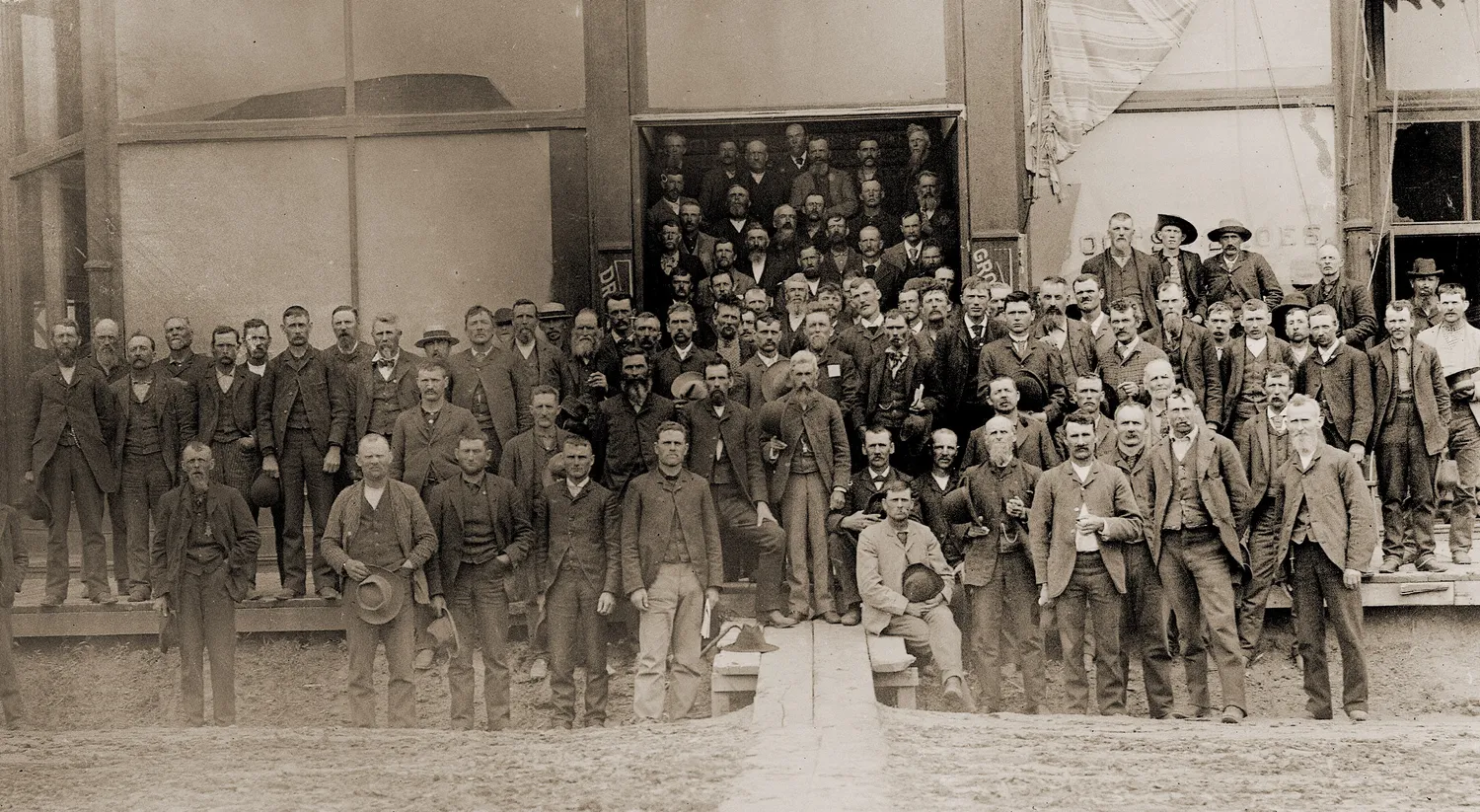
Peoples Party at Columbus Nebraska

"Peoples Party at Columbus Nebraska" by Solomon D. Butcher (1856-1927) / 
Source: Wikimedia Commons

During the late 1800s in the United States, many farmers faced serious economic problems. The prices of their crops were falling, but the costs they paid for supplies and shipping were rising. This situation made it difficult for rural families to make a living. One major challenge came from railroad monopolies. Railroad companies controlled the transportation of crops and charged high fees, leaving farmers with little profit. In addition, the government often sided with businesses instead of helping struggling farmers.

To address these challenges, farmers began to organize. They formed local groups called Granges and later, the Farmers' Alliances. These organizations helped farmers work together, share new techniques, and advocate for better treatment. However, farmers soon realized that local efforts were not enough. They needed political power to create real change. This led to the birth of the Populist Party in 1892, also known as the People's Party. The Populist Party became a national third party, meaning it was not part of the two main political parties, but still competed in elections.

The Populist Party developed a platform with several key goals. They demanded currency reform, including the use of silver as well as gold to back U.S. money. The Populists believed this would make it easier for farmers to pay their debts and raise crop prices. They also called for government ownership of railroads, lower freight rates, and direct election of Senators. These reforms were designed to give ordinary people more economic and political power, especially those in rural communities.

Despite gaining popularity, the Populist Party faced significant obstacles. The two major parties—Democrats and Republicans—often ignored or opposed Populist ideas. Many business leaders and bankers feared that Populist reforms would hurt their profits. In the 1896 presidential election, the Populists joined with Democratic candidate William Jennings Bryan, hoping that together they could win. However, Bryan lost, and the Populist Party soon declined in influence. Yet, some of their demands, such as the direct election of Senators, were later adopted as laws during the Progressive Era.

The rise and fall of the Populist Party shows the power and limitations of third parties in American history. Although the Populists did not achieve all their goals, they gave a voice to millions of farmers and rural Americans. Their efforts inspired later reform movements and shaped national debates about fairness, democracy, and government responsibility.

Interesting Fact: In 1892, the Populist Party’s candidate for president, James B. Weaver, received over one million votes, one of the strongest showings ever for a third party in U.S. history.

Comprehension quiz (8 questions)

1. What year was the Populist Party founded?

1892
1776
1920
1865

2. Who did the Populists support for president in 1896?

William Jennings Bryan
Abraham Lincoln
James B. Weaver
Theodore Roosevelt

3. What did railroad monopolies do to farmers?

Charged high shipping fees
Gave free tools
Lowered crop prices
Helped organize Granges

4. Why did farmers form the Populist Party?

To gain political power
To support businesses
To join Republicans
To stop farming

5. What was one goal of the Populists?

Currency reform
War with Europe
More monopolies
Less democracy

6. What effect did Populist reforms have later?

Some became laws
None were adopted
Caused more monopolies
Banned all elections

7. The Populist Party was a third party.

True
False

8. What does 'monopoly' mean?

One company controls an industry
Everyone shares power
A group of farmers
A type of railroad
Who it's for

Perfect for the way you teach

Teachers
  • Build comprehension skills
  • Auto-graded quiz
  • Differentiated reading
Parents
  • Read together at home
  • Improve fluency
  • Quiet reading time
Homeschoolers
  • Reading curriculum support
  • Independent practice
  • Track Lexile growth
Topics

Reviews & Ratings

No reviews yet. Be the first to share your experience!

More reading you might love

20 more
Passage
California Progressive Era - reading educational content

California Progressive Era

Reading Passage · HSS 4.5.2

$1.50
Passage
Theodore Roosevelt Square Deal: Progressive Policies - reading educational content

Theodore Roosevelt Square Deal: Progressive Policies

Reading Passage · D2.HIS.2.3-5

$1.50
Passage
Progressive Movement Goals and Reforms - reading educational content

Progressive Movement Goals and Reforms

Reading Passage · D2.HIS.2.3-5

$1.50
Passage
Muckrakers Expose Corruption - reading educational content

Muckrakers Expose Corruption

Reading Passage · D2.HIS.2.3-5

$1.50
Passage
Child Labor Problem - reading educational content

Child Labor Problem

Reading Passage · D2.HIS.2.3-5

$1.50
Passage
Labor Unions History - reading educational content

Labor Unions History

Reading Passage · HSS 5.9.2

$1.50
Worksheet
Progressive Tenses - worksheet educational content

Progressive Tenses

Worksheet · L.4.1.B

Free
Passage
Factory Work in Industrial America - reading educational content

Factory Work in Industrial America

Reading Passage

$1.50
Bundle
Progressive Era - bundle educational content

Progressive Era

Bundle

$4.99
Worksheet
Practicing Progressive Verbs - worksheet educational content

Practicing Progressive Verbs

Worksheet · L.4.1.B

$1.50
Passage
New Immigrants and New Jobs - reading educational content

New Immigrants and New Jobs

Reading Passage · D2.HIS.2.3-5

$1.50
Passage
New Inventions Emerge - reading educational content

New Inventions Emerge

Reading Passage

$1.50
Passage
California Direct Democracy - reading educational content

California Direct Democracy

Reading Passage · D2.HIS.2.5

$1.50
Passage
The Growth of Big Business - reading educational content

The Growth of Big Business

Reading Passage

$1.50
Passage
Industrial Revolution Schools - reading educational content

Industrial Revolution Schools

Reading Passage · D2.HIS.2.3-5

$1.50
Passage
New Immigrant Communities - reading educational content

New Immigrant Communities

Reading Passage

$1.50
Passage
Telegraph Invention - reading educational content

Telegraph Invention

Reading Passage · D2.HIS.3.3-5

$1.50
Passage
The Progressive Era: Making America Better - 4th Grade Socia - reading educational content

The Progressive Era: Making America Better - 4th Grade Socia

Reading Passage · CCSS.ELA-LITERACY.RI.4.3

Free
Passage
Angel Island - reading educational content

Angel Island

Reading Passage · D2.HIS.2.6-8

$1.50
Passage
A Factory Worker’s Life - reading educational content

A Factory Worker’s Life

Reading Passage · D2.HIS.2.3-5

$1.50
Copyright © 2026 Workybooks. Made with ♥ in California.