This learning resource is available in interactive and printable formats. The interactive worksheet can be played online and assigned to students. The Printable PDF version can be downloaded and printed for completion by hand.
Discover the fascinating history of the Silk Road in this engaging history reading passage. Explore how the Silk Road connected Ancient China to the rest of the world, encouraging trade, cultural exchange, and technological advancements. This passage features key vocabulary, evidence from historical sources, and explains the significance of the Silk Road for world history. Students will learn about ancient cities like Chang’an and Samarkand, the goods traded, and how people from different cultures interacted. The passage is aligned to CA HSS 6.6.1 and CCSS.ELA-Literacy.RH.6-8.1 standards. Activities include a multiple-choice quiz, graphic organizers, writing prompts, and a Spanish translation. The passage is designed for classroom use and includes a read aloud audio option for accessibility. Perfect for students and teachers studying ancient civilizations, trade, and the impact of geography on human history.
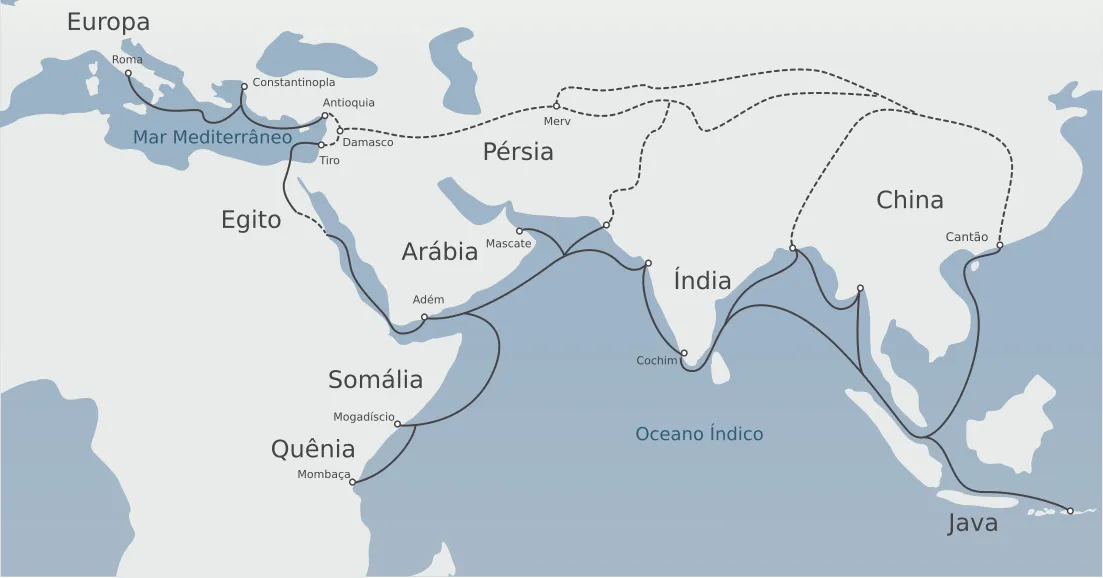
The Silk Road was a vast network of ancient trade routes that linked China with Central Asia, the Middle East, and even parts of Europe from roughly the 2nd century BCE to the 15th century CE. These trade routes were not a single path, but rather a collection of overland and sea routes that made it possible for merchants, pilgrims, and travelers to exchange goods, ideas, and technologies across thousands of miles. The Silk Road began during the Han dynasty (206 BCE–220 CE), when Emperor Wu sent an envoy named Zhang Qian to explore regions to the west. His reports helped open the way for regular trade between China and distant lands.
The Silk Road got its name from the highly valued Chinese silk cloth that was traded along the route. However, many other goods traveled these routes, including spices, glassware, horses, precious stones, and paper. Archaeological evidence, such as silk fragments found in ancient Egyptian tombs and Roman records describing Chinese silk, shows that products from China reached faraway places. Major cities along the route, like Chang’an (modern-day Xi’an), Samarkand, and Kashgar, became important trading centers and places where different cultures met. These cities also served as stops for caravans, groups of people and pack animals who traveled together for safety across dangerous deserts and mountains.
Trade on the Silk Road was not just about goods—it was also about cultural exchange. As people from various civilizations met, they shared languages, religions, art, and scientific knowledge. Buddhism, for example, spread from India to China and other parts of Asia through this network. The exchange of ideas also led to the transfer of inventions, such as papermaking and gunpowder, which would eventually shape societies far from their place of origin. Archaeological sites, such as the Mogao Caves near Dunhuang, contain art influenced by different cultures and tell the story of people who traveled these routes.
The Silk Road’s importance changed over time. During the Tang dynasty (618–907 CE), trade flourished, and the route was safer under strong government control. Later, political instability and new sea routes caused overland trade to decline. Despite these changes, the Silk Road’s impact continued, as it had already connected distant peoples and encouraged the movement of goods and ideas across continents.
Overall, the Silk Road played a vital role in world history by linking civilizations, spreading technology, and encouraging interactions that shaped societies. Its story connects to themes of geography, human movement, and the development of global networks.
Interesting Fact: The word “sericulture,” meaning silk farming, comes from the Latin word for silk, “sericum,” reflecting the influence of this ancient trade.
When did the Silk Road begin?
Han dynasty, 2nd century BCETang dynasty, 10th century CERoman Empire, 1st century CEQing dynasty, 18th century CE
What was the Silk Road mainly used for?
Trade and cultural exchangeFarming and fishingBuilding citiesRaising armies
Which city was a major trading center?
Chang’anBeijingDelhiAthens
What helped spread Buddhism to China?
The Silk RoadGreat WallForbidden CityMing dynasty
Why did people travel in caravans?
For safety in desertsTo farm togetherTo build templesTo find gold
How did the Silk Road change over time?
Trade shifted to sea routesIt became a farming routeIt was never used againIt only traded silk
The Silk Road ended in the 15th century. True or false?
TrueFalse
What does 'caravan' mean?
Group of travelersType of silkAncient cityTrade law
Perfect For:
👩🏫 Teachers
• Reading comprehension practice
• Auto-graded assessments
• Literacy skill development
👨👩👧👦 Parents
• Reading practice at home
• Comprehension improvement
• Educational reading time
🏠 Homeschoolers
• Reading curriculum support
• Independent reading practice
• Progress monitoring
Reading Features:
📖
Reading Passage
Engaging fiction or nonfiction text
❓
Comprehension Quiz
Auto-graded questions
📊
Instant Feedback
Immediate results and scoring
📄
Printable Version
Download for offline reading
🔊
Read Aloud
Voice-over with word highlighting
Reviews & Ratings
No reviews yet. Be the first to share your experience!
Related Content
Life in Ancient China
This comprehensive history reading passage explores daily life and social structure in Ancient China, focusing on the ro...
Geography of Ancient China
This passage examines the geographic advantages and challenges faced by Ancient China, exploring how natural features li...
Bronze in Ancient China
This passage explores the significance of bronze in Ancient China, focusing on its use in rituals, weapons, and expressi...
Confucianism, Daoism, and Buddhism in China
This rigorous ancient history reading passage explores the development and impact of Confucianism, Daoism, and Buddhism ...
Evidence in Ancient History
This engaging history reading passage investigates how archaeologists and historians discover clues about how ancient pe...
Ancient Theocracy
This engaging history reading passage explores the concept of theocracy in ancient civilizations, where priests and reli...
Ancient Canaan
This educational passage explores the land of Canaan, the historical homeland of the ancient Israelites. Students will l...
The First Emperor: Qin Shi Huangdi Unites China
This comprehensive reading passage explores the rise of Qin Shi Huangdi, the first emperor who united ancient China. Stu...
Shi Huangdi: First Emperor of China
This rigorous history reading passage explores the remarkable reign of Shi Huangdi, the first emperor of China, and his ...
Ban Zhao: China's Woman Scholar
This passage explores the life and legacy of Ban Zhao, one of ancient China's most respected scholars and the author of ...
Ancient Philosophy
This reading passage takes students on a journey through the philosophical traditions of ancient Greece, India, and Chin...
Ancient Literature
This passage explores the importance of ancient stories and poems from civilizations such as Greece, India, and Israel. ...
Geography of Ancient Israel
This passage explores the rich geography of Ancient Israel, focusing on how landforms, climate, and natural resources sh...
Ancient Money Barter
This passage explores the fascinating evolution from barter to the earliest coins in ancient civilizations, focusing on ...
Ancient Writing Systems
This engaging history reading passage explores the origins and evolution of ancient writing systems, including cuneiform...
Ancient Science and Medicine
This comprehensive reading passage explores the development of science and medicine in ancient civilizations, including ...
Ancient Agriculture Farming
This passage explores the transformative impact of farming on ancient societies, examining how the Neolithic Revolution ...
Social structures in Ancient World
This passage explores the organization and significance of family life in ancient societies, focusing on how extended fa...
Ancient Mathematics
This passage explores the essential role of mathematics in ancient civilizations, including Mesopotamia, Egypt, Greece, ...
Trade Across Ancient India
This history reading passage explores Ancient India's trade networks and their impact on global connections. Students wi...