

Mesopotamia
A bundle of 16 resources — buy once and get every item to download and assign, individually or all together.
By completing this purchase you agree to our Terms of Use and Privacy Policy. Your subscription renews automatically until you cancel. You can cancel anytime from your account settings. All sales are final and non-refundable. Digital content is available for download in your account immediately upon purchase.
Items included in this bundle
16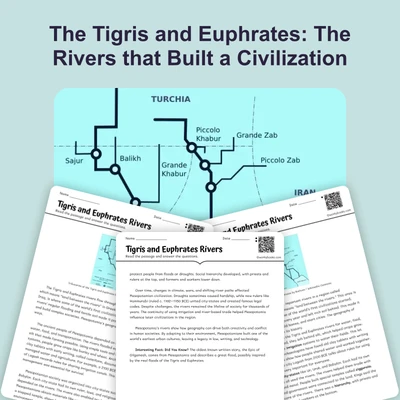

About this bundle
This comprehensive Social Studies Resource is expertly designed to help students master the complex history, geography, and development of ancient civilizations, perfectly aligned with curriculum and social studies standards. Use this engaging material to clarify the critical environmental factors, technological innovations, and social structures that enabled early humans to settle, farm, and build advanced societies in the ancient world.
About this Resource: The material provides a clear, conceptual framework using accessible language and detailed historical evidence to make the history of early urban cultures easy to understand. It explores how the physical environment drove both human creativity and societal organization, tracing the growth of independent regional centers from early agricultural settlements into powerful ancient empires.
The topics included in this resource are:
- Tigris and Euphrates Rivers
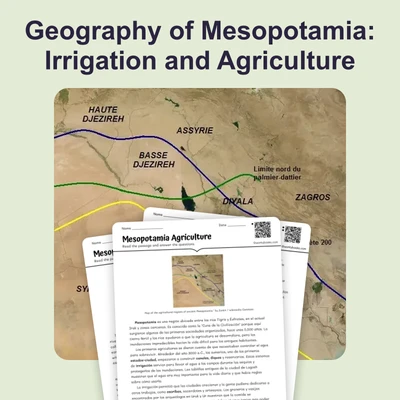
- Farming in Ancient Mesopotamia
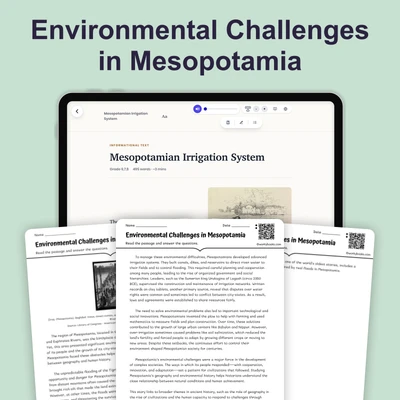
- Mesopotamian Irrigation System
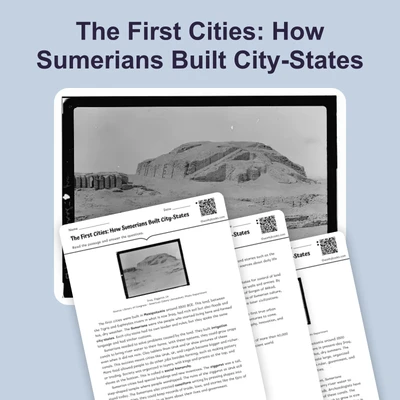
- First Sumerian City-States
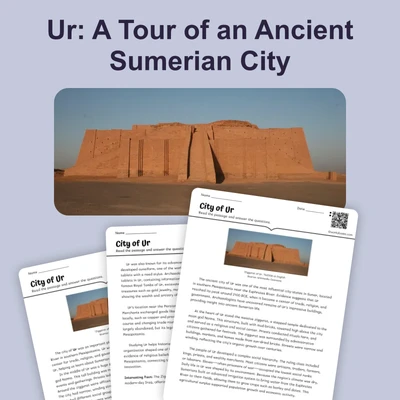
- Ancient City of Ur
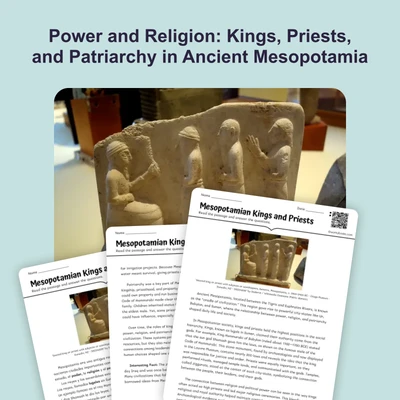
- How Mesopotamia Was Ruled
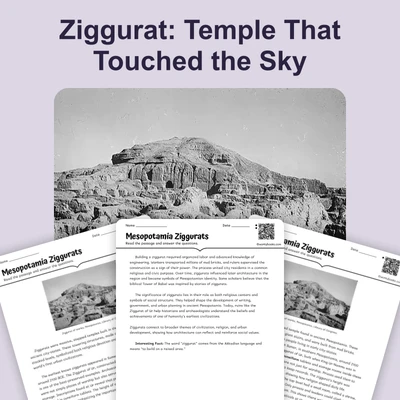
- Mesopotamia Ziggurats
- Code of Hammurabi
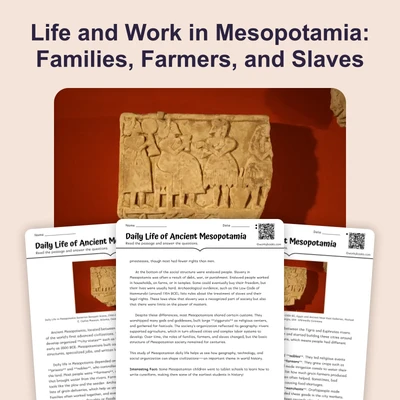
- Daily Life in Mesopotamia
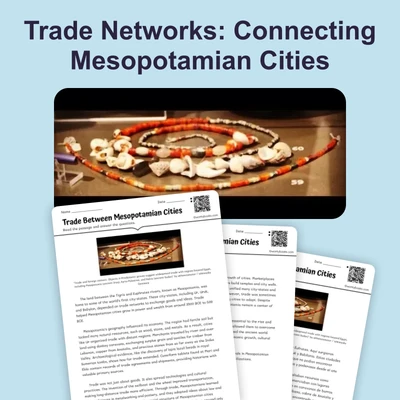
- Trade in Ancient Mesopotamia
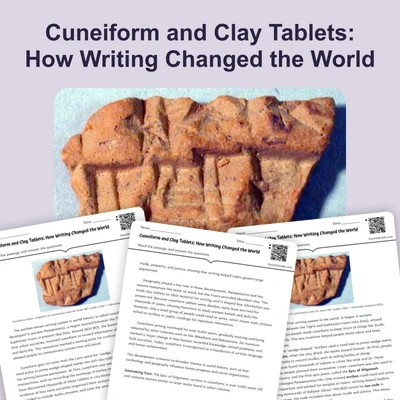
- Cuneiform Writing
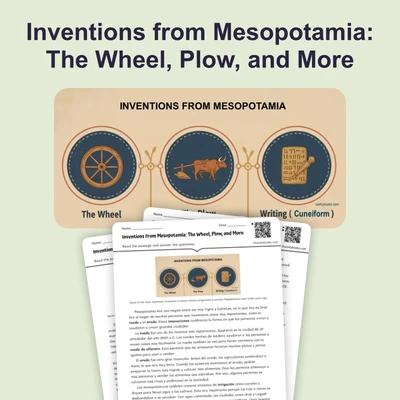
- Inventions of Ancient Mesopotamia
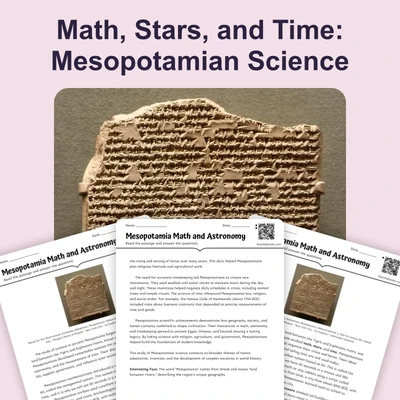
- Mesopotamian Math and Astronomy
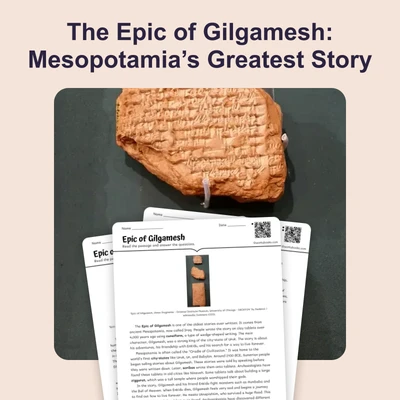
- Epic of Gilgamesh
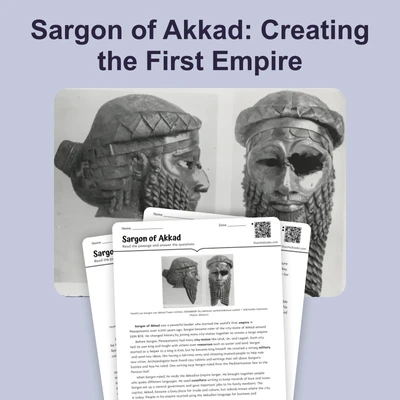
- Sargon of Akkad
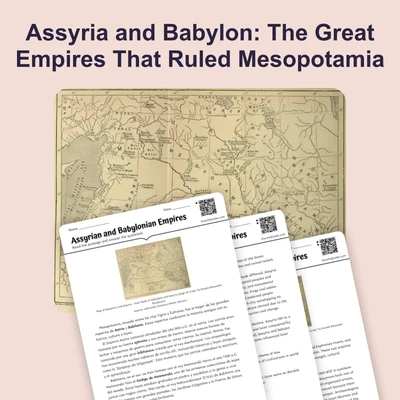
- Assyrian and Babylonian Empires
This Phygital — Print and Interactive Version — gives you more options in your classroom. Available as both a print-and-go worksheet and an interactive digital lesson, it ensures a smooth and engaging learning experience.
What's Included:
- Reading Passages: Detailed, illustrated passages explaining the geographical context, agricultural milestones, and cultural achievements of ancient societies. To support differentiated learning for all types of readers, each included topic features two leveled versions (Level 1: Simplified and Level 2: Detailed) provided in both full English text and full Spanish machine translations.
- Glossary: A dedicated section accompanying the topics defining critical historical, cultural, and geographical vocabulary words such as Mesopotamia, irrigation, city-state, hierarchy, cuneiform, ziggurat, salinization, scribe, and levee.
- Quiz: Multiple-choice assessment questions per topic to check student comprehension of core historical concepts, environmental adjustments, and vocabulary recall instantly.
- Writing Activity: Open-ended analytical and comprehension questions that challenge students to synthesize data, draw cause-and-effect relationships, evaluate primary source narratives, and explain complex environmental or political dynamics in their own words.
- Graphic Organizers: Guided structural tables—including Cause-and-Effect tables and Chronological Development timelines—to help students map resource distribution, tracking sequential historical events and major structural changes over time.
- Answer Key: Complete correct response details for the multiple-choice quizzes and suggested detailed text guidelines for all writing questions and graphic organizers, making grading simple and saving valuable teaching time.
Learning Objectives:
Students will be able to:
- Explain how physical geography, specifically proximity to major river systems like the Tigris and Euphrates, provided the necessary conditions for early human settlement, farming, and the rise of complex urban civilizations.
- Analyze the cause-and-effect relationships between environmental limitations (such as unpredictable seasonal flooding or severe droughts) and human innovation, highlighting the creation of advanced irrigation networks, levees, and canals.
- Describe how agricultural food surpluses transformed nomadic or early tribal structures into specialized societies, fostering separate professional roles for scribes, artisans, merchants, and priests.
- Differentiate between the distinct tiers of ancient social hierarchies and evaluate how religious authority, political leadership, and early laws (such as the Code of Hammurabi) combined to govern populations and maintain civic stability.
- Evaluate the long-term historical significance of key technological and cultural achievements, including the creation of cuneiform writing, mud-brick architectural feats like ziggurats, mathematical sexagesimal systems, and early literary masterpieces like the Epic of Gilgamesh.
Perfect for the way you teach
- Assign in one click
- Track progress per student
- Auto-graded results
- Practice at home
- Print or do on-screen
- Build skill mastery
- Standards-aligned
- Self-paced
- Ready-to-use today