This passage explores the discovery and historical significance of the Venus de Milo, one of the most famous statues from ancient Greece. Students learn about the archaeological context of its accidental discovery in 1820 on the Greek island of Milos, details of its construction and materials, and how it came to symbolize Greek art and culture worldwide. The passage addresses the importance of archaeology, the use of marble, and how artifacts like the Venus de Milo help historians understand ancient societies, art, and social hierarchy. Included activities help students practice historical thinking, analyze evidence, and build academic vocabulary. The resource aligns with CA HSS 6.1 and CCSS RH.6-8.1 standards, and supports English learners with a Spanish translation and differentiated version. Audio support for read aloud is available, making this an engaging, accessible, and rigorous resource for history classrooms.
Written by Workybooks TeamPublished by Workybooks
Preview
Sample passage and quiz content
CONTENT PREVIEW
Expand content preview
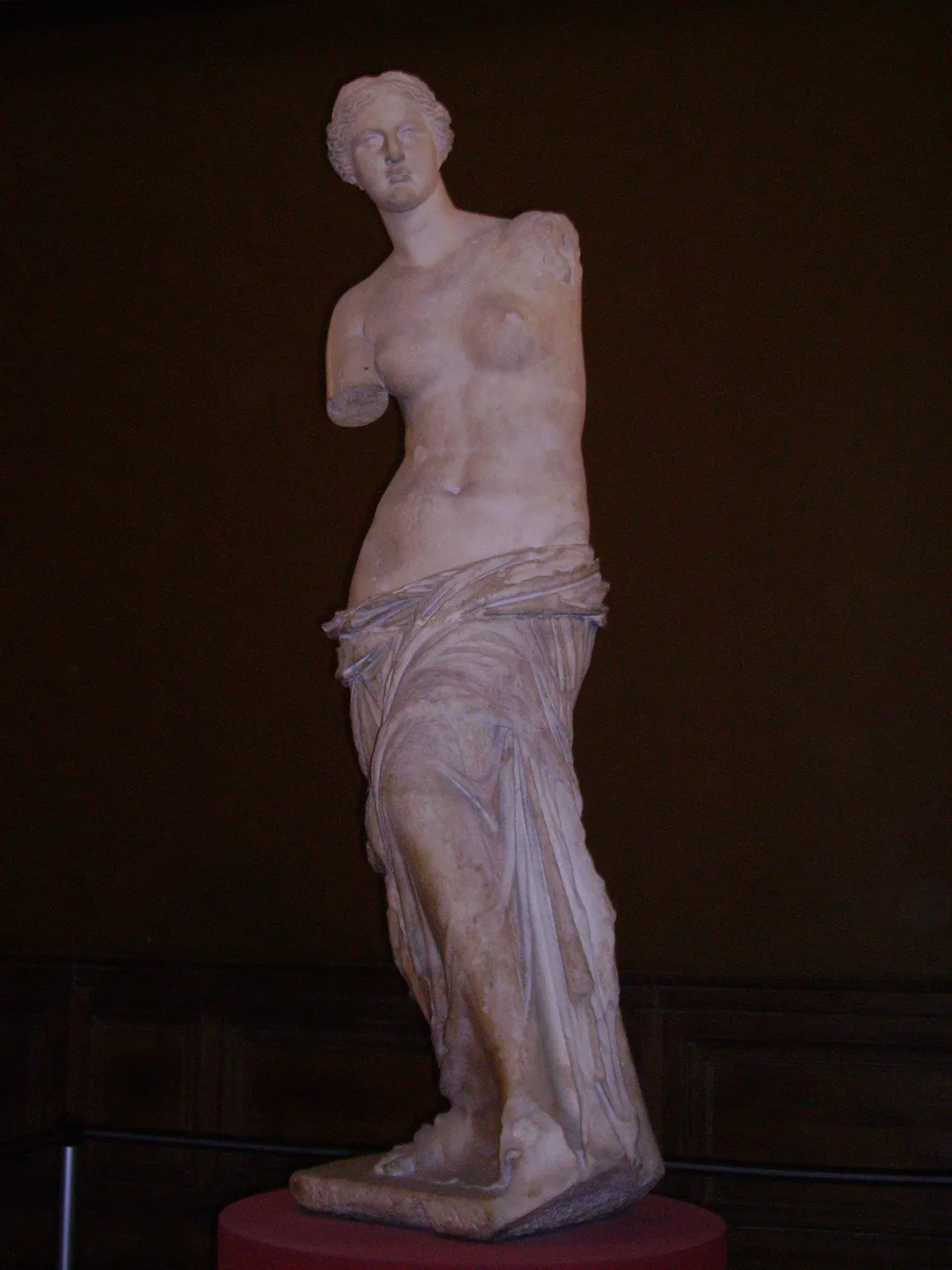
"Venus de Milo-Louvre" / Source: Wikimedia Commons
The Venus de Milo is one of the most recognized statues from ancient Greece, discovered by accident on the island of Milos in 1820. This marble statue, believed to represent the goddess Aphrodite (known to the Romans as Venus), has fascinated archaeologists and art lovers for over two centuries. Its discovery revealed not only artistic mastery but also valuable clues about ancient Greek society, their beliefs, and their craftsmanship.
The statue was uncovered by a farmer named Yorgos Kentrotas while he was digging on his land. French naval officer Olivier Voutier, who happened to be nearby, realized the importance of the find and helped bring it to the attention of local officials. The Venus de Milo was found in pieces, buried in an ancient ruin. Soon after, it was transported to France and placed in the Louvre Museum, where it remains today as a symbol of classical beauty and artistic achievement. Historical documents from the time, including Voutier’s diary and official records, provide primary source evidence of the statue’s discovery and early display.
The Venus de Milo stands about 6 feet 8 inches tall and is carved from fine Parian marble, a material prized in the ancient world for its purity and smoothness. The statue is notable for its missing arms, a detail that has sparked much debate and speculation among historians and artists. Some believe the arms were lost after the statue was unearthed, while others think they broke off in ancient times. Archaeological studies of the site and the statue’s fragments have not provided a definite answer. The statue’s style reflects the Hellenistic period, around 150 BCE, when Greek artists created more lifelike and dynamic figures. This era saw changes in artistic techniques and social values, as sculptors began to portray gods in more human and approachable ways.
Experts have also examined the statue’s inscriptions and the ruins where it was found to understand its original context. Some ancient writings suggest it may have stood in a gymnasium or temple, serving both religious and decorative purposes. The Venus de Milo’s discovery changed how historians view the art and daily life of ancient Greece. It demonstrated the high level of skill in marble sculpture and offered insights into the roles of women and goddesses in Greek culture. The statue also reflects the importance of trade and wealth, as marble was imported from distant quarries and only wealthy city-states could afford such grand works.
Today, the Venus de Milo remains a vital link to the ancient world. It continues to inspire artists, historians, and visitors from across the globe. The statue’s journey from a buried ruin in Greece to a world-famous museum in Paris is a powerful example of how archaeological discoveries can shape our understanding of history. The story of the Venus de Milo connects to broader themes of cultural exchange, the preservation of heritage, and the ways in which societies remember their past.
Interesting Fact: The Venus de Milo has no arms, and despite many attempts, experts still do not know for sure what her original pose was or what she was holding.
Where was Venus de Milo found?
Island of MilosAthensRomeEgypt
Who discovered the statue?
Yorgos KentrotasAlexander the GreatOlivier VoutierA Roman emperor
In which museum is Venus de Milo displayed?
Louvre MuseumBritish MuseumAcropolis MuseumMetropolitan Museum
Why is the statue missing its arms?
Unknown, experts debate itThey meltedLost during transportDestroyed by a king
What does the Venus de Milo represent?
Goddess AphroditeA Roman emperorA Greek soldierA famous farmer
How did the discovery change history?
Showed Greek art skillStarted a warBuilt a new cityInvented trade
Venus de Milo has arms. True or false?
TrueFalse
What is an archaeologist?
Studies past culturesSells statuesBuilds museumsFarms marble
Who it's for
Perfect for the way you teach
Teachers
Build comprehension skills
Auto-graded quiz
Differentiated reading
Parents
Read together at home
Improve fluency
Quiet reading time
Homeschoolers
Reading curriculum support
Independent practice
Track Lexile growth
Topics
Venus de Miloancient GreecearchaeologystatuediscoveryLouvresculptureancient history
Reviews & Ratings
No reviews yet. Be the first to share your experience!
More reading you might love
20 more
Lost City of Pompeii
This engaging passage explores the ancient Roman city of Pompeii, which was buried by the eruption of Mount Vesuvius in ...
CA HSS 6.1RH.6-8.2RH.6-8.4RH.6-8.7
Minoan Civilization
This engaging history reading passage explores the Minoans, one of the earliest civilizations of the Bronze Age located ...
CA HSS 6.1RH.6-8.1RH.6-8.4
How Ancient Ideas Spread
This history reading passage explores the concept of cultural diffusion and its significance in shaping ancient civiliza...
CA HSS 6.16.2TEKS 113.18(B)(1)(A)RI.6.3
First Humans
This engaging history reading passage explores the evolution of early humans, tracing the journey from the earliest homi...
CA HSS 6.1RH.6-8.1RH.6-8.2W.6.2
Who Were the Neanderthals
This engaging history reading passage explores the fascinating world of the Neanderthals, our ancient relatives who live...
CA HSS 6.1TEKS 6.2RI.6.1RI.6.4
Early Human Cognition
This engaging reading passage explores the Cognitive Revolution, a major turning point in human history that occurred ar...
CA HSS 6.1CCSS.RI.6.1CCSS.RI.6.2CCSS.RI.6.4
Valmiki and the Ramayana
This ancient history reading passage explores the life and legacy of Valmiki, the celebrated poet credited with composin...
CA HSS 6.1CCSS.ELA-LITERACY.RH.6-8.1CCSS.ELA-LITERACY.RH.6-8.2
China's Terracotta Army
This passage explores the fascinating discovery of the Terra-Cotta Army near Xi’an, China, and its significance in ancie...
CA HSS 6.1CCSS RH.6-8.1CCSS RH.6-8.4CCSS RH.6-8.7
Dead Sea Scrolls Discovery
This passage explores the remarkable discovery of the Dead Sea Scrolls, one of history’s most significant archaeological...
CA HSS 6.1CCSS.RI.6.1CCSS.RI.6.3
Life as a Hunter-Gatherer
This engaging history reading passage explores the ways early humans survived and spread across continents by foraging, ...
CA HSS 6.1RI.6.1RI.6.4RI.7.1
Human Impact on Extinctions
This passage explores how Paleolithic people, or early humans, shaped their environment through the use of fire, hunting...
CA HSS 6.1CCSS RH.6-8.2CCSS RI.6.4
Stone Age Settlements
Explore how early humans in the Paleolithic Era built shelters such as caves and huts to survive harsh climates. This pa...
CA HSS 6.1CCSS.RI.6.3CCSS.RI.7.1CCSS.RI.8.2
How Early Humans Survived the Ice Age
This passage explores how Paleolithic people adapted to a variety of landscapes, including coastal regions, mountains, p...
CA HSS 6.1CCSS RH.6-8.1CCSS RH.6-8.2CCSS RH.6-8.4
Life in the Neolithic Age
This engaging passage explores what life was like during a typical day in the Neolithic Age, a pivotal era in ancient hi...
CA HSS 6.1CCSS RH.6-8.2CCSS RH.6-8.4
Ramayana Epic of India
This passage introduces students to the epic of the Ramayana and its role in teaching the concept of dharma within ancie...
CA HSS 6.1RI.6.1RI.6.4RI.7.1
How Artifacts Are Restored
This engaging passage explores how scientists, especially archaeologists and conservators, protect and restore artifacts...
CA HSS 6.1RI.6.1RH.6-8.2
Ancient World Literature
This passage explores the importance of ancient stories and poems from civilizations such as Greece, India, and Israel. ...
CA HSS 6.1CCSS.RI.6.1CCSS.RI.6.4
What Was the Neolithic Revolution
This comprehensive history reading passage explores the Neolithic Revolution, focusing on how early humans transitioned ...
CA HSS 6.1CCSS RH.6-8.2CCSS RH.6-8.4CCSS RH.6-8.7
Neanderthals and Homo Sapiens
This reading passage explores the fascinating interactions between Homo sapiens and Neanderthals in ancient Europe, focu...
CA HSS 6.1CCSS.RI.6.3CCSS.RI.6.4
First Humans Reach Australia
This reading passage explores the journey of early humans who reached Australia by crossing the ocean over 60,000 years ...