Where does Cellular Respiration take Place — Reading Comprehension
Rate this|
11
Premium Resource
Present
Present in classroom. No work saved
Assign
Classroom with student accounts, Track progress
Quick Play
No student accounts, assign with a link
Grades
3
4
5
6
7
8
PRINT+DIGITAL RESOURCE
This learning resource is available in interactive and printable formats. The interactive worksheet can be played online and assigned to students. The Printable PDF version can be downloaded and printed for completion by hand.
"This science passage for middle school students (grades 6-8) explores the vital process of cellular respiration and where it takes place within a cell. The text is written in a direct, informative style, explaining the key stages: glycolysis in the cytoplasm and the Krebs cycle and oxidative phosphorylation in the mitochondria. It uses clear, concise language to define important vocabulary like adenosine triphosphate (ATP) and pyruvate. The passage emphasizes the role of mitochondria as the "powerhouses of the cell" and connects the process to the energy required for all living functions. This content aligns with NGSS standards related to the flow of matter and energy in organisms, specifically MS-LS1-7, and is designed to support student comprehension through a structured reading format, followed by targeted questions. The accompanying multiple-choice questions assess factual recall, conceptual understanding, and application of the concepts. The resource is ideal for self-study or classroom use, providing a comprehensive overview of cellular respiration's location and function."
CONTENT PREVIEW
Expand content preview
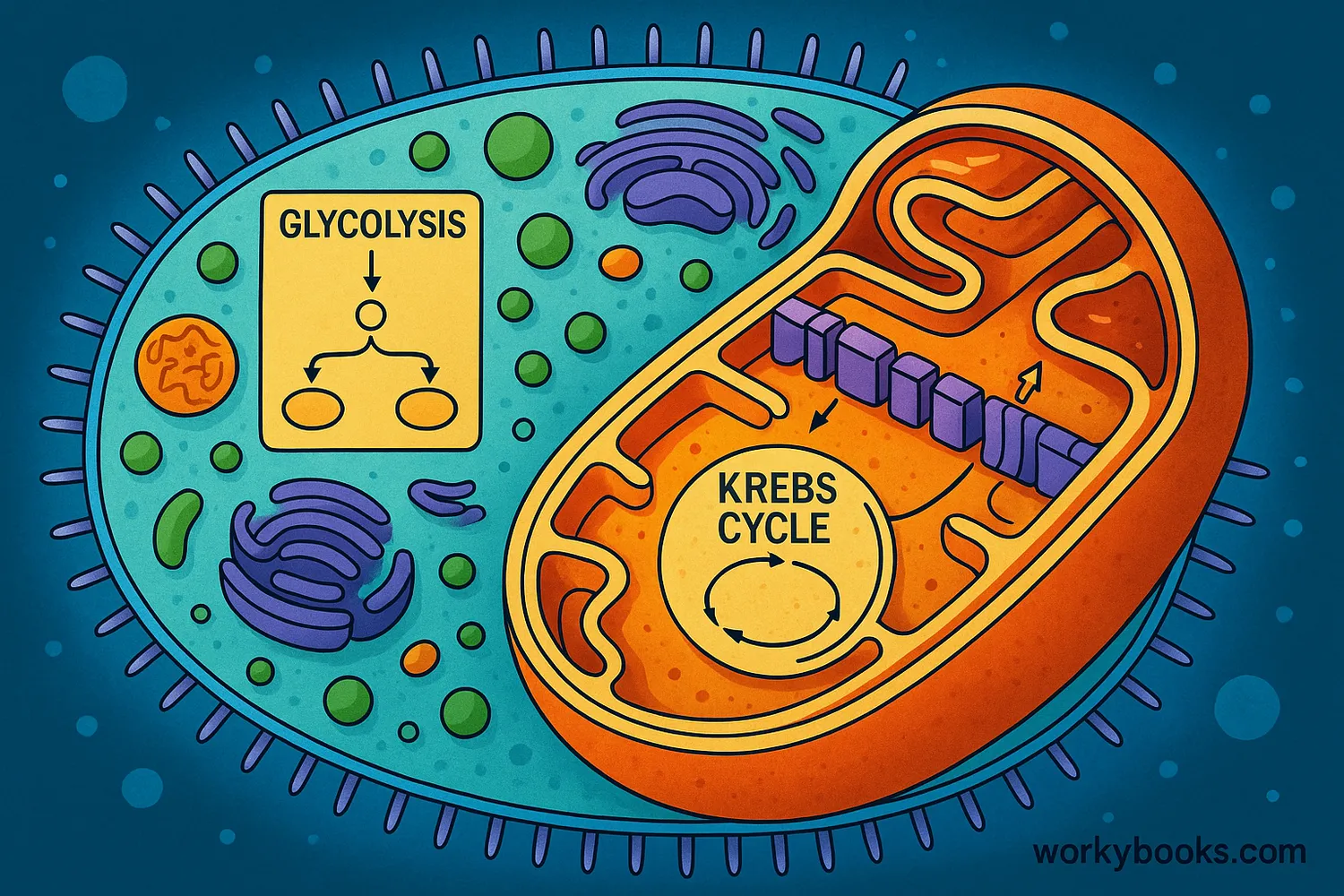
Different stages of cellular respiration within a eukaryotic cell, including glycolysis in the cytoplasm and the Krebs cycle and oxidative phosphorylation in the mitochondrion.
Cellular respiration is the fundamental process by which living organisms convert the chemical energy stored in food molecules into a usable form of energy called adenosine triphosphate (ATP). This process is essential for all life, as ATP powers nearly every cellular activity, from muscle contraction to the synthesis of new proteins. Without cellular respiration, cells would lack the energy required to function, and life as we know it would not exist. This complex series of reactions occurs in specific locations within the cell, depending on the stage of the process.
The journey of cellular respiration begins in the cytoplasm, the jelly-like substance that fills the cell. This first stage, known as glycolysis, involves the breakdown of a single glucose molecule into two smaller molecules called pyruvate. Glycolysis does not require oxygen, so it is the initial step for both aerobic and anaerobic respiration. Although it produces a small amount of ATP, its main role is to prepare the pyruvate molecules for the next, more energy-intensive stages.
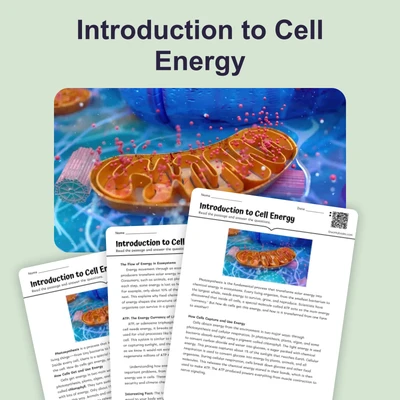
Following glycolysis, if oxygen is available, the process moves into the mitochondria, often called the "powerhouses of the cell." These bean-shaped organelles have two membranes, creating distinct compartments where the next stages take place. The pyruvate molecules are transported into the mitochondrial matrix, the inner-most compartment, where they are further broken down during the Krebs cycle (also known as the citric acid cycle). This cycle releases carbon dioxide and generates electron-carrying molecules. The final and most productive stage, oxidative phosphorylation, occurs on the inner mitochondrial membrane. Here, a large amount of ATP is produced using the energy from the electron-carrying molecules.
In summary, cellular respiration is a multi-step process with different locations. It begins with glycolysis in the cytoplasm, followed by the oxygen-dependent stages in the mitochondria. This division of labor allows the cell to efficiently extract the maximum amount of energy from food.
Fun Fact: A single cell can contain hundreds or even thousands of mitochondria, especially in energy-hungry cells like those in the heart and muscles.
What is the primary purpose of cellular respiration?
To produce glucoseTo create carbon dioxideTo convert energy into ATPTo store excess water
Where does the process of glycolysis take place?
In the nucleusIn the mitochondriaIn the cytoplasmOn the cell membrane
What is the name of the energy-storing molecule produced by cellular respiration?
It requires oxygen to occur.It is the final stage of respiration.It produces a large amount of ATP.It breaks down glucose into pyruvate.
Which organelle is referred to as the "powerhouse of the cell"?
NucleusMitochondrionCytoplasmCell membrane
Based on the passage, what would likely happen if a cell's mitochondria stopped working?
Glycolysis would stop immediately.The cell would produce less ATP.The cell would start producing more glucose.The cell would become a plant cell.
What is the main idea of the reading passage?
The function of the nucleus in a cell.The process of photosynthesis.The locations and stages of cellular respiration.The chemical formula for ATP.
If a scientist discovered a new single-celled organism that lacked mitochondria but still produced ATP, what could you infer about its energy production?
It must be a plant.It only performs glycolysis.It performs the Krebs cycle in its nucleus.It does not require food for energy.
Perfect For:
👩🏫 Teachers
• Reading comprehension practice
• Auto-graded assessments
• Literacy skill development
👨👩👧👦 Parents
• Reading practice at home
• Comprehension improvement
• Educational reading time
🏠 Homeschoolers
• Reading curriculum support
• Independent reading practice
• Progress monitoring
Reading Features:
📖
Reading Passage
Engaging fiction or nonfiction text
❓
Comprehension Quiz
Auto-graded questions
📊
Instant Feedback
Immediate results and scoring
📄
Printable Version
Download for offline reading
🔊
Read Aloud
Voice-over with word highlighting
Reviews & Ratings
No reviews yet. Be the first to share your experience!
Related Content
Cell Structure and Function
This middle school science passage introduces the fundamental concept that cells are the basic unit of life, aligned wit...
MS-LS1-1MS-LS1-2
Claws vs. Nails: Structure and Function
This engaging, audio-integrated reading passage, "Claws vs. Nails: Structure and Function," introduces sixth-grade stude...
Plant Parts Function Sort
This classification activity helps students understand how different plant structures contribute to survival. Students c...
4-LS1-1
Animal Structures Word Sort
This engaging classification activity helps students understand the different structures that make up animal bodies. Stu...
4-LS1-1
The Nature of Life Science
This passage, aligned with NGSS MS-LS1-1, introduces students in grades 6-8 to the foundational concepts of life science...
MS-LS1-1
Science Vocabulary
This worksheet on domain-specific words will help students learn some science vocabulary. Students will be asked to matc...
L.3.6L.3.4.A
Simple Machines Science Report
This science writing task requires students to clearly explain how three simple machines work using precise domain-speci...
W.5.4
Animal Body Parts and Their Functions
In this 'Animal Body Parts and Their Functions' word sort activity aligned with LS1.A, students learn about how differen...
Golgi Apparatus and Its Function
This NGSS-aligned reading passage introduces middle school students to the structure and function of the Golgi apparatus...
MS-LS1-1
What Are Plant Structures
This engaging 250-word reading passage introduces fourth-grade students to the fundamental concept of plant structures a...
NGSS 4-LS1-1
Bacteria: Prokaryotic Cell Structure
This engaging and audio-integrated reading passage, 'Bacteria: Prokaryotic Cell Structure,' introduces 6th-grade student...
Whale Blubber: Function and Adaptation
This engaging, audio-integrated reading passage, 'Whale Blubber Function and Adaptation,' introduces young learners to t...
Citizen Science and Ecological Monitoring
This engaging passage for grades 6-8 introduces the concept of citizen science and its critical role in ecological monit...
MS-LS2-1
Tools and Technology in Earth Science
This middle school science reading passage explores the wide range of tools and technologies used in Earth science, from...
MS-ESS2-2MS-ESS3-2MS-ETS1-1MS-PS4-3
The Nucleolus and Its Function
This NGSS-aligned reading passage focuses on the nucleolus, a key structure inside the cell’s nucleus responsible for ma...
MS-LS1-1MS-LS1-2
Blobfish Adaptations to Extreme Pressure
This engaging passage explores the fascinating world of the blobfish and its unique adaptations to the extreme pressure ...
What Is Earth Science?
This engaging middle school science passage introduces students to the field of Earth science, aligning with NGSS standa...
MS-ESS1MS-ESS2MS-ESS3SEP
The Pumpkin Life Cycle
This informational worksheet explores the pumpkin lifecycle, guiding students through procedural steps in a scientific t...
RI.2.3RI.2.10
The Nature of Science
This passage explores the nature of science for middle school students, aligning with NGSS standards MS-ETS1-4, MS-PS1-1...
MS-ETS1-4MS-PS1-1MS-LS1-1
The Aorta: Molecules to Organisms of the Body's Largest Artery
This educational content features a fascinating reading passage, audio integrated for an enhanced learning experience, a...