Adiabatic Cooling Explained
Interactive passage with audio narration, comprehension questions, and printable PDF.
By completing this purchase you agree to our Terms of Use and Privacy Policy. Your subscription renews automatically until you cancel. You can cancel anytime from your account settings. All sales are final and non-refundable. Digital content is available for download in your account immediately upon purchase.
What's included
Adiabatic Cooling Explained preview and details
About this printable Adiabatic Cooling Explained science reading passage, NGSS-aligned (Grade 6)
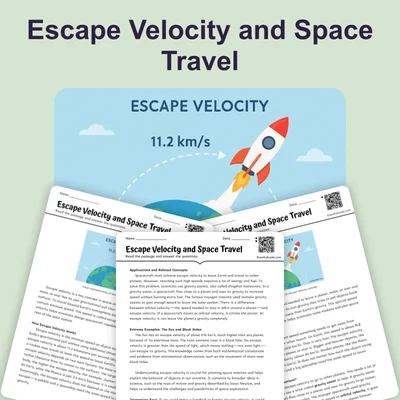
Sample passage and quiz from Adiabatic Cooling Explained
Reading passage and comprehension quiz preview
Adiabatic Cooling Explained
Have you ever wondered why it gets colder as you go up a mountain, even on a sunny day? Or why clouds form high in the sky? The answer often involves a science idea called adiabatic cooling. This is a very important process that helps us understand weather changes and how our atmosphere works.
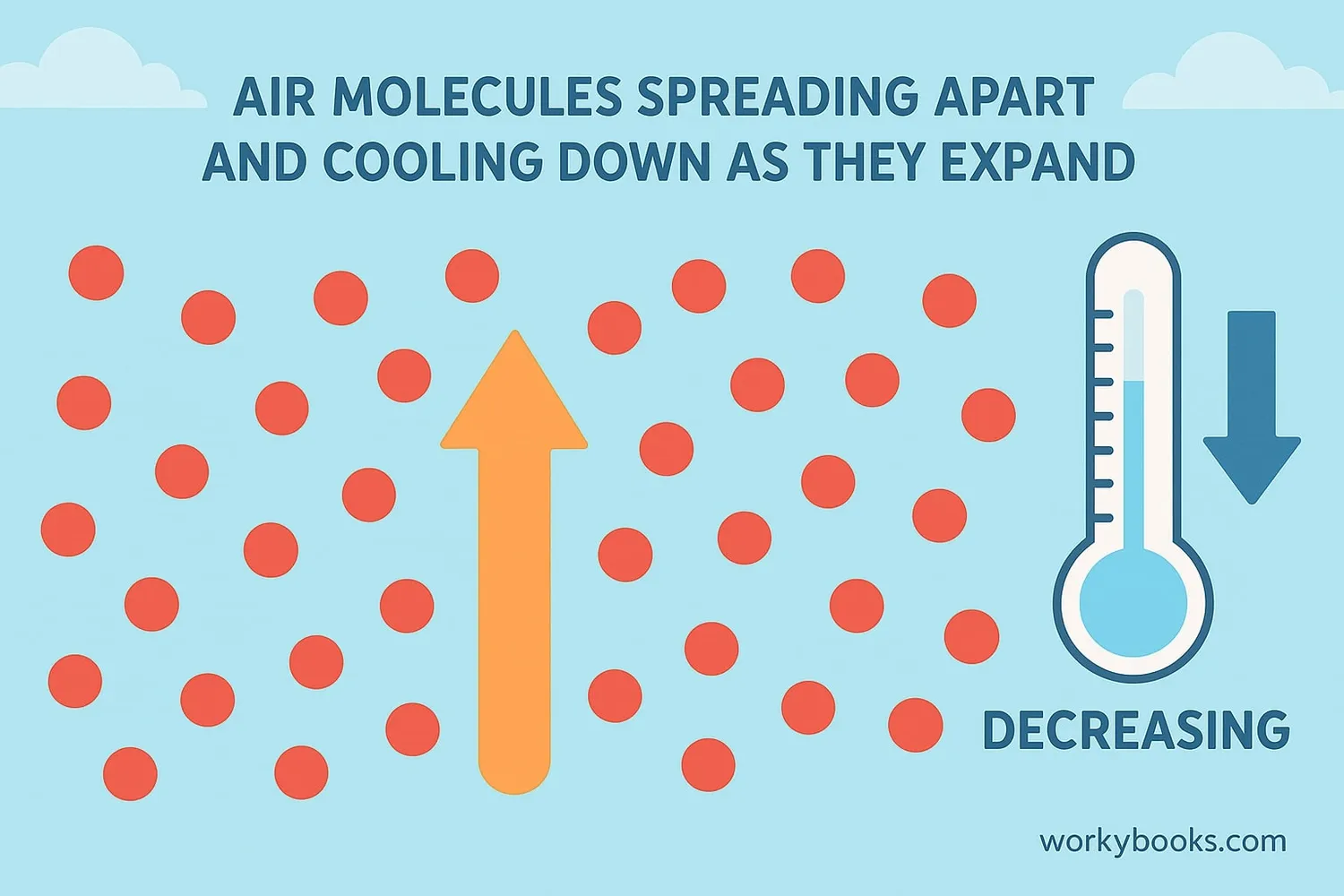
Imagine a parcel of air, which is like an invisible bubble of air. When this air parcel rises in the atmosphere, it moves into areas where the air pressure is lower. Think of it like a big, invisible squeeze. When the pressure around the air parcel decreases, the air inside it starts to expand, or spread out. This expansion uses up energy, and as a result, the air parcel cools down. This cooling without losing any heat to the outside is what we call adiabatic cooling. It’s like when you spray an aerosol can, and the nozzle gets cold; the gas inside expands rapidly and cools.
So, what does this have to do with weather? As warm, moist air rises, it cools adiabatically. If it cools enough, the water vapor in the air can no longer stay as an invisible gas. It changes into tiny liquid water droplets or ice crystals. This process is called condensation. When billions of these tiny droplets or crystals come together, they form clouds. That's why clouds are usually higher up in the sky, where the air has cooled enough for condensation to happen.
Adiabatic cooling is a fundamental concept in meteorology, the study of weather. It helps explain why different air masses have different temperatures and how they lead to various weather conditions, from sunny skies to rain and snow. Understanding this process gives us clues about how air moves and interacts, leading to the weather we experience every day. It's a key part of how the Earth's climate system operates, influencing temperature, humidity, and precipitation patterns globally.
Interesting Fact: The opposite of adiabatic cooling is adiabatic heating, which happens when air sinks and gets compressed, causing its temperature to rise.
Comprehension quiz (10 questions)
1. What happens to a parcel of air as it rises?
2. What forms when water vapor condenses?
3. Adiabatic cooling means air cools without losing heat to the outside. (True/False)
4. Why does air cool when it expands?
5. What causes the air parcel to expand?
6. Which of these is most likely to be formed by adiabatic cooling?
7. What term describes the invisible bubble of air?
8. If air is sinking, what process is likely happening?
9. Why are mountain tops often colder than valleys?
10. Which scenario best describes adiabatic cooling?
Perfect for the way you teach
- Build comprehension skills
- Auto-graded quiz
- Differentiated reading
- Read together at home
- Improve fluency
- Quiet reading time
- Reading curriculum support
- Independent practice
- Track Lexile growth