African Americans Fight for Freedom β Reading Comprehension
Rate this|
1
Present
Present in classroom. No work saved
Assign
Classroom with student accounts, Track progress
Quick Play
No student accounts, assign with a link
Grades
3
4
5
Standards
D2.HIS.2.3-5
D2.HIS.3.3-5
RI.4.3
RI.4.4
PRINT+DIGITAL RESOURCE
This learning resource is available in interactive and printable formats. The interactive worksheet can be played online and assigned to students. The Printable PDF version can be downloaded and printed for completion by hand.
This educational passage explores the brave and inspiring story of how African Americans fought for freedom in the United States. Students will learn about important events, people like Harriet Tubman and Frederick Douglass, and the struggle to end slavery. The passage clearly explains how African Americans worked together, escaped slavery, and helped others become free. It describes the Underground Railroad and the impact of the Emancipation Proclamation. Students will also discover cause and effect relationships in history, making it a perfect fit for C3 Framework and Common Core standards. Glossary terms help build vocabulary, and a timeline highlights key moments. The resource includes a quiz, writing activities, read aloud audio, and a Spanish translation, making it accessible and engaging for all learners. This passage is ideal for introducing students to the history of African American freedom struggles in the United States.
CONTENT PREVIEW
Expand content preview
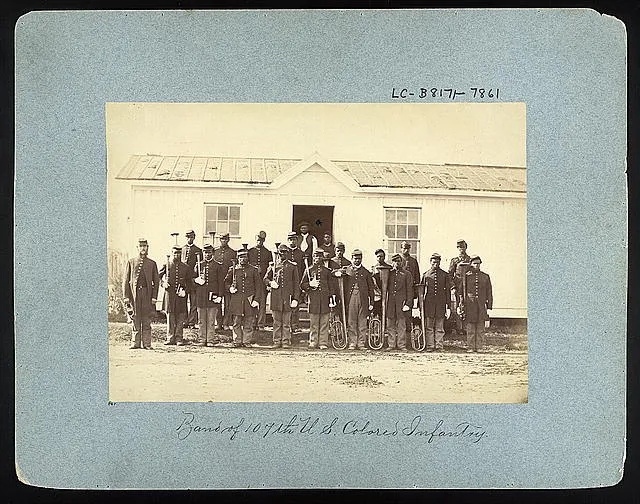
Band of 107th U.S. Colored Infantry. Source: Library of Congress - Smith, William Morris
The Betsy Ross flag is one of the first flags of the United States. During the American Revolution, the colonies wanted a flag to show their unity. They needed a symbol to represent their freedom and new nation.
In 1776, leaders from the 13 colonies met in Philadelphia. They decided to create a flag for the Continental Army. According to legend, George Washington, Robert Morris, and George Ross visited Betsy Ross, a skilled seamstress. They asked her to sew a flag with thirteen red and white stripes and thirteen white stars on a blue field. The stars were arranged in a circle, showing that all the colonies were equal.
Betsy Ross was known for her excellent sewing skills. She had a workshop in Philadelphia where she made flags, uniforms, and other items. Some people believe she helped design the first flag, but historians are not sure. There are no records from 1776 to prove she made the first flag. The story was first told by her grandson, William Canby, almost 100 years later.
The flag was important for the soldiers. It gave them hope and reminded them why they were fighting. The 13 stars and stripes stood for each colony that wanted independence from Great Britain. The flag became a symbol of unity and bravery.
After the American Revolution, the United States grew. New states joined the country, and more stars and stripes were added to the flag. The original Betsy Ross flag remains an important part of American history. It reminds people of the courage and teamwork that began the nation.
Today, the American flag has 50 stars, but the Betsy Ross flag is still remembered. People honor it on holidays like Flag Day and the Fourth of July. The story of Betsy Ross shows how one person's skill and hard work can help shape a nation.
Interesting Fact: Some historians believe the first American flag could have been made by another flag maker, but Betsy Ross is still celebrated as a symbol of American spirit.
How many stars were on the Betsy Ross flag?
13502010
Who was asked to sew the first flag?
Betsy RossMartha WashingtonThomas JeffersonBenjamin Franklin
What did the 13 stars in a circle mean?
All colonies were equalA lucky numberA British symbolA family crest
Why did the colonies want a new flag?
To show unityFor funTo copy BritainTo sell flags
What happened after the Revolution?
More stars were addedThe flag was forgottenColonies left the unionBetsy Ross became president
The flag gave soldiers hope. Why?
It was a symbol of freedomIt was largeIt was easy to sewIt had gold stripes
Betsy Ross was a seamstress. (true or false)
truefalse
What does the word 'unity' mean?
Working togetherBeing aloneFeeling tiredTelling stories