Colonial Clothing and Homemade Goods
Interactive passage with audio narration, comprehension questions, and printable PDF.
By completing this purchase you agree to our Terms of Use and Privacy Policy. Your subscription renews automatically until you cancel. You can cancel anytime from your account settings. All sales are final and non-refundable. Digital content is available for download in your account immediately upon purchase.
What's included
Part of this bundle

Colonial Clothing and Homemade Goods preview and details
About this printable Colonial Clothing and Homemade Goods reading passage (Grades 3-5)
Sample passage and quiz from Colonial Clothing and Homemade Goods
Reading passage and comprehension quiz preview
Colonial Clothing and Homemade Goods
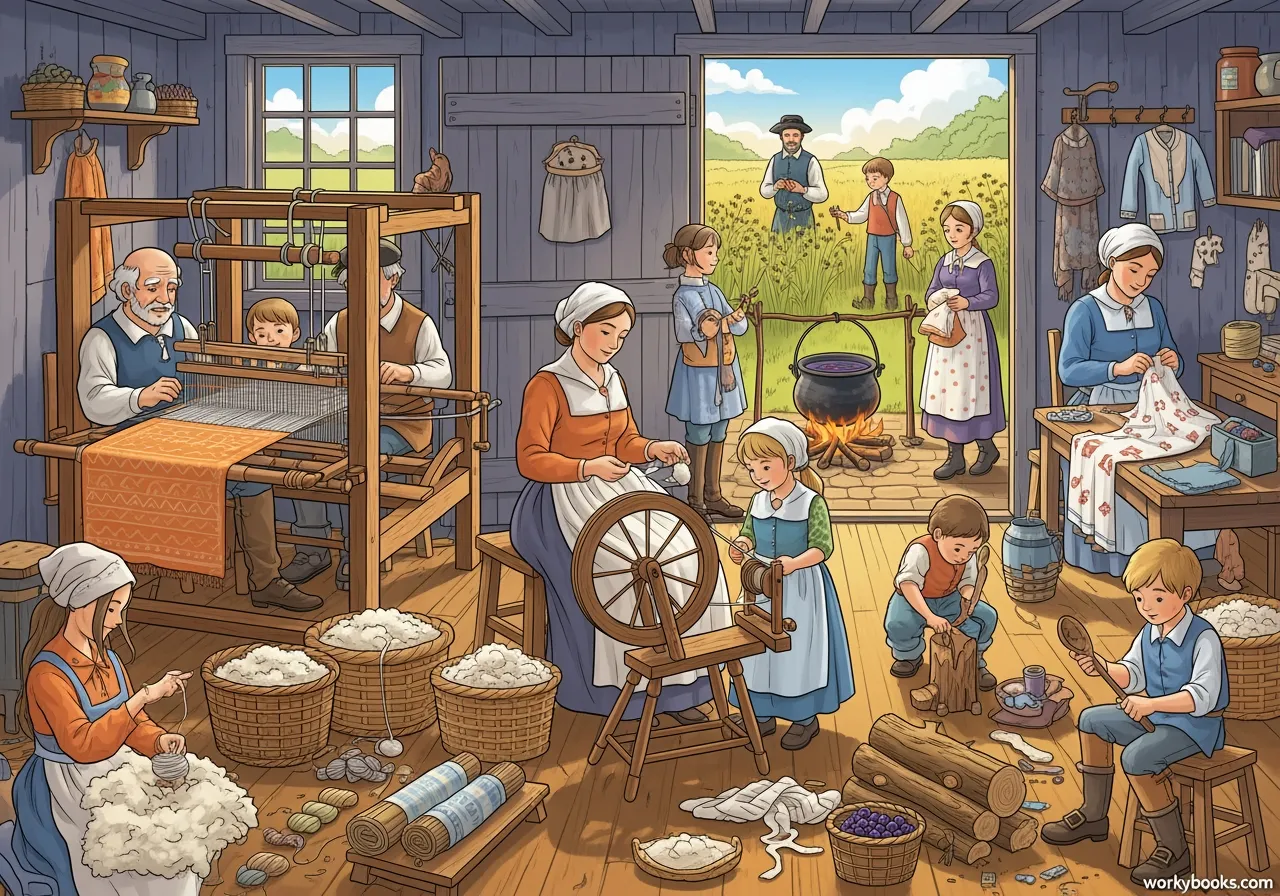
In colonial America, most families made their own clothing and goods. There were no big stores or factories. Instead, families worked together at home to make what they needed. They used materials such as wool from sheep, linen from flax plants, and leather from animal hides.
Making clothes was hard work. First, the wool or flax had to be cleaned and spun into thread. This job, called spinning, was often done by hand or with a spinning wheel. After spinning, the thread was woven into cloth using a loom. Weaving was slow and needed careful hands. When the cloth was ready, it was cut and sewn into shirts, pants, and dresses. Every piece was handmade.
Because making one shirt took many days, children usually had only two outfits. They wore one set of clothes during the week and saved the other for Sundays or special days. Clothes were patched and repaired instead of being thrown away. Shoes were also made at home, often from sturdy leather. These homemade shoes were called moccasins or simple boots.
Colonial families were very self-sufficient. This meant they could make almost everything they needed without buying from others. They made soap, candles, and tools at home. Each person in the family had a job to help. Children helped gather wool, spin thread, or sew buttons. Mothers and older daughters did most of the spinning, weaving, and sewing.
Clothing styles were simple and practical. Most people wore plain colors like brown, gray, or blue. Fancy clothes were rare and usually saved for special events. Buying fabric or clothing from Europe was very expensive, so most families used homespun cloth. This means cloth was made and dyed at home. Sometimes, families traded goods with neighbors, such as trading a shirt for flour or a pair of shoes for a tool.
The process of making homemade goods taught children important skills. They learned to work hard, solve problems, and help their families. Colonial life was not easy, but families were proud of the things they made together.
Interesting Fact: Some colonial laws even required people to wear homespun cloth to support local work and avoid buying from far away!
Comprehension quiz (8 questions)
1. What materials did colonists use for clothing?
2. What was homespun cloth?
3. Why did children have few outfits?
4. Why did families patch and repair clothes?
5. How did being self-sufficient help families?
6. What job did children help with?
7. Colonial families bought most goods from stores. True or False?
8. What does 'handmade' mean?
Common Core standards for Colonial Clothing and Homemade Goods
Explain events, procedures, ideas, or concepts in a historical, scientific, or technical text, including what happened and why, based on specific information in the text.
Determine the meaning of general academic and domain-specific words or phrases in a text relevant to a grade 4 topic or subject area.
Perfect for the way you teach
- Build comprehension skills
- Auto-graded quiz
- Differentiated reading
- Read together at home
- Improve fluency
- Quiet reading time
- Reading curriculum support
- Independent practice
- Track Lexile growth