Colonial Jobs: Blacksmiths, Bakers, and Craftsmen
Interactive passage with audio narration, comprehension questions, and printable PDF.
By completing this purchase you agree to our Terms of Use and Privacy Policy. Your subscription renews automatically until you cancel. You can cancel anytime from your account settings. All sales are final and non-refundable. Digital content is available for download in your account immediately upon purchase.
What's included
Part of this bundle

Colonial Jobs: Blacksmiths, Bakers, and Craftsmen preview and details
About this printable Colonial Jobs: Blacksmiths, Bakers, and Craftsmen reading passage (Grades 3-5)
Sample passage and quiz from Colonial Jobs: Blacksmiths, Bakers, and Craftsmen
Reading passage and comprehension quiz preview
Colonial Jobs
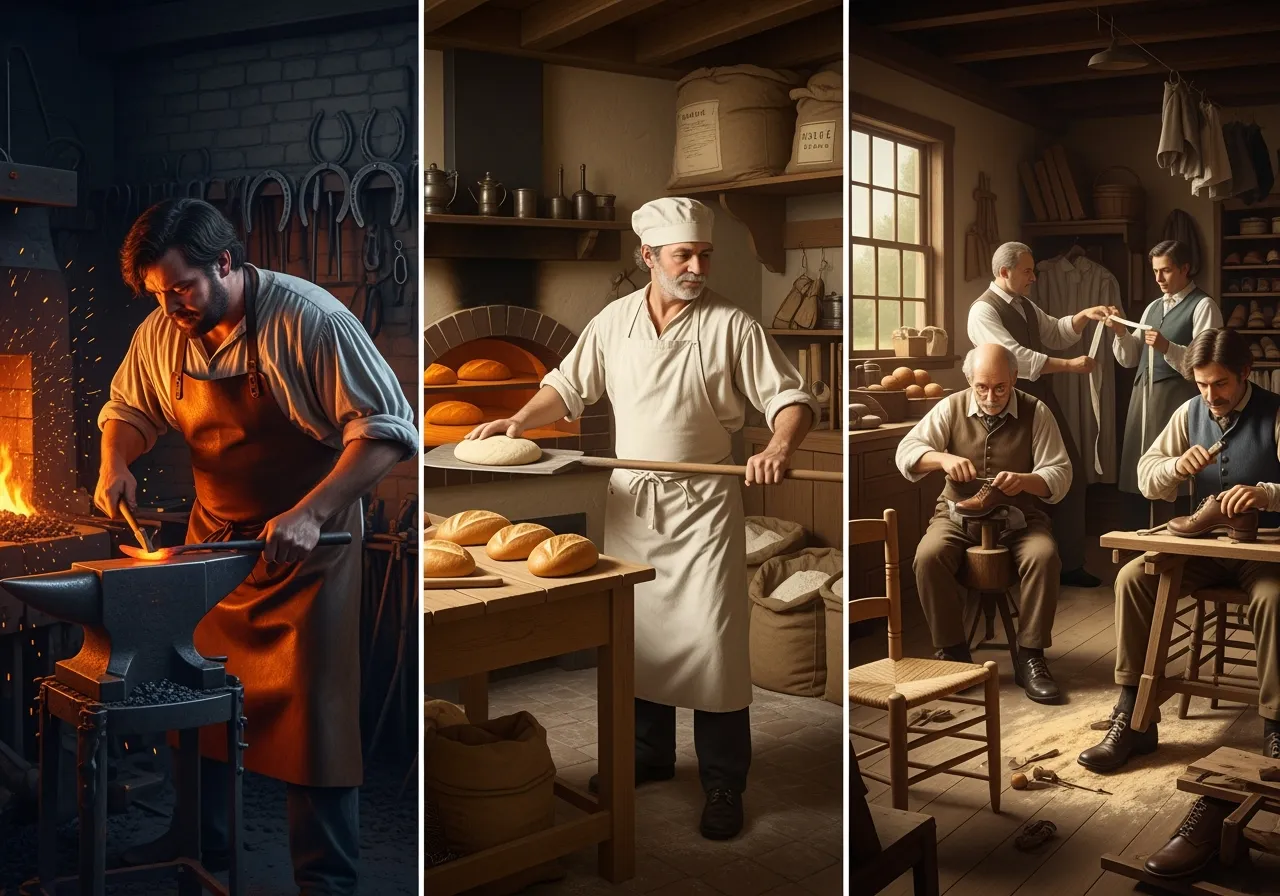
In Colonial America, every town needed skilled workers to survive and grow. These workers were called tradespeople. Tradespeople included blacksmiths, coopers, cobblers, and printers. They made the important things people used every day.
A blacksmith used hot fire and heavy tools to shape metal. Blacksmiths made horseshoes, nails, tools, and even parts for wagons. Their work was hard and very important. Without blacksmiths, people could not fix or build many things.
Coopers made barrels and buckets from wood. Barrels were used to store food, water, and supplies. Because there were no plastic or metal cans, barrels were everywhere. Coopers used special tools to bend and fit wooden pieces together. Their skill helped families and businesses keep food safe and dry.
Cobblers made and repaired shoes. In colonial times, shoes were made by hand, one pair at a time. Colonists needed strong shoes for work and travel. Cobblers also fixed old shoes so people could use them longer. This saved money and materials.
Printers used ink, paper, and large presses to make newspapers, books, and pamphlets. Printers shared news, laws, and ideas with the whole community. They helped people learn about events and important decisions. Without printers, colonists would not know what was happening in their world.
To become a tradesperson, most boys started as an apprentice. An apprentice was a young worker who learned from a master craftsman. Boys usually started at age twelve or thirteen. They worked for seven years, living with the master's family. Apprentices did many chores and watched the master closely. Over time, they learned more skills until they could do the job themselves. After finishing, they became journeymen and could work for pay. One day, they might become masters and train apprentices of their own.
Colonial jobs were difficult but gave people pride and purpose. Each tradesperson helped the community in a special way. Their skills built strong towns and lasting friendships.
Interesting Fact: Some apprentices signed special papers, called indentures, to promise they would work and learn for seven years!
Comprehension quiz (8 questions)
1. Who made barrels in colonial times?
2. How long did apprentices train?
3. What did blacksmiths use to shape metal?
4. Why were printers important?
5. What happened after apprentices finished training?
6. How did coopers help communities?
7. Colonial jobs were easy and quick. True or false?
8. What is an apprentice?
Common Core standards for Colonial Jobs: Blacksmiths, Bakers, and Craftsmen
Explain events, procedures, ideas, or concepts in a historical, scientific, or technical text, including what happened and why, based on specific information in the text.
Determine the meaning of general academic and domain-specific words or phrases in a text relevant to a grade 4 topic or subject area.
Perfect for the way you teach
- Build comprehension skills
- Auto-graded quiz
- Differentiated reading
- Read together at home
- Improve fluency
- Quiet reading time
- Reading curriculum support
- Independent practice
- Track Lexile growth