This learning resource is available in interactive and printable formats. The interactive worksheet can be played online and assigned to students. The Printable PDF version can be downloaded and printed for completion by hand.
This detailed history reading passage explores the dramatic religious changes introduced by Akhenaten, one of Egypt’s most controversial pharaohs. Students will analyze why Akhenaten abandoned Egypt’s traditional gods for the worship of Aten, how his reforms affected Egyptian society, and what archaeological evidence reveals about this period. The text connects Akhenaten’s actions to broader themes of power, religion, and social structure in Ancient Egypt. Features include a glossary of key terms, a Spanish translation, differentiated reading level version, timeline, and engaging activities such as quizzes and graphic organizers. The passage and activities align with CA HSS 6.2.3 and CCSS RH.6-8.2, supporting history and ELA skills. Read aloud audio and Spanish translation make it accessible to diverse learners.
CONTENT PREVIEW
Expand content preview
Akhenaten was a pharaoh of ancient Egypt who ruled from about 1353 to 1336 BCE.
Akhenaten was a pharaoh of ancient Egypt who ruled from about 1353 to 1336 BCE and became known for his bold religious revolution. Before Akhenaten, the Egyptians worshipped many gods, such as Amun, Osiris, and Isis. However, Akhenaten made a dramatic change by declaring that only one god, the sun disk called Aten, should be worshipped above all others. This decision transformed the religious landscape of Egypt and challenged centuries of tradition.
Akhenaten, originally named Amenhotep IV, came to the throne during the powerful 18th dynasty. Early in his reign, Akhenaten changed his name to reflect his devotion to Aten. He ordered the construction of a new capital city, Akhetaten (modern-day Amarna), located in the desert. Archaeological evidence from the city, including temples and art, shows that Akhenaten promoted Aten as the supreme deity. Unlike earlier temples, which were dark and filled with images of many gods, temples to Aten were open to sunlight and mostly empty, highlighting the importance of the sun. Inscriptions and reliefs discovered at Amarna reveal Akhenaten and his queen, Nefertiti, worshipping Aten directly, which was unusual for Egyptian royalty.
This religious shift had major effects on Egyptian society. The powerful priests of Amun lost influence, as Akhenaten closed their temples and redirected resources. Many Egyptians found the changes confusing and resisted abandoning their traditional gods. Some scholars believe Akhenaten’s reforms were partly a way to strengthen his own power by reducing the authority of the priesthood. However, little evidence remains from ordinary Egyptians, so historians debate how much daily life truly changed for most people. Letters found at Amarna suggest that the new religion was not popular outside the royal court. After Akhenaten’s death, his successors quickly restored the old religious practices.
Akhenaten’s religious revolution was short-lived but significant. It marks one of the earliest known examples of monotheism, or the belief in a single god, in world history. His actions also altered Egyptian art and architecture. Statues and carvings from his reign show more naturalistic and unusual styles. Today, archaeologists and historians continue to study the ruins of Amarna to learn more about this period of change and its impact on ancient Egypt.
Akhenaten’s story connects to broader themes in world history, such as the relationship between religion, political power, and social structure. It also raises questions about how leaders can use religious ideas to reshape societies.
Interesting Fact: Akhenaten was the father of Tutankhamun, the famous “boy king” whose tomb was found nearly intact in 1922.
Who was Akhenaten?
A pharaoh of EgyptA Greek kingA Roman emperorA priest of Amun
What god did Akhenaten worship?
OsirisAtenIsisHorus
Where was Akhetaten located?
The Nile DeltaIn the desertNear ThebesAlong the Red Sea
Why did Akhenaten close Amun’s temples?
To support Aten's worshipTo build pyramidsFor more farmlandTo honor Osiris
What happened after Akhenaten died?
Old religion was restoredAten became popularAmarna grew largerNefertiti ruled Egypt
How did Akhenaten’s reforms affect priests?
They lost powerThey became kingsThey left EgyptThey built new temples
Akhenaten started monotheism. True or false?
TrueFalse
What does dynasty mean?
One ruler onlyA family of rulersA type of priestA building style
Perfect For:
👩🏫 Teachers
• Reading comprehension practice
• Auto-graded assessments
• Literacy skill development
👨👩👧👦 Parents
• Reading practice at home
• Comprehension improvement
• Educational reading time
🏠 Homeschoolers
• Reading curriculum support
• Independent reading practice
• Progress monitoring
Reading Features:
📖
Reading Passage
Engaging fiction or nonfiction text
❓
Comprehension Quiz
Auto-graded questions
📊
Instant Feedback
Immediate results and scoring
📄
Printable Version
Download for offline reading
🔊
Read Aloud
Voice-over with word highlighting
Reviews & Ratings
No reviews yet. Be the first to share your experience!
Related Content
Geography of Ancient Egypt
This passage explores the vital role of geography in the rise of Ancient Egypt, focusing on the importance of the Nile R...
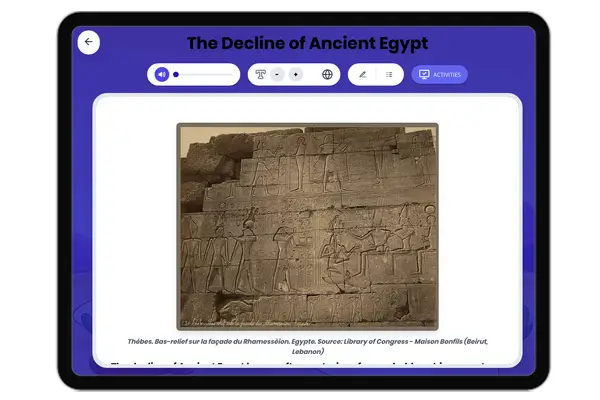
The Decline of Ancient Egypt
This detailed passage examines the decline of Ancient Egypt, exploring the complex causes behind the fall of one of hist...
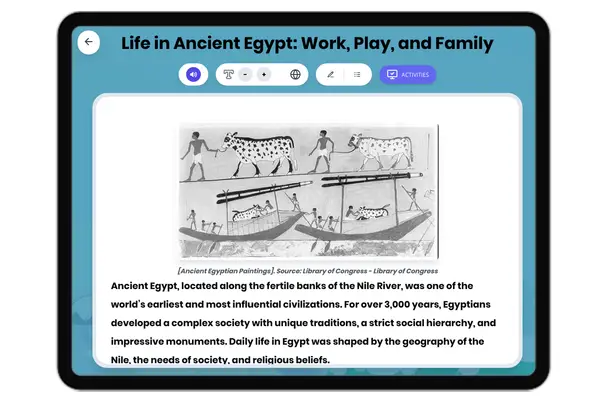
Daily Life in Ancient Egypt
Explore the fascinating world of daily life in Ancient Egypt with this comprehensive history reading passage. Students w...
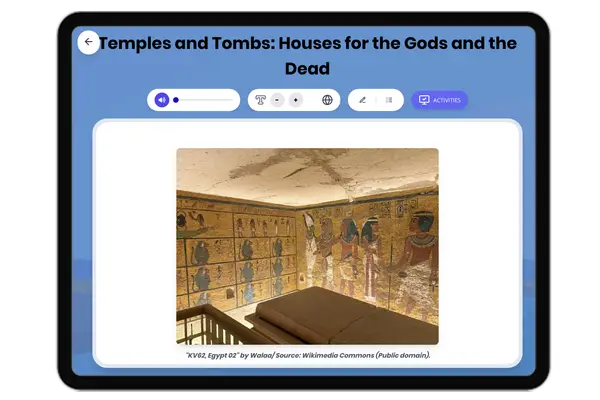
Temples and Tombs in Ancient Egypt
This passage explores the significance of temples and tombs in Ancient Egypt, focusing on their religious, social, and c...
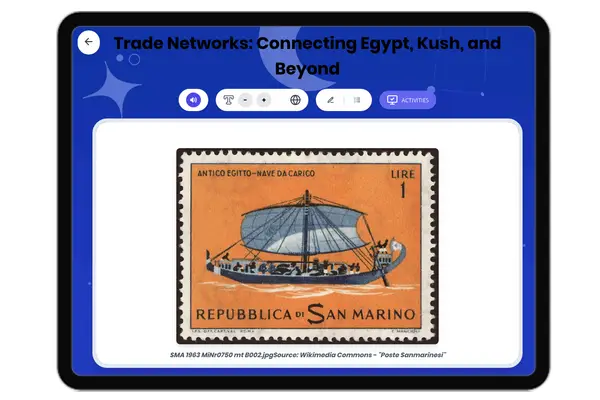
Egypt Kush Trade
This engaging history reading passage explores the complex trade networks that connected Ancient Egypt, Kush, and region...
6.2.3RH.6-8.1RH.6-8.4RH.6-8.7
New Kingdom Egypt
This engaging history reading passage explores the rise of Ancient Egypt during the New Kingdom, when Egypt became a pow...
CA HSS 6.2RH.6-8.2WHST.6-8.2
Evidence in Ancient History
This engaging history reading passage investigates how archaeologists and historians discover clues about how ancient pe...
Why Egypt Wanted Nubian Gold
This engaging passage explores the relationship between Ancient Egypt and the Kingdom of Kush (Nubia), focusing on why t...
How Pharaohs Governed Egypt
This history reading passage explores how Ancient Egypt was governed, highlighting the roles of the pharaoh, vizier, off...
Art and Architecture in Ancient Egypt
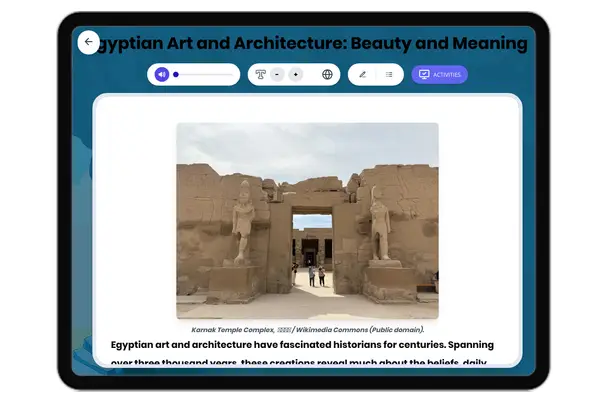
This passage explores the beauty and meaning behind Egyptian art and architecture, from the grand pyramids to detailed t...
King Narmer Unifies Egypt
This engaging history reading passage explores the unification of Ancient Egypt under King Narmer, focusing on the signi...
Ancient Egyptian Afterlife
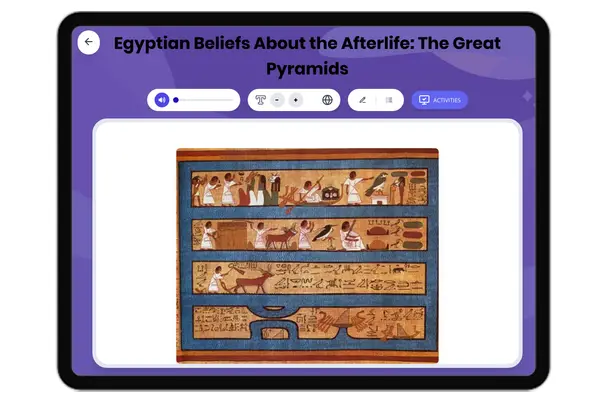
This engaging history reading passage explores ancient Egyptian beliefs about the afterlife and the construction of the ...
CA HSS 6.2RH.6-8.1RH.6-8.4
Ancient Theocracy
This engaging history reading passage explores the concept of theocracy in ancient civilizations, where priests and reli...
Ancient Mathematics
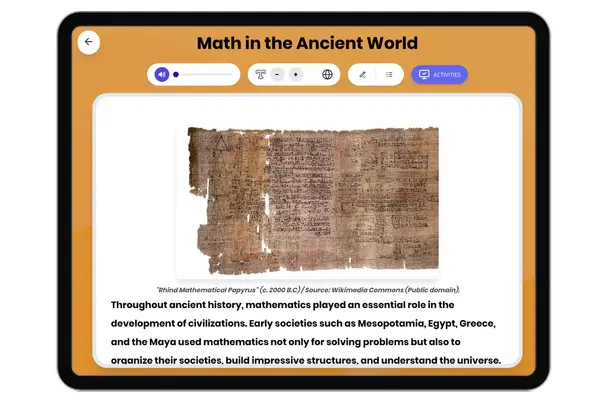
This passage explores the essential role of mathematics in ancient civilizations, including Mesopotamia, Egypt, Greece, ...
Ancient Monarchy
This reading passage explores the concept of monarchy in ancient civilizations, focusing on the origins, structure, and ...
Women in Ancient Societies
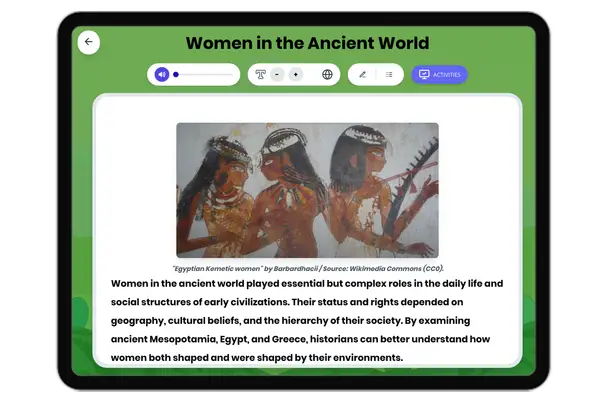
This reading passage explores the complex roles of women in the ancient world, focusing on civilizations such as Mesopot...
Ancient Science and Medicine
This comprehensive reading passage explores the development of science and medicine in ancient civilizations, including ...
Kush Conquers Egypt
This reading passage explores the fascinating period when the Kingdom of Kush, located in Nubia south of Egypt, conquere...
Slavery in Ancient World
This passage explores the complex history of slavery in the ancient world, examining its presence in societies such as M...
Ancient Civilizations and the Environment
This engaging history reading passage explores how ancient civilizations such as Mesopotamia, Egypt, and the Maya adapte...