Aleutian Islands: A Biodiversity Hotspot
Interactive passage with audio narration, comprehension questions, and printable PDF.
By completing this purchase you agree to our Terms of Use and Privacy Policy. Your subscription renews automatically until you cancel. You can cancel anytime from your account settings. All sales are final and non-refundable. Digital content is available for download in your account immediately upon purchase.
What's included
Aleutian Islands: A Biodiversity Hotspot preview and details
About this printable Aleutian Islands: A Biodiversity Hotspot science reading passage, NGSS-aligned (Grade 6)
Sample passage and quiz from Aleutian Islands: A Biodiversity Hotspot
Reading passage and comprehension quiz preview
Aleutian Islands: A Biodiversity Hotspot
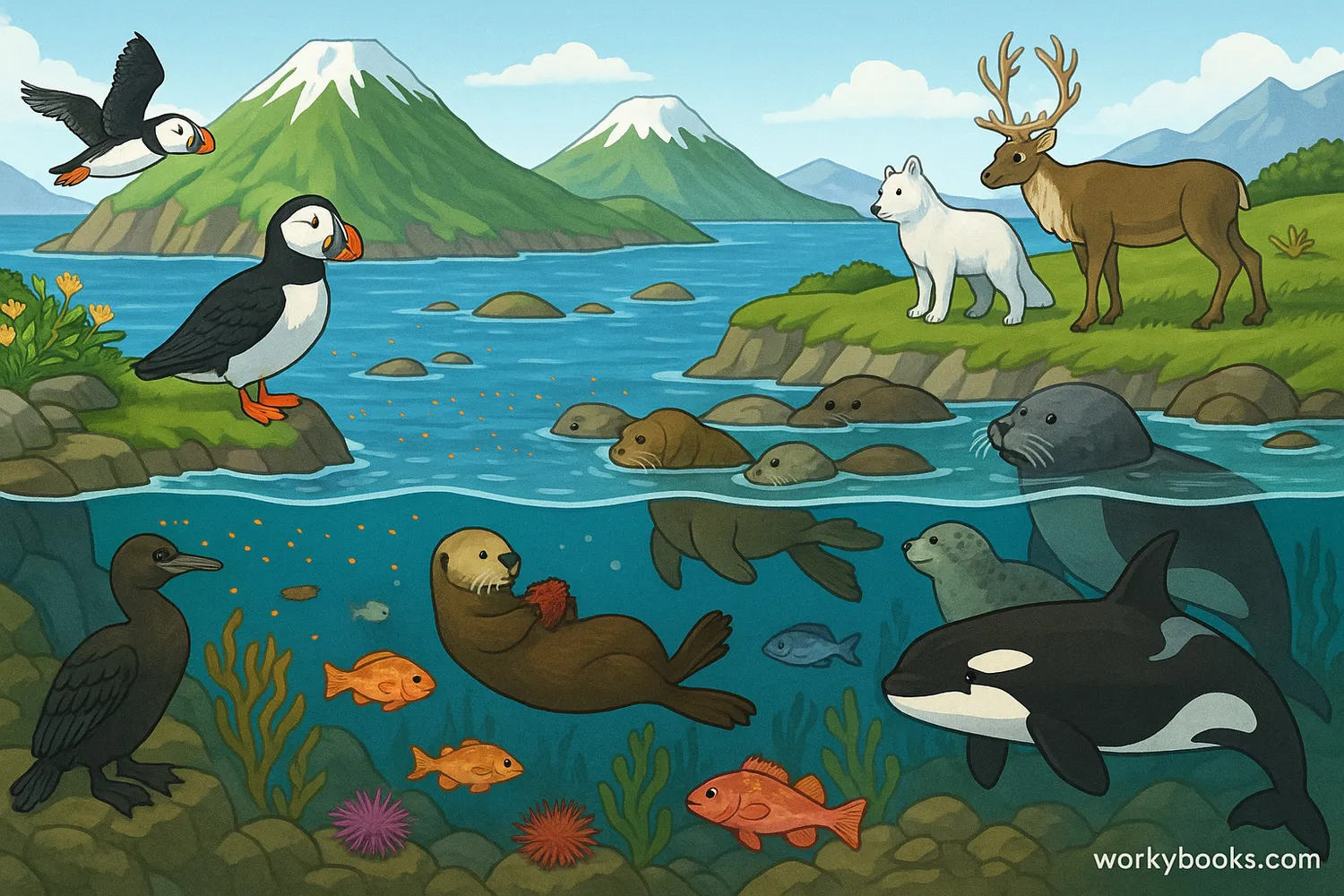
Imagine a chain of rugged, volcanic islands stretching across the North Pacific Ocean, a place where cold currents meet, creating a vibrant underwater world. This is the Aleutian Islands, a remote and breathtaking archipelago that serves as a remarkable example of a biodiversity hotspot.
A biodiversity hotspot is a region with a very high number of different plant and animal species. The Aleutian Islands are crucial for global biodiversity because of their unique ecosystem. An ecosystem is a community of living organisms interacting with their non-living environment, like the ocean, rocks, and climate. Here, the ocean's deep, nutrient-rich waters support an incredible variety of life, from tiny plankton to giant whales. This abundance of life makes the ecosystem highly resilient, meaning it can recover quickly from changes or disturbances.
The islands are a vital breeding ground and feeding area for millions of seabirds, including puffins, cormorants, and various species of gulls. On land, you might spot Arctic foxes or caribou. But it's in the surrounding waters where the Aleutians truly shine. This marine environment is home to an astonishing array of creatures: sea otters, Stellar sea lions, harbor seals, and numerous whale species like humpbacks and orcas. Fish populations are also incredibly diverse, supporting the entire food web.
Each species in this complex ecosystem has a specific role, known as an ecological niche. For example, sea otters play a key role in keeping sea urchin populations in check, which in turn protects kelp forests. These kelp forests provide shelter and food for many other marine animals. When there are many different ecological niches filled by various species, the ecosystem becomes stronger and more stable. This greater variety of life means the ecosystem is more likely to thrive, even when faced with challenges like climate change or disease. The Aleutian Islands demonstrate how interconnected all living things are and why protecting biodiversity is so important for the health of our planet.
Interesting Fact: The Aleutian Islands are part of the "Ring of Fire," an area in the Pacific Ocean where many earthquakes and volcanic eruptions occur.
Comprehension quiz (10 questions)
1. Which ocean are the Aleutian Islands located in?
2. What do sea otters help protect?
3. True or False: The Aleutian Islands have low biodiversity.
4. What does a 'biodiversity hotspot' refer to?
5. Why are the Aleutian Islands considered resilient?
6. How do cold currents impact the Aleutian ecosystem?
7. What happens if a diverse ecosystem loses one species?
8. Which factor most contributes to the Aleutians' resilience?
9. If a new predator arrived, how would a diverse ecosystem react?
10. How does a greater variety of ecological niches benefit an ecosystem?
Perfect for the way you teach
- Build comprehension skills
- Auto-graded quiz
- Differentiated reading
- Read together at home
- Improve fluency
- Quiet reading time
- Reading curriculum support
- Independent practice
- Track Lexile growth