The Giant Isopod: Biological Evolution
Interactive passage with audio narration, comprehension questions, and printable PDF.
What's included
The Giant Isopod: Biological Evolution preview and details
About this printable The Giant Isopod: Biological Evolution science reading passage, NGSS-aligned (Grades 5-8)
Sample passage and quiz from The Giant Isopod: Biological Evolution
Reading passage and comprehension quiz preview
The Giant Isopod: Biological Evolution
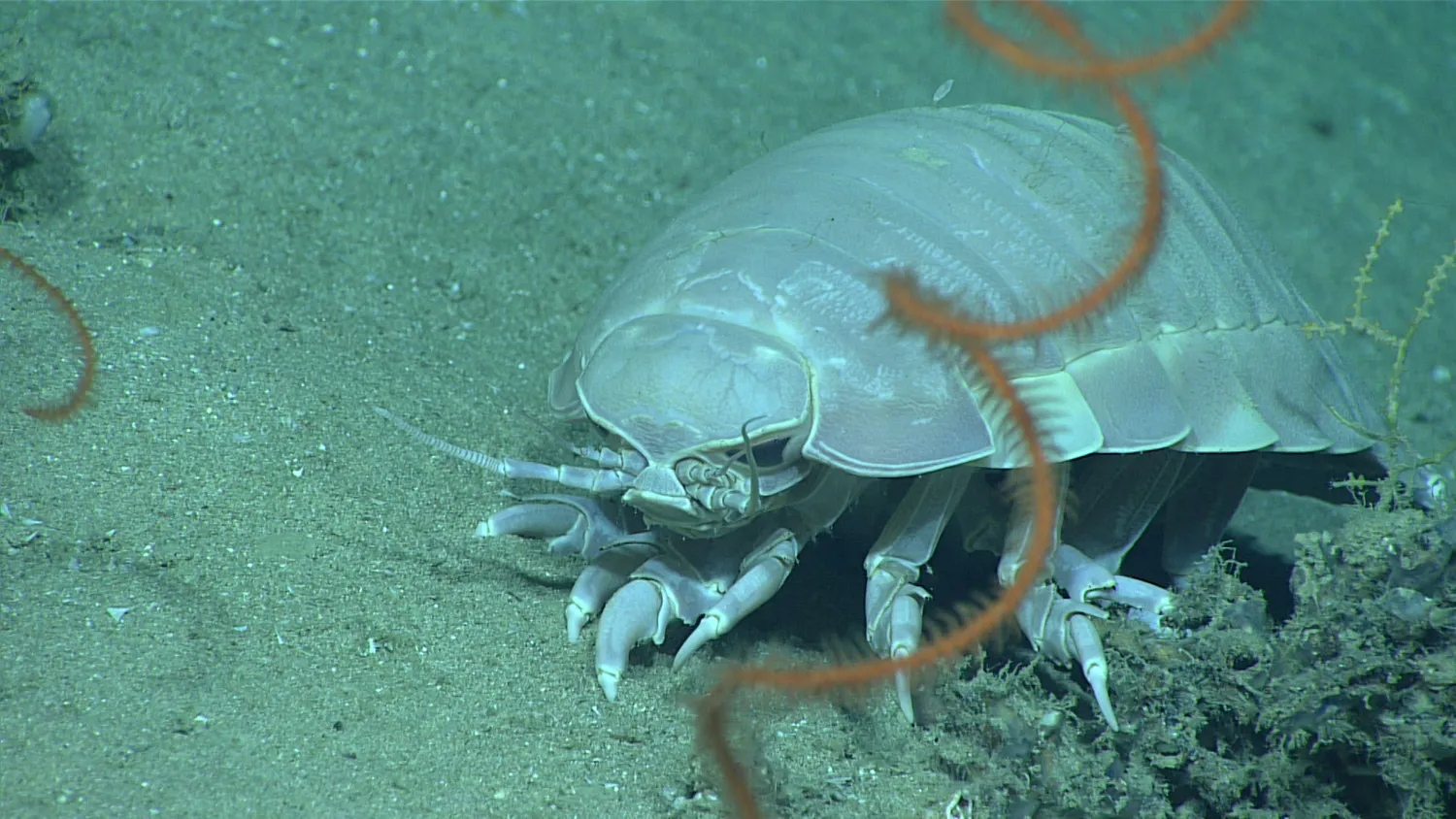
"Bathynomus giganteus" by NOAA / Wikimedia Commons.
Deep in the ocean’s darkest zones lives one of the strangest creatures on Earth—the giant isopod(Bathynomus giganteus). These armored, prehistoric-looking animals are the ocean’s version of pill bugs but can grow as large as a house cat! Found in the cold, crushing depths of the Atlantic, Pacific, and Indian Oceans, giant isopods are masters of survival in one of the planet’s harshest environments.
Giant isopods have tough, segmented exoskeletons that protect them from predators. Their flat bodies, which can reach up to 16 inches long, help them scuttle along the seafloor. Unlike their tiny land-dwelling cousins, these deep-sea giants have large, reflective eyes adapted to spotting faint traces of light in perpetual darkness.
These scavengers aren’t picky eaters—they feast on dead whales, fish, and squid that sink to the ocean floor. Since food is scarce in the deep sea, giant isopods have slow metabolisms and can survive years without eating! When they do find a meal, they use their strong jaws to tear through flesh and bone.
Giant isopods move slowly to conserve energy, but they can curl into a tight ball like roly-polies to protect themselves. Scientists believe they live for 5–10 years, though their exact lifespan remains a mystery. Females carry eggs in a special pouch until the young hatch, already looking like miniature adults.
Fun Fact: In 2023, a giant isopod in Japan named "Tama-tan" went viral for its grumpy, almost cartoonish face—proving that deep-sea creatures can be weirdly cute!
Comprehension quiz (8 questions)
1. Where do giant isopods live?
2. What is the giant isopod’s primary diet?
3. How long can giant isopods survive without food?
4. What unique ability do giant isopods share with pill bugs?
5. How large can giant isopods grow?
6. Why do giant isopods have large eyes?
7. What was the name of the famous viral giant isopod?
8. How do scientists estimate their lifespan?
Perfect for the way you teach
- Build comprehension skills
- Auto-graded quiz
- Differentiated reading
- Read together at home
- Improve fluency
- Quiet reading time
- Reading curriculum support
- Independent practice
- Track Lexile growth