This learning resource is available in interactive and printable formats. The interactive worksheet can be played online and assigned to students. The Printable PDF version can be downloaded and printed for completion by hand.
This reading passage explores the meaning, context, and contradictions of the famous phrase "All men are created equal" from the Declaration of Independence, a foundational document in U.S. History. Students will analyze how Enlightenment ideas about natural rights influenced the founders, and examine the contradiction between the Declaration’s ideals and the reality of slavery. The passage integrates primary source evidence, multiple perspectives, and disciplinary vocabulary to build critical thinking skills. Activities include a multiple-choice quiz, writing prompts, graphic organizers, and a timeline to deepen understanding. The resource aligns with CA HSS and TEKS history standards (D2.His.2.6-8, D2.His.3.6-8) and Common Core ELA standards (RI.6.3, RI.6.4, W.6.2). Differentiated versions and Spanish translation make the content accessible for diverse learners. Audio read-aloud support is included for enhanced engagement.
CONTENT PREVIEW
Expand content preview
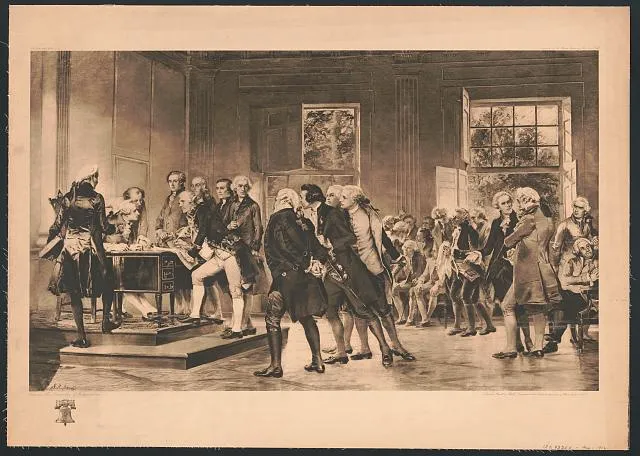
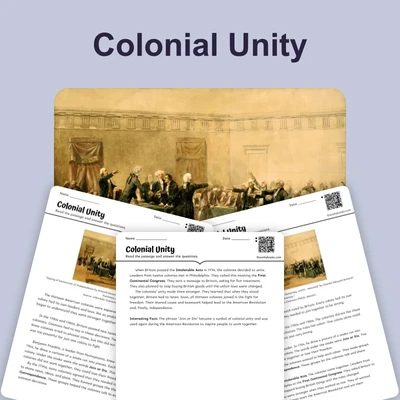
"Signing the Declaration of Independence" / Library of Congress.
The Declaration of Independence was adopted by the Second Continental Congress on July 4, 1776. This important document marked the beginning of the American colonies' struggle for freedom from Great Britain. Written mainly by Thomas Jefferson, it argued that the colonies had the right to form their own nation. The Declaration is famous for its statement that "all men are created equal," a phrase that became the core ideal of American society.
The authors of the Declaration were influenced by Enlightenment ideas from European thinkers, such as John Locke. These philosophers believed in natural rights—basic freedoms like life, liberty, and the pursuit of happiness. Jefferson and others argued that governments were created to protect these rights. If a government failed to do so, the people had the right to change or remove it. This was a radical idea at the time, challenging the authority of kings and traditional rulers.
However, the meaning of "all men are created equal" was limited in 1776. In reality, the rights described in the Declaration did not apply to everyone. At the time, women, enslaved people, and many others were excluded from these rights. The equality Jefferson described was mostly meant for white, land-owning men. This contradiction between the ideal and the reality would cause conflict and debate for centuries.
Over time, the phrase "all men are created equal" inspired many Americans to demand change. Abolitionists in the 1800s used the Declaration’s words to argue against slavery. Women’s rights activists later did the same, insisting that equality should include women. The Civil Rights Movement of the 20th century also called on the promise of equality to fight discrimination and segregation. Each generation reinterpreted the Declaration, expanding its meaning to include more people.
The Declaration of Independence remains a symbol of freedom and justice. It continues to influence American society and laws. Its words have inspired people around the world who seek their own rights and independence. Although the fight for true equality is ongoing, the Declaration’s ideals have been a powerful force for change.
Interesting Fact: The original Declaration of Independence was written on parchment with a quill pen, and only one signed copy exists today, preserved in the National Archives in Washington, D.C.
Who wrote most of the Declaration?
Thomas JeffersonGeorge WashingtonJohn AdamsBenjamin Franklin
What year was it adopted?
1776178718001750
Where is the signed copy kept?
National ArchivesWhite HouseLibrary of CongressIndependence Hall
What idea did the Enlightenment support?
Natural rightsAbsolute monarchyNo changeOnly one religion
Who was excluded from equality in 1776?
Women and enslaved peopleAll landownersOnly British soldiersAll colonists
How did the phrase 'all men are created equal' change?
Included more people over timeWas forgottenNever mentioned againBecame less important
The Declaration inspired other countries.
TrueFalse
What is an 'abolitionist'?
Someone who wanted to end slaveryA government leaderA famous writerA British soldier
Perfect For:
👩🏫 Teachers
• Reading comprehension practice
• Auto-graded assessments
• Literacy skill development
👨👩👧👦 Parents
• Reading practice at home
• Comprehension improvement
• Educational reading time
🏠 Homeschoolers
• Reading curriculum support
• Independent reading practice
• Progress monitoring
Reading Features:
📖
Reading Passage
Engaging fiction or nonfiction text
❓
Comprehension Quiz
Auto-graded questions
📊
Instant Feedback
Immediate results and scoring
📄
Printable Version
Download for offline reading
🔊
Read Aloud
Voice-over with word highlighting
Reviews & Ratings
No reviews yet. Be the first to share your experience!
Related Content
American Revolution Global Influence
This engaging U.S. History reading passage explores how the American Revolution influenced revolutions around the world,...
D2.HIS.2.3-5D2.HIS.3.3-5RI.4.3RI.4.4
American Revolution Patriots
This engaging passage explores the motivations, conflicts, and consequences of the Patriots’ fight for independence duri...
D2.HIS.2.3-5D2.HIS.3.3-5RI.4.3RI.4.4
American Revolution Economic Effects
This detailed reading passage explores the profound economic consequences of the American Revolution, focusing on how wa...
D2.HIS.2.3-5D2.HIS.3.3-5RI.4.3RI.4.4
French Alliance and American Revolution
This passage explores the complex reasons behind France’s decision to support the American Revolution. Students will ana...
D2.HIS.2.3-5D2.HIS.3.3-5RI.4.3RI.4.4
Women's Role in American Revolution
This passage explores the vital and complex roles women played during the American Revolution. Students will analyze how...
D2.HIS.2.3-5D2.HIS.3.3-5RI.4.3RI.4.4
Key Leaders of the American Revolution
This comprehensive reading passage explores the contributions of key leaders during the American Revolution, including G...
African Americans in the Revolutionary War
This engaging U.S. history reading passage explores the vital role of African Americans during the American Revolution. ...
HSS 5.5.4RI.4.4
American Industrial Revolution
This World History reading passage explores the spread of the Industrial Revolution from Britain to the United States, f...
Colonies Unite! The Big Meeting Before the American Revolution
This engaging U.S. History reading passage explores the events leading up to the American Revolution, focusing on the Fi...
D2.HIS.1.3-5D2.HIS.2.3-5RI.4.1RI.4.3
The Industrial Revolution in America
This engaging history reading passage explores the Industrial Revolution in America, a time of great change and innovati...
D2.HIS.1-6.3-5RI.4.3RI.4.4
French Revolution and America
This engaging history reading passage explores how the French Revolution divided Americans in the early years of the Uni...
D2.HIS.2.3-5D2.HIS.3.3-5RI.4.3RI.4.4
Native Americans and Slavery in Early America
This comprehensive U.S. history reading passage explores the complex relationship between Native Americans and slavery d...
D2.HIS.2.3-5D2.HIS.3.3-5RI.4.3RI.4.4
Native American Tribes Across America
This engaging history reading passage introduces students to Native American tribes across America, focusing on their da...
D2.HIS.1.3-5D2.HIS.2.3-5RI.4.1RI.4.2
France Helps America Win Independence
This engaging history reading passage explores how France helped America win independence during the American Revolution...
D2.HIS.3.3-5D2.HIS.5.3-5RI.4.3RI.4.4RI.5.3
Industrial Revolution Comes to America
This engaging U.S. history reading passage explores how the Industrial Revolution transformed the Northeast region of Am...
Slavery Expansion in South After Revolution
This rigorous U.S. history reading passage explores the expansion of slavery in the Southern states after the American R...
D2.HIS.2.3-5D2.HIS.3.3-5RI.4.3RI.4.4
Informational Text — American Flag
This informational text on the American flag will teach students about what the stars, stripes, and colors on the flag r...
RI.3.10
Thomas Paine Common Sense
This passage explores the profound impact of Thomas Paine's pamphlet, Common Sense, on the American Revolution and the m...
D2.HIS.2.3-5D2.HIS.3.3-5RI.4.3RI.4.4
Taxation Without Representation
This engaging U.S. History reading passage explores the causes of the American Revolution, focusing on the theme of 'tax...
D2.HIS.2.3-5D2.HIS.3.3-5RI.4.3RI.4.4
Benjamin Franklin in Colonial America
This U.S. History reading passage explores the life and influence of Benjamin Franklin, a key colonial leader whose idea...