American Industrial Revolution — Reading Comprehension
Rate this
Premium Resource
Present
Present in classroom. No work saved
Assign
Classroom with student accounts, Track progress
Quick Play
No student accounts, assign with a link
Grades
5
6
7
8
PRINT+DIGITAL RESOURCE
This learning resource is available in interactive and printable formats. The interactive worksheet can be played online and assigned to students. The Printable PDF version can be downloaded and printed for completion by hand.
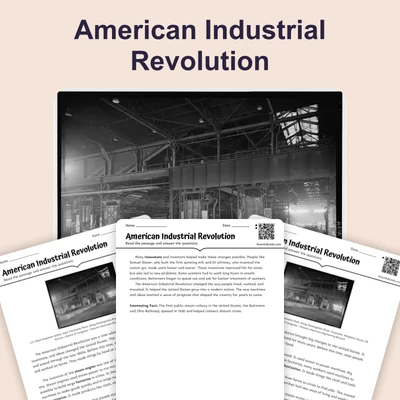
This World History reading passage explores the spread of the Industrial Revolution from Britain to the United States, focusing on its beginnings in New England textile mills and its expansion across the country. Students will learn how new inventions, such as the spinning jenny and the cotton gin, and the rise of the factory system transformed American society, labor, and the economy. The text highlights key individuals like Samuel Slater and Francis Cabot Lowell, details changes in daily life, and examines the impact on different social groups. Activities include a multiple-choice quiz, writing prompts, graphic organizers, and a glossary of key terms to build historical and academic vocabulary. Spanish translation and read aloud audio are provided. This passage aligns with HSS 7.11 and RH.6-8.1 standards, supporting history and literacy skills.
CONTENT PREVIEW
Expand content preview
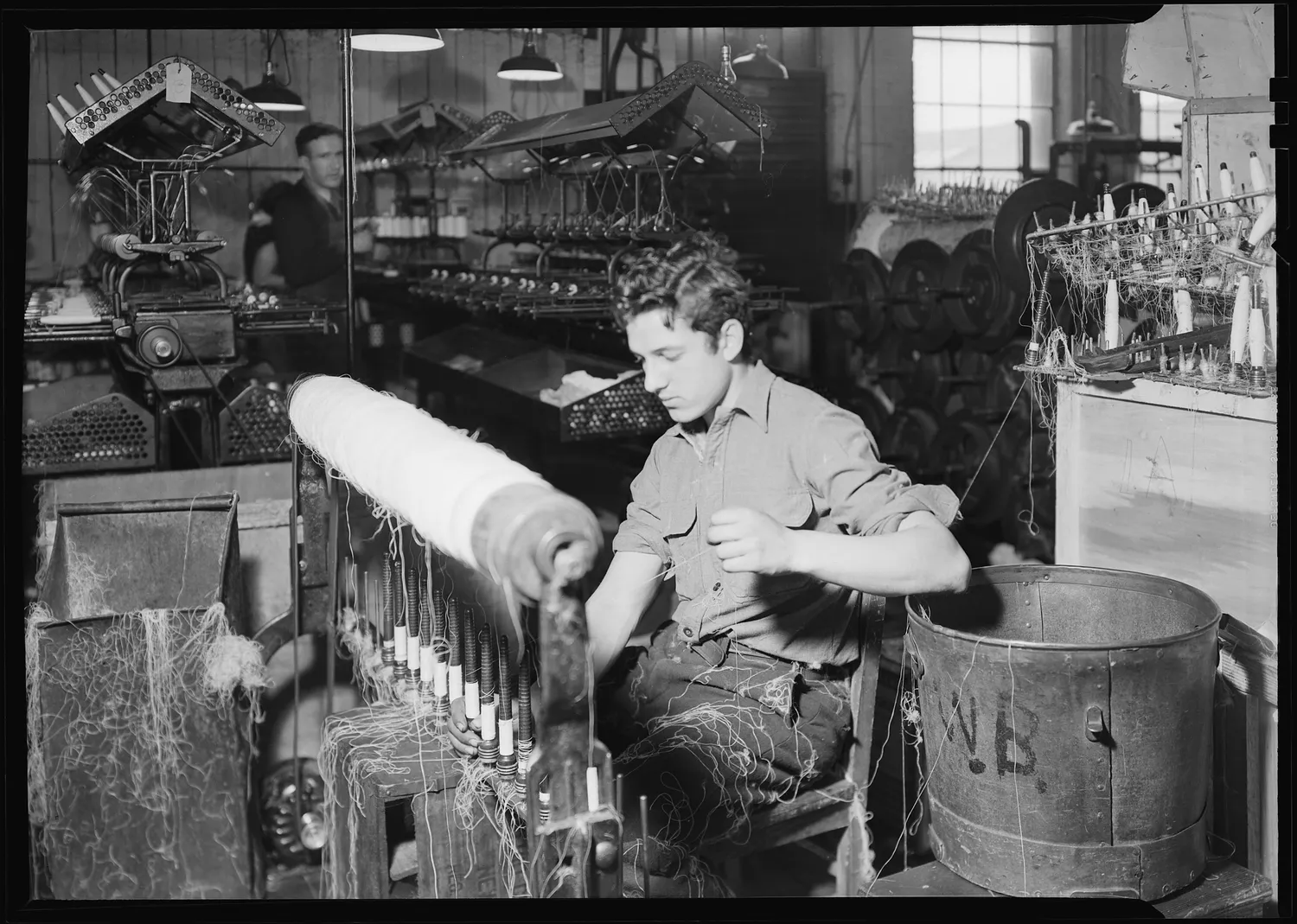
"Paterson, New Jersey - Textiles. (Textile worker.) - NARA - 518594" by Lewis Hine / Source: Wikimedia Commons (Public domain).
The Industrial Revolution began in Great Britain in the late 1700s, but its powerful changes soon reached the United States. This period was marked by the rise of machines and factories that transformed how people worked, lived, and produced goods. In America, the movement started in New England, where natural resources and rivers provided the perfect conditions for new industries to grow.
In 1790, Samuel Slater, an English textile worker, built the first successful water-powered cotton-spinning factory in Pawtucket, Rhode Island. He used his memory to reconstruct British machinery, which was illegal to export at the time. This factory became the model for textile mills across New England. Mills used water wheels to power machines that spun cotton into thread, making cloth much faster than by hand. Primary source letters from Slater himself describe his challenges in building the mill and finding skilled workers.
Soon, other inventors and entrepreneurs improved the factory system. In 1814, Francis Cabot Lowell opened a mill in Waltham, Massachusetts, that combined spinning and weaving in one building. The Lowell mills hired young women, known as “Lowell Girls,” who lived in company boardinghouses and followed strict rules. Factory work was often hard and noisy, but it gave many women new economic opportunities. Documents from the time, such as factory rules and worker diaries, show both the promise and the difficulties of this new way of life.
Several inventions helped expand American industry. Eli Whitney’s cotton gin (1793) made it easier to separate cotton fibers from seeds, leading to more cotton sent to Northern mills. Improvements in transportation, like canals and railroads, allowed goods and raw materials to move quickly and cheaply across long distances. By the mid-1800s, the factory system had spread from New England to the Midwest, changing cities and rural areas alike. New social classes formed, including a growing urban working class and factory owners.
The Industrial Revolution reshaped American society by shifting people from farms to cities and creating new kinds of jobs. It brought both progress and challenges, including long work hours, child labor, and pollution. Over time, labor unions and government reforms began to improve working conditions. The spread of industrialization in the United States set the stage for the country’s rise as a major economic power.
The story of American industrialization connects to global trends in technology and society. Understanding these changes helps us see how geography, innovation, and human choices shape history.
Interesting Fact: The nickname "Yankee ingenuity" was used to describe the creative problem-solving skills of American inventors during this period.
Who built the first U.S. textile mill?
Samuel SlaterEli WhitneyFrancis LowellHenry Ford
Where did the first factories start?
New EnglandThe SouthThe WestCalifornia
What powered early textile mills?
Water wheelsSteam enginesElectricitySolar power
Why was the cotton gin important?
It cleaned cotton fasterIt powered factoriesIt built railroadsIt made thread
What was one effect of factories?
More people moved to citiesFewer jobs existedFarms grew largerGold was discovered
Who were the Lowell Girls?
Young women mill workersFactory ownersInventorsRailroad builders
The Industrial Revolution began in America in 1790.
TrueFalse
What is a factory system?
Making goods in one large placeFarming with machinesBuilding railroadsSailing ships
Perfect For:
👩🏫 Teachers
• Reading comprehension practice
• Auto-graded assessments
• Literacy skill development
👨👩👧👦 Parents
• Reading practice at home
• Comprehension improvement
• Educational reading time
🏠 Homeschoolers
• Reading curriculum support
• Independent reading practice
• Progress monitoring
Reading Features:
📖
Reading Passage
Engaging fiction or nonfiction text
❓
Comprehension Quiz
Auto-graded questions
📊
Instant Feedback
Immediate results and scoring
📄
Printable Version
Download for offline reading
🔊
Read Aloud
Voice-over with word highlighting
Reviews & Ratings
No reviews yet. Be the first to share your experience!
Related Content
Industrial Revolution Global Impact
This world history reading passage examines the global impact of the Industrial Revolution, focusing on how industrializ...
Capitalism Industrial Revolution
This engaging world history passage examines the rise of capitalism and its critical role in the Industrial Revolution. ...
Industrial Revolution Child Labor
This rigorous world history reading passage examines the harsh reality of child labor in factories and mines during the ...
Industrial Revolution Working Conditions
This world history reading passage examines the working conditions and workers' struggles during the Industrial Revoluti...
Pollution and the Industrial Revolution
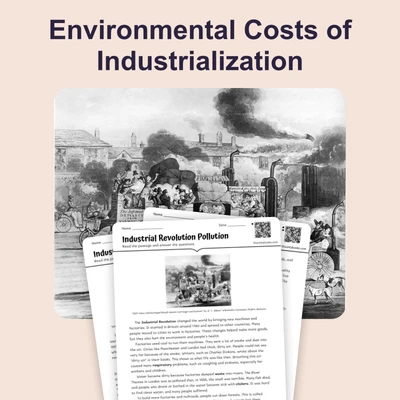
This passage explores the environmental costs of industrialization during the Industrial Revolution, focusing on air and...
The Steam Engine Revolution
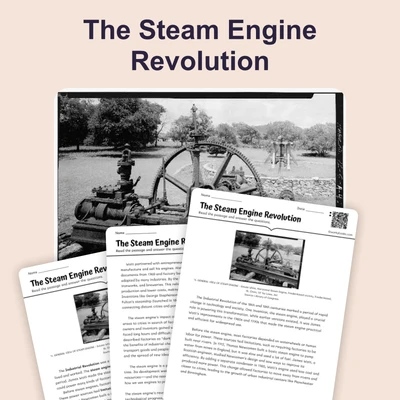
This rigorous world history passage explores the origins and impact of the steam engine during the Industrial Revolution...
New Social Classes: Industrial Society
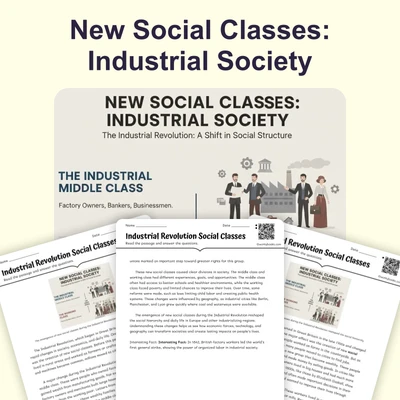
This reading passage examines how the Industrial Revolution led to the development of new social classes and changed the...
Women in the Industrial Workforce
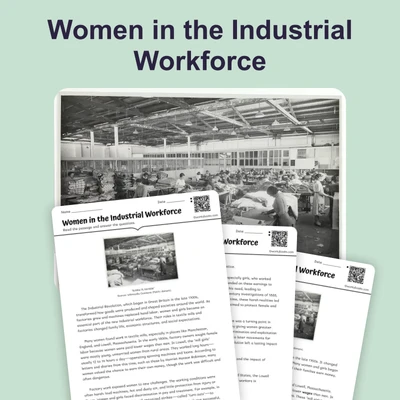
This rigorous world history reading passage explores the key role women and girls played in the industrial workforce dur...
The Growth of Factory Towns and Industrial Cities
This history reading passage examines how the Industrial Revolution caused the rapid growth of factory towns and industr...
Steamboat Industrial Revolution
This engaging passage introduces students to the impact of steamboats during the Industrial Revolution in U.S. history. ...
D2.HIS.1.3-5D2.HIS.2.3-5RI.4.3RI.4.4
Industrial Revolution Cities
This engaging U.S. history passage explores the growth and transformation of American cities during the Industrial Revol...
D2.HIS.2.3-5D2.HIS.3.3-5RI.4.3RI.4.4
Industrial Revolution Pollution
This reading passage explores the impact of the Industrial Revolution on pollution in the United States, focusing on the...
D2.HIS.2.3-5D2.HIS.3.3-5RI.4.3RI.4.4
Industrial Revolution Benefits
This engaging reading passage explores the positive effects of the Industrial Revolution in the United States, highlight...
D2.HIS.3.3-5D2.HIS.14.3-5RI.4.3RI.4.4
Child Labor in the Industrial Revolution
This engaging history reading passage introduces students to the topic of child labor during the Industrial Revolution i...
D2.HIS.2.3-5D2.HIS.16.3-5RI.4.3RI.4.4
Industrial Revolution Schools
This engaging reading passage explores how schools changed during the Industrial Revolution and Progressive Era in the U...
D2.HIS.2.3-5D2.HIS.3.3-5RI.4.3RI.4.4
American Revolution Global Influence
This engaging U.S. History reading passage explores how the American Revolution influenced revolutions around the world,...
D2.HIS.2.3-5D2.HIS.3.3-5RI.4.3RI.4.4
The Industrial Revolution in America
This engaging history reading passage explores the Industrial Revolution in America, a time of great change and innovati...
D2.HIS.1-6.3-5RI.4.3RI.4.4
From Farms to Factories
This engaging passage, "From Farms to Factories," delves into the profound changes brought by the Industrial Revolution ...
Textiles Industry Revolution
This history reading passage examines how the spinning jenny, water frame, and power loom revolutionized textile product...