France Helps America Win Independence — Reading Comprehension
Rate this|
1
Premium Resource
Present
Present in classroom. No work saved
Assign
Classroom with student accounts, Track progress
Quick Play
No student accounts, assign with a link
Grades
3
4
5
Standards
D2.HIS.3.3-5
D2.HIS.5.3-5RI.4.3
RI.4.4
RI.5.3
RI.5.4
PRINT+DIGITAL RESOURCE
This learning resource is available in interactive and printable formats. The interactive worksheet can be played online and assigned to students. The Printable PDF version can be downloaded and printed for completion by hand.
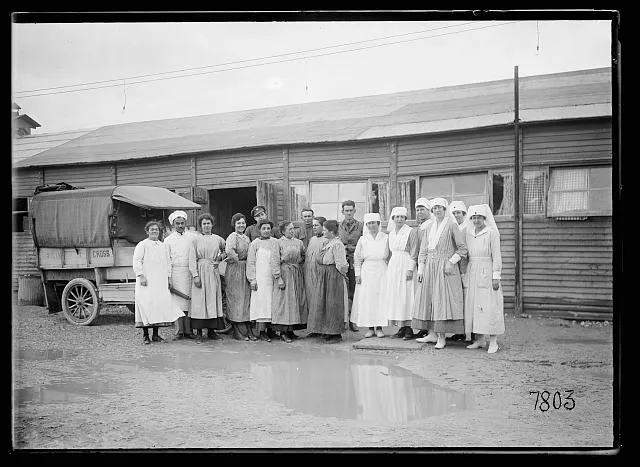
This engaging history reading passage explores how France helped America win independence during the American Revolution, aligning with the C3 Framework and Common Core ELA standards. Students will discover the causes, key figures like George Washington and King Louis XVI, and the effect of French support on the war's outcome. The passage uses clear language and a cause-and-effect structure to build literacy skills while teaching important U.S. history content. Included are interactive multiple-choice and writing activities, a glossary of key terms, a timeline of major events, and a Spanish translation for bilingual learning. An authentic public domain image and read aloud audio enhance understanding. This resource is perfect for building foundational knowledge about international alliances and their role in shaping American independence.
CONTENT PREVIEW
Expand content preview
Miss Wills, her staff and French help in front of the American Red Cross line-of-communication Canteen at Is-sur-Tille. Source: Library of Congress - Library of Congress
The night of December 25, 1776, was cold and dark. The American Revolution was not going well for the Continental Army. Many soldiers were tired and hungry. Some had no shoes, and hope was slipping away. George Washington, the leader of the army, knew something needed to change.
Washington planned a bold move. He decided to lead his troops across the icy Delaware River. The goal was to surprise the enemy, the Hessian soldiers, who were camped in Trenton, New Jersey. It was a risky plan because the river was wide and filled with chunks of ice. The weather was freezing, and it was snowing hard. But Washington believed a surprise attack could turn the war around.
On Christmas night, the soldiers quietly climbed into boats. Rowers pushed the boats through the icy water. Some men wrapped rags around their feet to stay warm. The crossing took all night. By early morning, everyone had reached the New Jersey side of the river.
Once on land, Washington’s men marched to Trenton. The snow and cold made the march slow and hard. Some soldiers left bloody footprints in the snow. But they did not give up. When they arrived, they attacked the Hessian camp by surprise. The enemy was not ready and quickly surrendered.
This victory at Trenton gave the Continental Army new hope. Many soldiers who thought about leaving decided to stay. People across the colonies heard about Washington’s success. It showed them that the American cause was not lost. More men joined the army, and the spirit of freedom grew stronger.
Washington’s decision to cross the Delaware was a turning point in the American Revolution. It showed the importance of bravery, leadership, and teamwork. The victory at Trenton helped save the Revolution when it almost failed.
Interesting Fact: The famous painting “Washington Crossing the Delaware” was created many years later by Emanuel Leutze in 1851.
When did Washington cross the Delaware?
December 25, 1776July 4, 1776January 1, 1777October 31, 1776
Who led the Continental Army?
George WashingtonThomas JeffersonBenjamin FranklinJohn Adams
Where did the surprise attack happen?
TrentonBostonPhiladelphiaNew York
Why did Washington plan a surprise attack?
To change the war's courseFor funTo find suppliesTo escape the enemy
How did the victory at Trenton help?
Gave new hopeEnded the warLost more soldiersMade more enemies
What was one problem crossing the river?
Icy waterNo boatsNo leaderEnemy ships
Washington’s plan was risky. (True/False)
TrueFalse
What does 'surrendered' mean?
Gave upRan awayWonWaited
Perfect For:
👩🏫 Teachers
• Reading comprehension practice
• Auto-graded assessments
• Literacy skill development
👨👩👧👦 Parents
• Reading practice at home
• Comprehension improvement
• Educational reading time
🏠 Homeschoolers
• Reading curriculum support
• Independent reading practice
• Progress monitoring
Reading Features:
📖
Reading Passage
Engaging fiction or nonfiction text
❓
Comprehension Quiz
Auto-graded questions
📊
Instant Feedback
Immediate results and scoring
📄
Printable Version
Download for offline reading
🔊
Read Aloud
Voice-over with word highlighting
Reviews & Ratings
No reviews yet. Be the first to share your experience!
Related Content
Traditional Native American Clothing
This engaging history passage explores traditional Native American clothing and how it reflected the environment, values...
D2.HIS.2.3-5D2.HIS.3.3-5RI.4.3RI.4.4
The Iroquois Confederacy: A System of Peace
This engaging U.S. History reading passage introduces students to the Iroquois Confederacy, a powerful alliance of Nativ...
D2.HIS.2.3-5D2.HIS.3.3-5RI.4.3RI.4.4
Native American Respect for Nature
This engaging history reading passage explores Native American respect for nature, emphasizing the close relationship be...
D2.HIS.2.3-5D2.HIS.3.3-5RI.4.3RI.4.4
Colonial Jobs: Blacksmiths, Bakers, and Craftsmen
This engaging history reading passage explores the vital roles of blacksmiths, bakers, and craftsmen in colonial America...
D2.HIS.2.3-5D2.HIS.3.3-5RI.4.3RI.4.4
Benjamin Franklin: Printer, Inventor, and Leader
This history reading passage explores the life and achievements of Benjamin Franklin, one of America's most important ea...
D2.HIS.2.3-5D2.HIS.3.3-5RI.4.1RI.4.3
African Americans Fight for Freedom
This educational passage explores the brave and inspiring story of how African Americans fought for freedom in the Unite...
D2.HIS.2.3-5D2.HIS.3.3-5RI.4.3RI.4.4
George Washington: Our First President
This engaging U.S. history reading passage introduces students to George Washington, America’s first president, through ...
D2.HIS.2.3-5D2.HIS.3.3-5RI.4.3RI.4.4
Life as a Pioneer Family
This history reading passage explores the daily life of a pioneer family as they moved west and settled on new land in A...
D2.HIS.2.3-5D2.HIS.3.3-5RI.4.3RI.4.4
Building Log Cabin Homes
This engaging history reading passage explores the process and significance of building log cabin homes in the early Ame...
D2.HIS.2.3-5D2.HIS.3.3-5RI.4.3RI.4.4
Women's Hard Work on the Frontier
This reading passage explores the important role of women on the American frontier. Students will learn how women faced ...
D2.HIS.2.3-5D2.HIS.3.3-5RI.4.1RI.4.3
Blue and Gray: Union vs. Confederate
This reading passage explores the history of the Union and Confederate sides during the American Civil War, focusing on ...
D2.HIS.2.3-5D2.HIS.3.3-5RI.4.3RI.4.4
Children and Women During the Civil War
This engaging history reading passage explores the important roles of children and women during the Civil War. Aligned w...
D2.HIS.2.3-5D2.HIS.3.3-5D2.HIS.16.3-5RI.4.1
General Robert E. Lee and Grant
This reading passage introduces students to General Robert E. Lee and General Ulysses S. Grant, two important leaders du...
D2.HIS.2.3-5D2.HIS.3.3-5RI.4.3RI.4.4
Thomas Edison Invents the Light Bulb
This passage explores the inspiring story of Thomas Edison and his invention of the light bulb, a key moment in U.S. his...
D2.HIS.2.3-5D2.HIS.3.3-5RI.4.3RI.4.4
Starting a New Life in America
This engaging passage for students explores the journey of immigrants starting a new life in America. Aligned with the C...
D2.HIS.2.3-5D2.HIS.3.3-5RI.4.3RI.4.4
The Space Race to the Moon
This engaging U.S. history reading passage explores the Space Race to the Moon, highlighting the fierce competition betw...
D2.HIS.2.3-5D2.HIS.3.3-5RI.4.1RI.4.3
Native American Civilizations Before European Contact
This engaging U.S. History reading passage explores Native American civilizations before European contact, focusing on t...
D2.HIS.2.3-5D2.HIS.3.3-5RI.4.3RI.4.4
Native vs European Land Views
This passage examines the contrasting beliefs about land between Native American societies and European settlers, highli...
D2.HIS.2.3-5D2.HIS.3.3-5RI.4.3RI.4.4
Women's Power in Iroquois Society
This passage explores women's power and influence in Iroquois society, focusing on their roles in government, family, an...