French Alliance and American Revolution — Reading Comprehension
Rate this|
1
Premium Resource
Present
Present in classroom. No work saved
Assign
Classroom with student accounts, Track progress
Quick Play
No student accounts, assign with a link
Grades
6
7
8
Standards
D2.HIS.2.3-5
D2.HIS.3.3-5
RI.4.3
RI.4.4
W.4.2
PRINT+DIGITAL RESOURCE
This learning resource is available in interactive and printable formats. The interactive worksheet can be played online and assigned to students. The Printable PDF version can be downloaded and printed for completion by hand.
This passage explores the complex reasons behind France’s decision to support the American Revolution. Students will analyze multiple perspectives, including French motives, British reactions, and the strategic needs of the American colonies. The text models historical reasoning and evidence-based analysis, using vocabulary appropriate for middle schoolers. A primary source excerpt from Benjamin Franklin is embedded to bring the era to life. Students will read about the diplomatic efforts, the impact of the Battle of Saratoga, and the consequences of French involvement for both nations. Activities include a timeline, reading comprehension questions, a writing task, and a graphic organizer, all aligned to C3 Framework (D2.His.2.3-5, D2.His.3.3-5) and Common Core (RI.4.3, RI.4.4, W.4.2) standards. Read aloud audio and a Spanish translation help ensure accessibility for all learners. This resource is designed for inquiry-based history instruction and supports disciplinary literacy skills.
CONTENT PREVIEW
Expand content preview
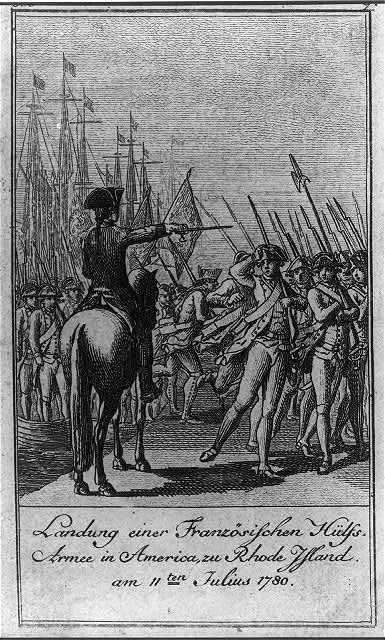
"Landing of a French Auxiliary Army in America, at Rhode Island, on July 11, 1780" by Daniel Chodowiecki (1726–1801) / Library of Congress.
The American Revolution was a struggle for independence between the thirteen colonies and the powerful British Empire. The British military was well-trained and equipped, making victory seem unlikely for the colonists. However, the situation changed dramatically after the colonies formed an alliance with France in 1778. This partnership provided the Americans with much-needed military and financial aid, which became a turning point in the war.
Before the French alliance, the Continental Army faced many challenges. Supplies and money were scarce, and the British had a strong navy that controlled the seas. The American leaders, including Benjamin Franklin, worked hard to convince France to support their cause. The French government eventually agreed, motivated by their own rivalry with Britain and the desire to weaken their old enemy. In February 1778, both sides signed the Treaty of Alliance, making their partnership official and promising mutual support.
French intervention significantly changed the course of the war. France sent thousands of troops, including professional soldiers and skilled officers like Marquis de Lafayette, to fight alongside the Continental Army. French warships challenged British naval power, disrupting their supply lines and blockades. In addition, the French provided loans, weapons, and supplies that the Americans desperately needed to continue fighting. This international support boosted the morale of American forces and gave them a chance to compete with the British on equal terms.
The alliance also created new challenges. French and American commanders sometimes disagreed about strategy and leadership. Communication was difficult, as messages had to cross the Atlantic Ocean. Despite these obstacles, the partnership achieved remarkable success, especially at the Siege of Yorktown in 1781. During this battle, French troops and ships played a crucial role in trapping the British army, forcing General Cornwallis to surrender. This victory convinced Britain to begin peace talks, eventually leading to American independence.
French involvement in the American Revolution had far-reaching consequences. It demonstrated the impact of foreign intervention in local conflicts and inspired other countries to seek alliances in their own struggles. The alliance also left France with financial problems, which contributed to unrest and revolution in France just a few years later. The American Revolution showed that international cooperation can change the outcome of major historical events, but it can also create new challenges and consequences.
Interesting Fact: The first formal salute to the American flag by another country came from a French warship in 1777, even before the official alliance was signed.
When did France join the American Revolution?
1778178317751789
What was signed in February 1778?
Treaty of AllianceTreaty of ParisDeclaration of IndependenceBill of Rights
Which battle led to British surrender?
Siege of YorktownBattle of LexingtonBattle of SaratogaBattle of Bunker Hill
Why did France help the colonies?
To weaken BritainTo gain landTo support BritainTo end slavery
How did French warships help the Americans?
Disrupted British supply linesTrained American soldiersFought in EuropeSigned the Declaration
What new problem did the alliance cause France?
Financial troublesLoss of landMore coloniesFewer allies
The French alliance was not important. True or False?
TrueFalse
What does 'alliance' mean?
A partnership between groupsA type of weaponA British lawA military leader
Perfect For:
👩🏫 Teachers
• Reading comprehension practice
• Auto-graded assessments
• Literacy skill development
👨👩👧👦 Parents
• Reading practice at home
• Comprehension improvement
• Educational reading time
🏠 Homeschoolers
• Reading curriculum support
• Independent reading practice
• Progress monitoring
Reading Features:
📖
Reading Passage
Engaging fiction or nonfiction text
❓
Comprehension Quiz
Auto-graded questions
📊
Instant Feedback
Immediate results and scoring
📄
Printable Version
Download for offline reading
🔊
Read Aloud
Voice-over with word highlighting
Reviews & Ratings
No reviews yet. Be the first to share your experience!
Related Content
Native American Tribes Across America
This engaging history reading passage introduces students to Native American tribes across America, focusing on their da...
D2.HIS.1.3-5D2.HIS.2.3-5RI.4.1RI.4.2
Teepees: Homes on the Great Plains
This engaging history reading passage introduces students to teepees, the unique homes of Native American tribes on the ...
D2.HIS.2.3-5D2.HIS.14.3-5RI.4.1RI.4.2RI.4.4
Traditional Native American Clothing
This engaging history passage explores traditional Native American clothing and how it reflected the environment, values...
D2.HIS.2.3-5D2.HIS.3.3-5RI.4.3RI.4.4
The Iroquois Confederacy: A System of Peace
This engaging U.S. History reading passage introduces students to the Iroquois Confederacy, a powerful alliance of Nativ...
D2.HIS.2.3-5D2.HIS.3.3-5RI.4.3RI.4.4
The Cherokee Nation: History and Culture
This reading passage explores the rich history and culture of the Cherokee Nation, one of the largest Native American tr...
D2.HIS.2.3-5D2.HIS.14.3-5RI.4.3RI.4.4RI.4.10
The Sioux: Warriors and Tribal Leaders
This history reading passage explores the Sioux Nation, focusing on their roles as warriors and tribal leaders. Students...
D2.HIS.1.3-5D2.HIS.2.3-5RI.4.1RI.4.3
Native American Respect for Nature
This engaging history reading passage explores Native American respect for nature, emphasizing the close relationship be...
D2.HIS.2.3-5D2.HIS.3.3-5RI.4.3RI.4.4
Jamestown: The First Permanent English Colony
This engaging history passage explores the founding of Jamestown, the first permanent English colony in America. Aligned...
D2.HIS.1.3-5D2.HIS.2.3-5RI.4.3RI.4.4
Pocahontas and the Powhatan People
This engaging reading passage explores the life of Pocahontas and the Powhatan people and their important role in early ...
D2.HIS.1.3-5D2.HIS.2.3-5RI.4.1RI.4.3
Colonial Children: School and Chores
This reading passage explores the daily lives of colonial children, focusing on their experiences at school and their ma...
D2.HIS.2.3-5D2.HIS.3.3-5RI.4.1RI.4.2RI.4.4
Colonial Clothing and Homemade Goods
This engaging U.S. history passage explores the daily life of early American colonists with a focus on colonial clothing...
D2.HIS.2.3-5RI.4.3RI.4.4
Colonial Jobs: Blacksmiths, Bakers, and Craftsmen
This engaging history reading passage explores the vital roles of blacksmiths, bakers, and craftsmen in colonial America...
D2.HIS.2.3-5D2.HIS.3.3-5RI.4.3RI.4.4
Colonial Towns and Village Life
This engaging history reading passage explores the daily life, work, and unity found in colonial towns and villages. Ali...
D2.HIS.1.3-5D2.HIS.2.3-5RI.4.3RI.4.4
Colonial Trade with England and Africa
This history reading passage explores colonial trade between the American colonies, England, and Africa, focusing on the...
D2.HIS.2.3-5D2.HIS.14.3-5RI.4.3RI.4.4
Benjamin Franklin: Printer, Inventor, and Leader
This history reading passage explores the life and achievements of Benjamin Franklin, one of America's most important ea...
D2.HIS.2.3-5D2.HIS.3.3-5RI.4.1RI.4.3
George Washington Leads the Army
This engaging history reading passage explores how George Washington bravely led the Continental Army during the America...
D2.HIS.1.3-5D2.HIS.2.3-5RI.4.3RI.4.4
Women and Children During the Revolutionary War
This reading passage explores the important roles women and children played during the Revolutionary War. Students will ...
D2.HIS.2.3-5RI.4.3RI.5.3
African Americans Fight for Freedom
This educational passage explores the brave and inspiring story of how African Americans fought for freedom in the Unite...
D2.HIS.2.3-5D2.HIS.3.3-5RI.4.3RI.4.4
The Battle of Yorktown Ends War
This engaging U.S. history reading passage explores the Battle of Yorktown, a key event that ended the American Revoluti...
D2.HIS.1.3-5D2.HIS.2.3-5RI.4.1RI.4.3
Loyalists vs. Patriots: Divided Families
This engaging U.S. history reading passage explores the division between Loyalists and Patriots during the American Revo...