This learning resource is available in interactive and printable formats. The interactive worksheet can be played online and assigned to students. The Printable PDF version can be downloaded and printed for completion by hand.
This passage explores the profound impact of Thomas Paine's pamphlet, Common Sense, on the American Revolution and the movement for independence in the Thirteen Colonies. Students will analyze the causes, motivations, and effects of Paine's work, compare colonial perspectives, and examine primary source evidence from the era. The resource includes a detailed reading passage, a glossary of key terms, a timeline of events, a multiple-choice quiz, and writing activities aligned to D2.His.2.3-5, D2.His.3.3-5, RI.4.3, RI.4.4, W.4.2. Additional features like a graphic organizer, read-aloud audio, and a Spanish translation make this a comprehensive history learning tool that supports multiple learning modalities and deepens understanding of the revolutionary period. Perfect for students and educators seeking to meet history and ELA standards while engaging with one of the most important texts in American history.
CONTENT PREVIEW
Expand content preview
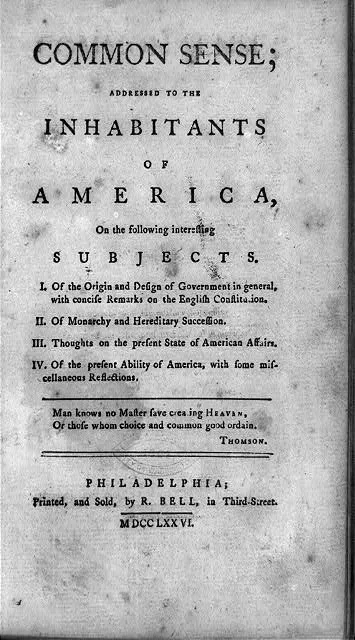
Common sense; addressed to the inhabitants of America, on the following interesting subjects. Source: Library of Congress - Paine, Thomas, 1737-1809.
In January 1776, a pamphlet called Common Sense was published in Philadelphia. Its author, Thomas Paine, was a recent immigrant from England who believed that the American colonies should seek complete independence from Great Britain. At the time, many colonists were uncertain. Some hoped for reconciliation, or repairing relations, with the British monarchy. Others quietly supported independence but feared the risks. Paine's pamphlet offered clear arguments that shaped public opinion and made the possibility of a new nation seem not only reasonable, but necessary.
Paine began by describing the problems of being ruled by a distant king. He argued that the British government, led by a hereditary monarch, did not protect the rights and interests of colonists. According to Paine, every person had "natural rights" that a government must respect. He criticized monarchy as unfair, since it allowed power to pass through family lines instead of being earned or chosen. Paine believed that hereditary rule often led to corruption and abuse of power.
Using simple, direct language, Paine reached a wide audience. He explained that the colonies had grown strong enough to govern themselves and had little to gain by remaining attached to Britain. He pointed out that continued loyalty would only bring more taxes, more British soldiers, and more limits on colonial self-government. Instead, Paine suggested that the colonies could form a republic—a system in which people choose their own leaders. This idea contrasted sharply with the old system of monarchy.
Common Sense quickly became a sensation. In just a few months, over 100,000 copies were sold or distributed throughout the colonies. People read it aloud in taverns, meeting houses, and even in the streets. Paine's ideas helped people see that independence was not just possible, but also just and logical. The pamphlet gave colonists the confidence to pursue a new form of government based on liberty and equality.
The impact of Paine's pamphlet was immediate and far-reaching. It helped to turn colonial anger and frustration into a clear demand for independence. Leaders such as George Washington and John Adams praised the work, and the arguments in Common Sense were echoed in the Declaration of Independence later that year. Paine's use of persuasive evidence and reasoning provided colonists with the tools to justify revolution.
However, not all colonists agreed with Paine. Some still believed that breaking away from Britain would cause chaos or war. Others feared losing the benefits of British protection and trade. Despite these concerns, Common Sense shifted the debate and encouraged more people to support the revolutionary cause.
Interesting Fact: Common Sense was published anonymously at first because Paine feared punishment for challenging British rule. Its influence was so great that it is often credited with helping to spark the movement for American independence.
Who wrote Common Sense?
Thomas PaineGeorge WashingtonJohn AdamsBenjamin Franklin
When was Common Sense published?
January 1776July 1776May 1775September 1783
What did Paine want for the colonies?
IndependenceNew taxesBritish soldiersA king
Why did Paine criticize monarchy?
It is unfair and hereditaryIt lowers taxesIt creates equalityIt supports self-government
How did Common Sense affect colonists?
It increased support for independenceIt stopped all debatesIt made people support BritainIt ended the war
Why was Common Sense published anonymously?
To avoid punishmentTo support BritainTo make it expensiveTo keep it a secret forever
Common Sense led to the Declaration of Independence. (True or False)
TrueFalse
What is a republic?
Government by elected leadersRule by a kingA type of pamphletColonial tax
Perfect For:
👩🏫 Teachers
• Reading comprehension practice
• Auto-graded assessments
• Literacy skill development
👨👩👧👦 Parents
• Reading practice at home
• Comprehension improvement
• Educational reading time
🏠 Homeschoolers
• Reading curriculum support
• Independent reading practice
• Progress monitoring
Reading Features:
📖
Reading Passage
Engaging fiction or nonfiction text
❓
Comprehension Quiz
Auto-graded questions
📊
Instant Feedback
Immediate results and scoring
📄
Printable Version
Download for offline reading
🔊
Read Aloud
Voice-over with word highlighting
Reviews & Ratings
No reviews yet. Be the first to share your experience!
Related Content
Native American Tribes Across America
This engaging history reading passage introduces students to Native American tribes across America, focusing on their da...
D2.HIS.1.3-5D2.HIS.2.3-5RI.4.1RI.4.2
Teepees: Homes on the Great Plains
This engaging history reading passage introduces students to teepees, the unique homes of Native American tribes on the ...
D2.HIS.2.3-5D2.HIS.14.3-5RI.4.1RI.4.2RI.4.4
Traditional Native American Clothing
This engaging history passage explores traditional Native American clothing and how it reflected the environment, values...
D2.HIS.2.3-5D2.HIS.3.3-5RI.4.3RI.4.4
The Iroquois Confederacy: A System of Peace
This engaging U.S. History reading passage introduces students to the Iroquois Confederacy, a powerful alliance of Nativ...
D2.HIS.2.3-5D2.HIS.3.3-5RI.4.3RI.4.4
The Cherokee Nation: History and Culture
This reading passage explores the rich history and culture of the Cherokee Nation, one of the largest Native American tr...
D2.HIS.2.3-5D2.HIS.14.3-5RI.4.3RI.4.4RI.4.10
The Sioux: Warriors and Tribal Leaders
This history reading passage explores the Sioux Nation, focusing on their roles as warriors and tribal leaders. Students...
D2.HIS.1.3-5D2.HIS.2.3-5RI.4.1RI.4.3
Native American Respect for Nature
This engaging history reading passage explores Native American respect for nature, emphasizing the close relationship be...
D2.HIS.2.3-5D2.HIS.3.3-5RI.4.3RI.4.4
Jamestown: The First Permanent English Colony
This engaging history passage explores the founding of Jamestown, the first permanent English colony in America. Aligned...
D2.HIS.1.3-5D2.HIS.2.3-5RI.4.3RI.4.4
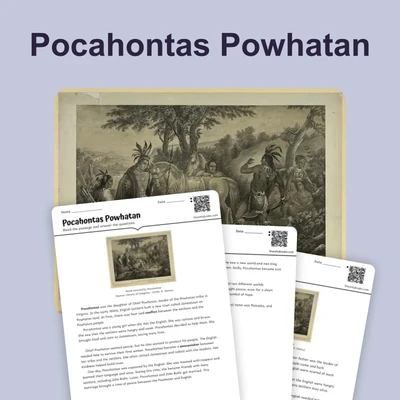
Pocahontas and the Powhatan People
This engaging reading passage explores the life of Pocahontas and the Powhatan people and their important role in early ...
D2.HIS.1.3-5D2.HIS.2.3-5RI.4.1RI.4.3
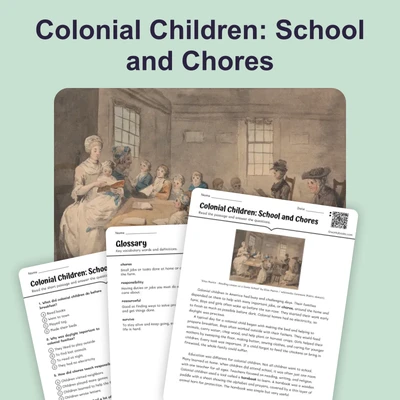
Colonial Children: School and Chores
This reading passage explores the daily lives of colonial children, focusing on their experiences at school and their ma...
D2.HIS.2.3-5D2.HIS.3.3-5RI.4.1RI.4.2RI.4.4
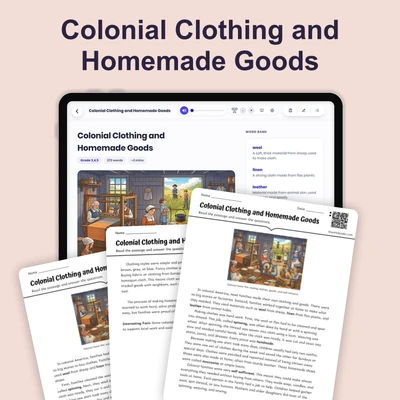
Colonial Clothing and Homemade Goods
This engaging U.S. history passage explores the daily life of early American colonists with a focus on colonial clothing...
D2.HIS.2.3-5RI.4.3RI.4.4
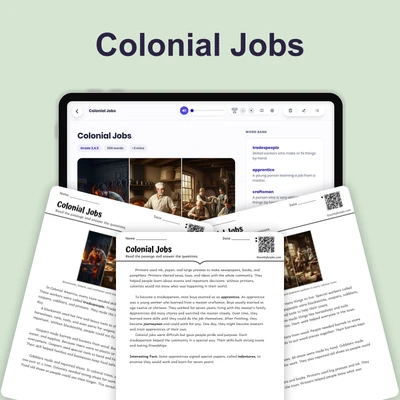
Colonial Jobs: Blacksmiths, Bakers, and Craftsmen
This engaging history reading passage explores the vital roles of blacksmiths, bakers, and craftsmen in colonial America...
D2.HIS.2.3-5D2.HIS.3.3-5RI.4.3RI.4.4
Colonial Towns and Village Life
This engaging history reading passage explores the daily life, work, and unity found in colonial towns and villages. Ali...
D2.HIS.1.3-5D2.HIS.2.3-5RI.4.3RI.4.4
Colonial Trade with England and Africa
This history reading passage explores colonial trade between the American colonies, England, and Africa, focusing on the...
D2.HIS.2.3-5D2.HIS.14.3-5RI.4.3RI.4.4
Benjamin Franklin: Printer, Inventor, and Leader
This history reading passage explores the life and achievements of Benjamin Franklin, one of America's most important ea...
D2.HIS.2.3-5D2.HIS.3.3-5RI.4.1RI.4.3
George Washington Leads the Army
This engaging history reading passage explores how George Washington bravely led the Continental Army during the America...
D2.HIS.1.3-5D2.HIS.2.3-5RI.4.3RI.4.4
Women and Children During the Revolutionary War
This reading passage explores the important roles women and children played during the Revolutionary War. Students will ...
D2.HIS.2.3-5RI.4.3RI.5.3
African Americans Fight for Freedom
This educational passage explores the brave and inspiring story of how African Americans fought for freedom in the Unite...
D2.HIS.2.3-5D2.HIS.3.3-5RI.4.3RI.4.4
The Battle of Yorktown Ends War
This engaging U.S. history reading passage explores the Battle of Yorktown, a key event that ended the American Revoluti...
D2.HIS.1.3-5D2.HIS.2.3-5RI.4.1RI.4.3
Loyalists vs. Patriots: Divided Families
This engaging U.S. history reading passage explores the division between Loyalists and Patriots during the American Revo...