Taxation Without Representation — Reading Comprehension
Rate this
Premium Resource
Present
Present in classroom. No work saved
Assign
Classroom with student accounts, Track progress
Quick Play
No student accounts, assign with a link
Grades
6
7
8
Standards
D2.HIS.2.3-5
D2.HIS.3.3-5
RI.4.3
RI.4.4
W.4.2
PRINT+DIGITAL RESOURCE
This learning resource is available in interactive and printable formats. The interactive worksheet can be played online and assigned to students. The Printable PDF version can be downloaded and printed for completion by hand.
This engaging U.S. History reading passage explores the causes of the American Revolution, focusing on the theme of 'taxation without representation.' Students will analyze multiple perspectives from both British officials and American colonists, examining the complex reasons behind colonial protest and the eventual movement toward independence. The passage is structured to model effective historical reasoning, integrating key vocabulary and a primary source quote from the period. Aligned to C3 Framework and Common Core ELA standards (D2.His.2.3-5, D2.His.3.3-5, RI.4.3, RI.4.4, W.4.2), the resource also features a glossary, Spanish translation, interactive timeline, and comprehension activities. Students will strengthen their analytical skills by using evidence and understanding the significance of these pivotal events. This history reading passage includes a read aloud audio option and Spanish translation for greater accessibility.
CONTENT PREVIEW
Expand content preview
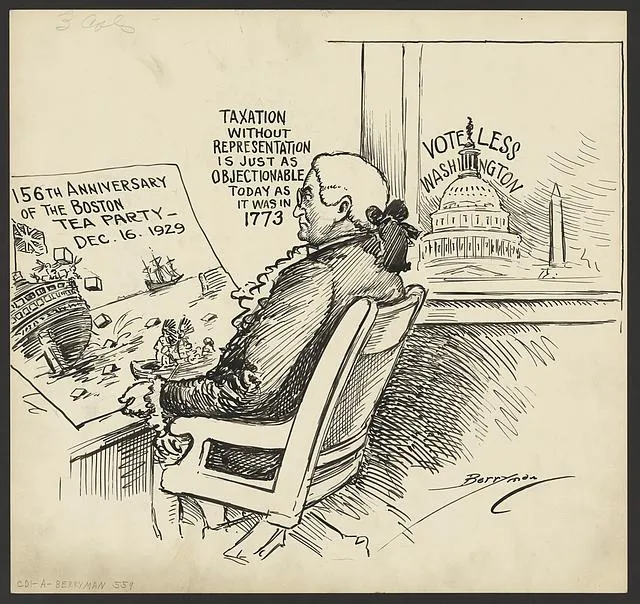
Taxation without representation is just as objectionable today as it was in 1773. Source: Library of Congress - Berryman, Clifford Kennedy, 1869-1949
The phrase taxation without representation describes a central problem faced by American colonists in the 1700s. After the costly French and Indian War, the British government needed money to pay off huge war debts. Parliament, the British lawmaking body, decided to raise funds by taxing the American colonies. However, the colonists had no elected officials in Parliament to represent their interests. This situation led to growing anger and a sense of injustice among the colonists.
Several acts imposed by Parliament, such as the Stamp Act of 1765 and the Townshend Acts of 1767, required colonists to pay taxes on everyday items like paper, tea, and glass. The British justified these taxes as necessary to maintain order and pay for colonial defense. Yet, colonists argued that because they had no representation in Parliament, these taxes were unfair. They believed only their own colonial assemblies had the right to tax them. This conflict over authority deepened the divide between Britain and its colonies.
Colonial leaders, including Samuel Adams and Patrick Henry, organized protests and urged fellow colonists to resist what they saw as British tyranny. They used pamphlets, speeches, and public meetings to spread their message. The slogan "No taxation without representation" became a unifying rallying cry. The colonists began boycotting British goods and forming groups like the Sons of Liberty. These actions showed their refusal to accept laws passed without their consent.
The British government responded by sending more troops to enforce the new laws, which only increased tensions. Events like the Boston Massacre in 1770 and the Boston Tea Party in 1773 demonstrated the anger and determination of the colonists. Each incident made compromise more difficult and pushed both sides further apart.
Ultimately, the issue of consent and governance fueled the demand for independence. Colonists argued that a government must have the approval of the people it governs. The struggle over taxation without representation became a key cause of the American Revolution. In the Declaration of Independence, the colonists listed their grievances, including the lack of representation, as reasons for breaking away from Britain.
The legacy of this conflict is still important today. The principle that people should have a voice in their government—especially when it comes to taxes—remains a foundation of democracy in the United States.
Interesting Fact: Some British politicians, like William Pitt, supported the colonists' argument and spoke out against taxing Americans without giving them representation in Parliament.
Who passed the Stamp Act?
British ParliamentColonial assembliesFrench governmentSons of Liberty
What year was the Boston Massacre?
1765177017731776
What did colonists boycott?
British goodsFrench teaAmerican newspapersColonial assemblies
Why did colonists oppose British taxes?
No representation in ParliamentToo expensiveNot enough goodsWanted more soldiers
What was the slogan used by colonists?
No taxation without representationGive us liberty or deathTea for allFollow the king
How did the British respond to protests?
Sent more troopsLowered taxesGave colonists seatsIgnored complaints
The Boston Tea Party happened in 1773. True or false?
TrueFalse
What is 'tyranny' as used in the passage?
Unfair use of powerA tax collectorA colonial leaderA British law
Perfect For:
👩🏫 Teachers
• Reading comprehension practice
• Auto-graded assessments
• Literacy skill development
👨👩👧👦 Parents
• Reading practice at home
• Comprehension improvement
• Educational reading time
🏠 Homeschoolers
• Reading curriculum support
• Independent reading practice
• Progress monitoring
Reading Features:
📖
Reading Passage
Engaging fiction or nonfiction text
❓
Comprehension Quiz
Auto-graded questions
📊
Instant Feedback
Immediate results and scoring
📄
Printable Version
Download for offline reading
🔊
Read Aloud
Voice-over with word highlighting
Reviews & Ratings
No reviews yet. Be the first to share your experience!
Related Content
Native American Tribes Across America
This engaging history reading passage introduces students to Native American tribes across America, focusing on their da...
D2.HIS.1.3-5D2.HIS.2.3-5RI.4.1RI.4.2
Teepees: Homes on the Great Plains
This engaging history reading passage introduces students to teepees, the unique homes of Native American tribes on the ...
D2.HIS.2.3-5D2.HIS.14.3-5RI.4.1RI.4.2RI.4.4
Traditional Native American Clothing
This engaging history passage explores traditional Native American clothing and how it reflected the environment, values...
D2.HIS.2.3-5D2.HIS.3.3-5RI.4.3RI.4.4
The Iroquois Confederacy: A System of Peace
This engaging U.S. History reading passage introduces students to the Iroquois Confederacy, a powerful alliance of Nativ...
D2.HIS.2.3-5D2.HIS.3.3-5RI.4.3RI.4.4
The Cherokee Nation: History and Culture
This reading passage explores the rich history and culture of the Cherokee Nation, one of the largest Native American tr...
D2.HIS.2.3-5D2.HIS.14.3-5RI.4.3RI.4.4RI.4.10
The Sioux: Warriors and Tribal Leaders
This history reading passage explores the Sioux Nation, focusing on their roles as warriors and tribal leaders. Students...
D2.HIS.1.3-5D2.HIS.2.3-5RI.4.1RI.4.3
Native American Respect for Nature
This engaging history reading passage explores Native American respect for nature, emphasizing the close relationship be...
D2.HIS.2.3-5D2.HIS.3.3-5RI.4.3RI.4.4
Jamestown: The First Permanent English Colony
This engaging history passage explores the founding of Jamestown, the first permanent English colony in America. Aligned...
D2.HIS.1.3-5D2.HIS.2.3-5RI.4.3RI.4.4
Pocahontas and the Powhatan People
This engaging reading passage explores the life of Pocahontas and the Powhatan people and their important role in early ...
D2.HIS.1.3-5D2.HIS.2.3-5RI.4.1RI.4.3
Colonial Children: School and Chores
This reading passage explores the daily lives of colonial children, focusing on their experiences at school and their ma...
D2.HIS.2.3-5D2.HIS.3.3-5RI.4.1RI.4.2RI.4.4
Colonial Clothing and Homemade Goods
This engaging U.S. history passage explores the daily life of early American colonists with a focus on colonial clothing...
D2.HIS.2.3-5RI.4.3RI.4.4
Colonial Jobs: Blacksmiths, Bakers, and Craftsmen
This engaging history reading passage explores the vital roles of blacksmiths, bakers, and craftsmen in colonial America...
D2.HIS.2.3-5D2.HIS.3.3-5RI.4.3RI.4.4
Colonial Towns and Village Life
This engaging history reading passage explores the daily life, work, and unity found in colonial towns and villages. Ali...
D2.HIS.1.3-5D2.HIS.2.3-5RI.4.3RI.4.4
Colonial Trade with England and Africa
This history reading passage explores colonial trade between the American colonies, England, and Africa, focusing on the...
D2.HIS.2.3-5D2.HIS.14.3-5RI.4.3RI.4.4
Benjamin Franklin: Printer, Inventor, and Leader
This history reading passage explores the life and achievements of Benjamin Franklin, one of America's most important ea...
D2.HIS.2.3-5D2.HIS.3.3-5RI.4.1RI.4.3
George Washington Leads the Army
This engaging history reading passage explores how George Washington bravely led the Continental Army during the America...
D2.HIS.1.3-5D2.HIS.2.3-5RI.4.3RI.4.4
Women and Children During the Revolutionary War
This reading passage explores the important roles women and children played during the Revolutionary War. Students will ...
D2.HIS.2.3-5RI.4.3RI.5.3
African Americans Fight for Freedom
This educational passage explores the brave and inspiring story of how African Americans fought for freedom in the Unite...
D2.HIS.2.3-5D2.HIS.3.3-5RI.4.3RI.4.4
The Battle of Yorktown Ends War
This engaging U.S. history reading passage explores the Battle of Yorktown, a key event that ended the American Revoluti...
D2.HIS.1.3-5D2.HIS.2.3-5RI.4.1RI.4.3
Loyalists vs. Patriots: Divided Families
This engaging U.S. history reading passage explores the division between Loyalists and Patriots during the American Revo...