This engaging passage explores how ancient trade routes connected civilizations such as Mesopotamia, Egypt, China, and Rome. Students will learn about famous routes like the Silk Road and Mediterranean Sea lanes, and how these networks enabled the exchange of goods, ideas, and technologies. The passage highlights archaeological and primary source evidence, describes cause-and-effect relationships, and explains how geography shaped trade. Activities include a multiple-choice quiz, writing prompts, graphic organizers, and a timeline to deepen understanding. Spanish translation and read aloud audio support accessibility. Key standards: CA HSS 6.2, 6.6, 6.7, CCSS RH6-8.1, RH6-8.2, RH6-8.4. Ideal for building historical thinking, vocabulary, and comprehension skills.
Written by Workybooks TeamPublished by Workybooks
Preview
Sample passage and quiz content
CONTENT PREVIEW
Expand content preview
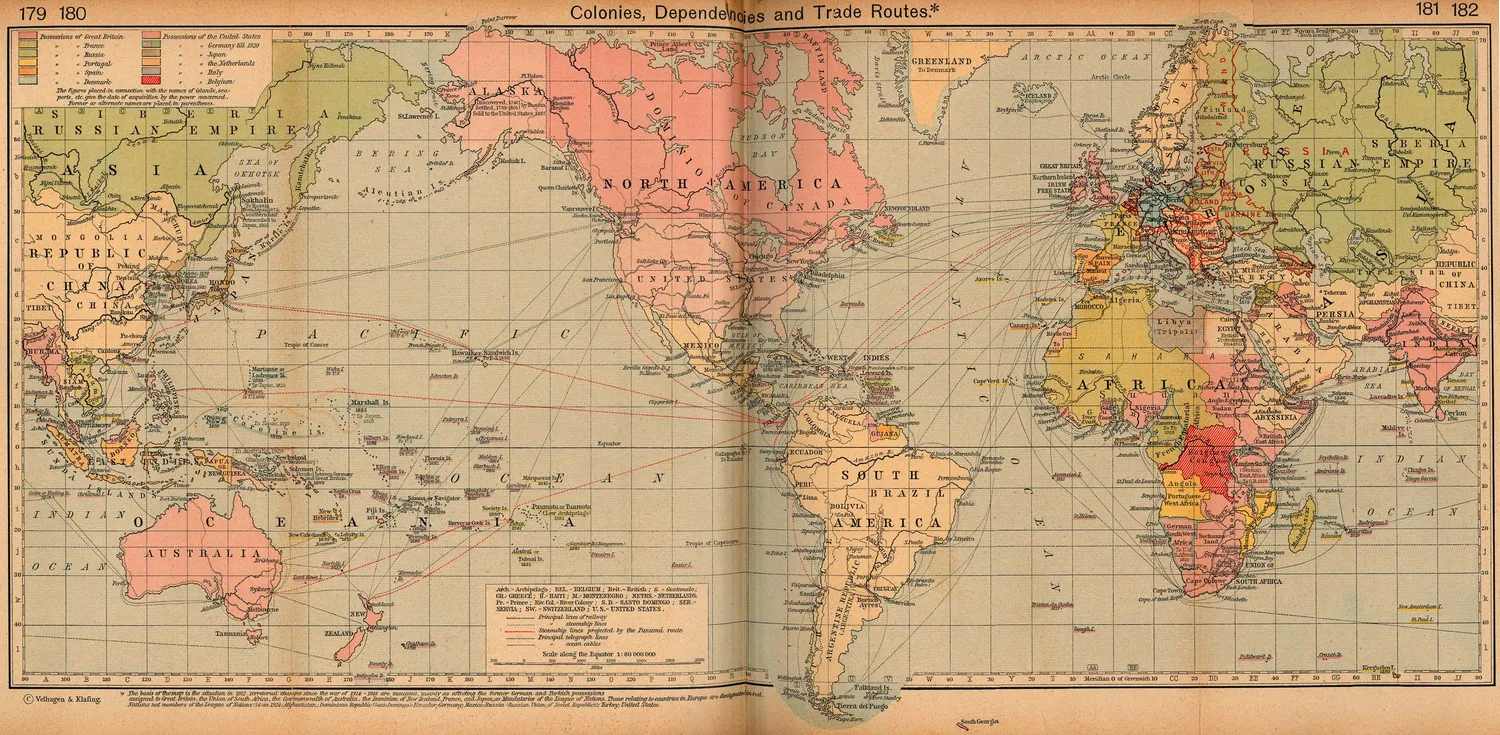
"Trade routes" by William R. Shepherd / Source: Wikimedia Commons (Public domain).
Trade routes were essential pathways that linked civilizations across vast regions, helping people exchange goods, ideas, and technologies. These networks emerged as early as 3000 BCE, when merchants from Mesopotamia traveled to the Indus Valley to trade commodities like textiles and metals. Over centuries, trade routes allowed distant societies to interact, shaping the development of ancient history.
One of the most famous trade networks was the Silk Road, which stretched over 4,000 miles from China to the Mediterranean Sea. Chinese silk, highly prized in Rome and Egypt, traveled west along caravans, while glassware, horses, and spices moved east. Archaeological evidence, such as silk remnants found in Egyptian tombs dating to 1000 BCE, shows the reach of these exchanges. Written records from Chinese court officials describe how foreign merchants arrived in cities like Chang'an, exchanging goods and sharing cultural knowledge.
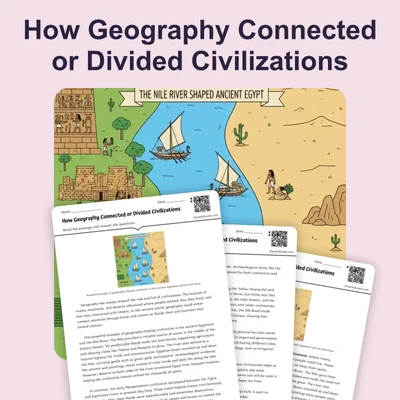
Geography played a critical role in shaping these routes. Rivers like the Nile in Egypt and the Tigris-Euphrates in Mesopotamia served as natural highways for boats carrying grain, papyrus, and pottery. The Mediterranean Sea became a hub for maritime trade, connecting Greek, Phoenician, and Roman city-states. Ships navigated using stars and early maps, forming strong commercial ties. The Indian Ocean trade network linked East Africa, Arabia, and India, allowing the spread of gold, ivory, and religious beliefs. Over time, these routes adapted to new technologies, such as the invention of the camel saddle, which enabled longer desert crossings.
Trade routes had significant effects on social and economic life. Merchants formed a distinct social class, often gaining wealth and influence. Ancient cities like Babylon, Alexandria, and Petra grew rich as marketplaces for goods from faraway lands. Trade also brought challenges, including bandit attacks and the spread of diseases like the plague. Yet, the benefits outweighed the risks, as trade routes encouraged the exchange of scientific knowledge, languages, and religious beliefs. For example, Buddhism spread from India to China along the Silk Road, and coins from Rome have been found as far east as Vietnam.
The legacy of ancient trade routes continues today. They laid the foundation for global connections, demonstrating how geography, technology, and human ambition shaped world history. Studying these networks helps historians understand economic systems, social hierarchies, and cultural exchange in the ancient world.
Interesting Fact: Roman glassware has been discovered in ancient Chinese tombs, proving that trade between East and West occurred far earlier than many historians once believed.
What was the Silk Road?
A trade route from China to MediterraneanA river in MesopotamiaA Roman cityA type of merchant
Which river helped trade in Egypt?
NileAmazonYellowDanube
What goods went west on the Silk Road?
SilkPotteryGoldFish
How did geography affect trade routes?
Rivers and seas helped travelMountains stopped all tradeTrade only on landNo effect at all
Why were merchants important?
Brought goods and ideasFought in warsBuilt citiesMade laws
Which is an effect of trade routes?
Spread of religionsNo cultural changeLess technologyFewer cities
Trade brought only benefits. True or false?
TrueFalse
What does 'commodities' mean?
Goods traded or soldA type of boatA Roman emperorAncient city-state
Who it's for
Perfect for the way you teach
Teachers
Build comprehension skills
Auto-graded quiz
Differentiated reading
Parents
Read together at home
Improve fluency
Quiet reading time
Homeschoolers
Reading curriculum support
Independent practice
Track Lexile growth
Topics
ancient tradeSilk RoadMediterraneancaravanbartermerchantsancient civilizationsgeographyspice tradecultural exchange
Reviews & Ratings
No reviews yet. Be the first to share your experience!
More reading you might love
19 more
World Civilizations 300 CE
This reading passage explores the world in 300 CE, highlighting major ancient civilizations such as the Roman Empire, Ha...
CA HSS 6.26.6RH.6-8.1RH.6-8.2
Farming in Ancient Mesopotamia
This engaging reading passage explores how the geography of Mesopotamia shaped its civilization through innovative irrig...
CA HSS 6.2RH.6-8.1RH.6-8.2RH.6-8.4
Mesopotamian Irrigation Systems
This reading passage explores the environmental challenges faced by ancient Mesopotamia, the 'land between the rivers.' ...
CA HSS 6.2RH.6-8.1RH.6-8.2TEKS 6.2A
Egypt's New Kingdom
This engaging history reading passage explores the rise of Ancient Egypt during the New Kingdom, when Egypt became a pow...
CA HSS 6.2RH.6-8.2WHST.6-8.2
Legacy of Ancient Civilizations
This history reading passage explores how geography played a crucial role in shaping the development, connection, and di...
CA HSS 6.2RI.6.1RI.6.3
Ancient Egyptian Afterlife
This engaging history reading passage explores ancient Egyptian beliefs about the afterlife and the construction of the ...
CA HSS 6.2RH.6-8.1RH.6-8.4
Comparing Ancient Religions and Beliefs
This passage explores the religious beliefs of ancient civilizations, focusing on the differences and similarities betwe...
CA HSS 6.2RH.6-8.1RH.6-8.4RH.6-8.9
Rosetta Stone Decoded
This engaging history reading passage explores the remarkable discovery of the Rosetta Stone and its impact on the study...
CA HSS 6.27.1CCSS.RI.6.1CCSS.RI.7.1
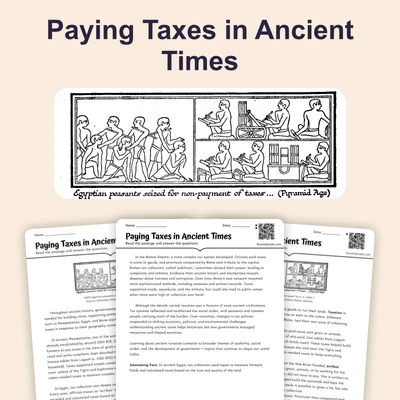
Ancient Taxes and Tribute
This reading passage explores the origins and practices of taxation in ancient civilizations, focusing on how early gove...
CA HSS 6.2CCSS.RI.6.1CCSS.RI.6.4CCSS.W.6.2
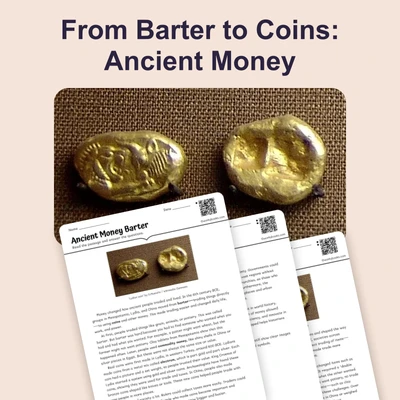
Ancient Coins and Barter
This passage explores the fascinating evolution from barter to the earliest coins in ancient civilizations, focusing on ...
CA HSS 6.2CCSS.ELA-LITERACY.RH.6-8.2CCSS.ELA-LITERACY.RH.6-8.4
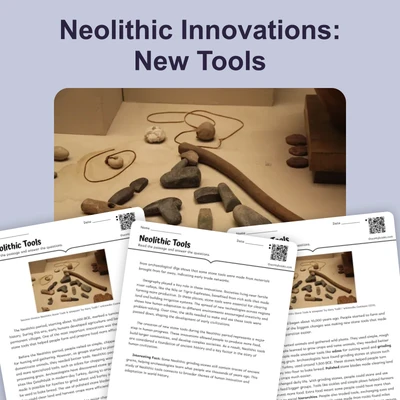
Neolithic Tools
This passage explores the profound impact of new stone tools during the Neolithic period, focusing on how these innovati...
CA HSS 6.2CCSS RH.6-8.1CCSS RH.6-8.4
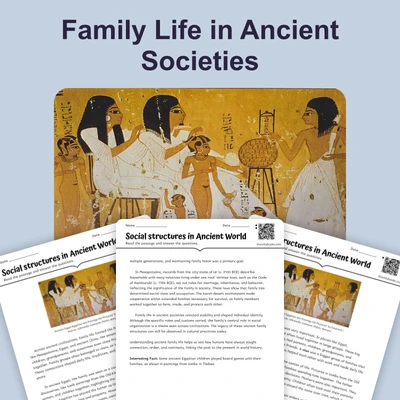
Social structures in Ancient World
This passage explores the organization and significance of family life in ancient societies, focusing on how extended fa...
CA HSS 6.2CCSS RH.6-8.1CCSS RH.6-8.4CCSS RH.6-8.7
Egyptian Social Classes
This engaging reading passage explores the social pyramid of Ancient Egyptian society, delving into how the roles and re...
CA HSS 6.2RI.6.1RI.6.2RI.6.4
King Solomon and the First Temple
This engaging history reading passage explores King Solomon and the construction of the First Temple in ancient Jerusale...
CA HSS 6.2CCSS.RI.6.1CCSS.RI.6.2CCSS.RI.7.1
King David of Israel
This engaging history passage explores the life and legacy of King David, focusing on his rise as a warrior king and his...
CA HSS 6.2CCSS.RI.6.1CCSS.RI.6.3CCSS.W.6.2
Mesopotamian Math and Astronomy
This engaging passage explores the scientific achievements of ancient Mesopotamia, the region between the Tigris and Eup...
CA HSS 6.2RH.6-8.2
City-States of the Ancient World
This history reading passage explores the development and significance of city-states in ancient civilizations, focusing...
CA HSS 6.2CCSS.RI.6.3CCSS.RI.6.4
Ancient Mathematics
This passage explores the essential role of mathematics in ancient civilizations, including Mesopotamia, Egypt, Greece, ...
CA HSS 6.2CCSS RH.6-8.1CCSS RH.6-8.4
Ancient Science and Medicine
This comprehensive reading passage explores the development of science and medicine in ancient civilizations, including ...