This learning resource is available in interactive and printable formats. The interactive worksheet can be played online and assigned to students. The Printable PDF version can be downloaded and printed for completion by hand.
This comprehensive science passage introduces students in grades 6-8 to the unique climate and wildlife of the Arctic tundra, aligning with NGSS standards. Students will learn about key scientific concepts such as permafrost, adaptation, and biodiversity. The passage defines important vocabulary in context and provides real-world examples of animal and plant survival. An engaging quiz and writing activity extend learning, encouraging students to apply concepts and think critically. Audio integration supports diverse learning styles, while a Spanish translation promotes accessibility. This resource is ideal for inquiry-based or cross-curricular lessons in general science, geography, or environmental studies. Keywords include Arctic tundra, wildlife, adaptation, climate, ecosystem, and NGSS.
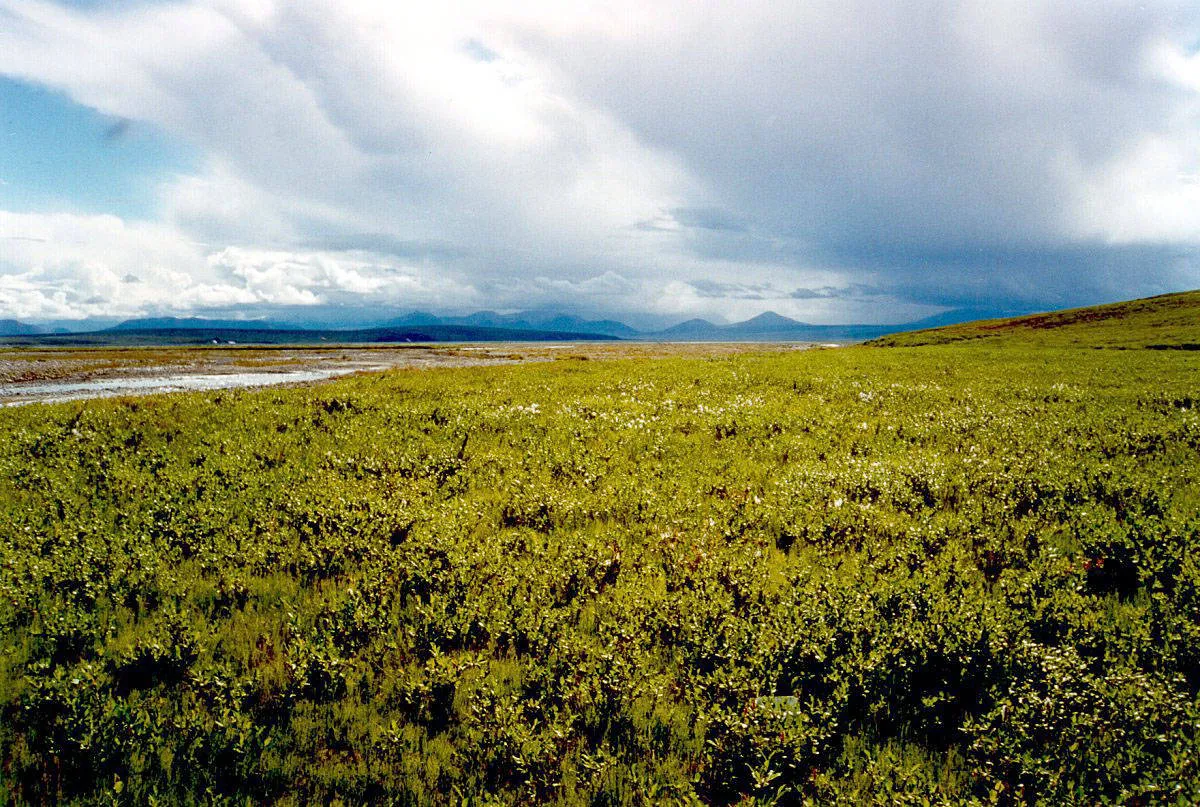
The Arctic tundra is one of the coldest and harshest environments on Earth. It is found near the North Pole, mostly in Alaska, Canada, Greenland, and Russia. The word tundra comes from a Finnish word meaning "treeless plain." This is because very few trees can grow here due to the extreme weather and soil conditions.
The climate of the Arctic tundra is known for its long, freezing winters and short, cool summers. Winter temperatures can drop as low as -34°C (-30°F). In summer, temperatures may only reach about 12°C (54°F). The ground is covered by permafrost, which is a thick layer of soil that stays frozen year-round. Only the top layer of soil thaws during summer, allowing some plants to grow.
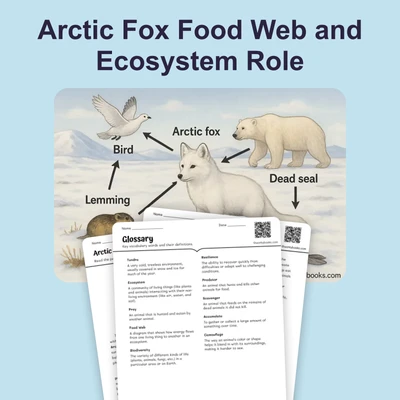
Even though conditions are harsh, many living things have adapted to survive in the tundra. Adaptation means a change or feature that helps an organism live in its environment. For example, the Arctic fox has thick fur and can change color with the seasons—white in winter to blend in with snow, and brown in summer to match the ground. The caribou has large hooves for walking on snow and soft ground. Birds like the snowy owl have feathers that keep them warm and help them hide from predators.
Plants in the Arctic tundra are also well adapted. Most are low to the ground, such as mosses and lichens. These plants grow close together to stay warm and avoid strong winds. Some plants have special leaves that can store water, since the soil can be very dry when the ice melts. Because of the permafrost, trees cannot grow deep roots, so only small shrubs, grasses, and wildflowers are found here.
The Arctic tundra is important for the planet. It stores large amounts of carbon in its frozen soil. This helps slow down climate change. However, if the permafrost melts due to rising global temperatures, it could release more carbon into the atmosphere and speed up warming.
The animals and plants of the tundra show how life can survive in even the toughest places by using unique adaptations and working together in an ecosystem.
Interesting Fact: The Arctic tundra gets less rain each year than most deserts, making it one of the driest places on Earth—even though it looks icy and wet!
Where is the Arctic tundra located?
Near the North PoleNear the EquatorIn South AmericaIn Australia
What is permafrost?
Permanently frozen soilMelted iceLayer of rocksTall grass
Which animal changes fur color seasonally?
Arctic foxCaribouSnowy owlPolar bear
Why can few trees grow in tundra?
Soil is frozenToo much rainSunny all yearToo many animals
What helps the tundra slow climate change?
Storing carbonMelting iceWarm summersHeavy rain
If permafrost melts, what might happen?
More carbon releasedMore trees growNo effectColder winters
The tundra gets more rain than deserts.
TrueFalse
What does 'adaptation' mean?
Survival featurePlant rootType of soilCold weather
Perfect For:
👩🏫 Teachers
• Reading comprehension practice
• Auto-graded assessments
• Literacy skill development
👨👩👧👦 Parents
• Reading practice at home
• Comprehension improvement
• Educational reading time
🏠 Homeschoolers
• Reading curriculum support
• Independent reading practice
• Progress monitoring
Reading Features:
📖
Reading Passage
Engaging fiction or nonfiction text
❓
Comprehension Quiz
Auto-graded questions
📊
Instant Feedback
Immediate results and scoring
📄
Printable Version
Download for offline reading
🔊
Read Aloud
Voice-over with word highlighting
Reviews & Ratings
No reviews yet. Be the first to share your experience!
Related Content
Climate and weather activity
This worksheet is perfect for understanding the differences between climate and weather. Students will read the phrases ...
Climate and Weather — Distinguishing Characterstics
This worksheet highlights the differences between climate and weather. The chart format makes comparing and contrasting ...
Comparing Weather and Climate Texts
This reading comprehension worksheet has 5th graders read two informational texts about Weather and Climate. Students th...
RI.5.9
Tools and Technology in Earth Science
This middle school science reading passage explores the wide range of tools and technologies used in Earth science, from...
MS-ESS2-2MS-ESS3-2MS-ETS1-1MS-PS4-3
What Is Space Weather and How Does It Affect the Earth?
This NGSS-aligned science passage for middle school explains what space weather is and how it affects Earth. Students le...
MS-ESS2-2
What Is Earth Science?
This engaging middle school science passage introduces students to the field of Earth science, aligning with NGSS standa...
MS-ESS1MS-ESS2MS-ESS3SEP
Extreme Weather and Climate Change
This Grade 6-8 science passage, aligned to NGSS standards, explores the impact of climate change on extreme weather even...
What Is The Difference Between Climate Model And Weather Model?
This reading passage delves into the fundamental differences between weather models and climate models, explaining their...
Scientific Inquiry in Earth Science
This passage explores scientific inquiry in Earth science for grades 6-8, aligned with NGSS standards MS-ESS1-4, MS-ESS2...
MS-ESS1-4MS-ESS2-1MS-ESS3-5SEP
Earth's Major Climate Zones Explained
This engaging science passage for grades 6-8 explains Earth's major climate zones, including tropical, temperate, and po...
Climate Through Earth's History
This engaging passage for grades 6-8 explores how Earth's climate has naturally changed over millions of years, highligh...
MS-ESS1-4MS-ESS2-6
Earth: Our Home in Space
This engaging Grade 4-5 science passage, aligned to NGSS, introduces students to Earth's special place in the solar syst...
Weather vs. Climate
This comprehensive passage for grades 6-8 explores the difference between weather and climate, aligning with NGSS standa...
MS-ESS2-6
How is Climate Different from Weather?
This passage distinguishes climate from weather for young readers. It defines climate as the usual weather patterns over...
RI.3.1RI.4.14.ESS2.D
Air Masses and Weather
This audio-integrated passage, "Air Masses and Weather," is designed for 6th-grade students to understand how the moveme...
Antarctica Climate
This engaging science passage for grades 6-8 explores Antarctica, the coldest climate zone on Earth. Students will learn...
Climate Zones Word Sort
This word sort activity helps students understand different climate zones through real-world locations. Students classif...
How Climate Change Affects Weather
This middle school science passage explores how and why weather patterns are changing globally. Students will learn abou...
MS-ESS3-5
Escape Velocity and Space Travel
This middle school science passage introduces students to the concept of escape velocity—the minimum speed required to b...
MS-ESS1-2MS-PS2-4
Polar Bears and Climate
This informational text on polar bears is a great way to practice reading comprehension. Students will read the passage ...