Are Electric Cars Pollution-Free
Interactive passage with audio narration, comprehension questions, and printable PDF.
By completing this purchase you agree to our Terms of Use and Privacy Policy. Your subscription renews automatically until you cancel. You can cancel anytime from your account settings. All sales are final and non-refundable. Digital content is available for download in your account immediately upon purchase.
What's included
Are Electric Cars Pollution-Free preview and details
About this printable Are Electric Cars Pollution-Free science reading passage, NGSS-aligned (Grades 5-8)
Sample passage and quiz from Are Electric Cars Pollution-Free
Reading passage and comprehension quiz preview
Are Electric Cars Pollution-Free?
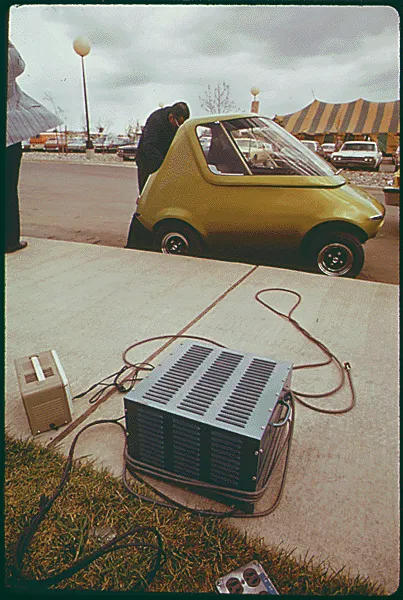
General Motors Urban Electric Car gets a battery charge from an outlet in the parking lot at the first symposium on low pollution power systems development held at the Marriott Motor Inn, Ann Arbor, Michigan."1973 GM electric car" by Environmental Protection Agency, Frank Lodge -Photographer / Wikimedia Commons
Electric cars are often called "zero-emission" vehicles, but this label can be misleading. While it is true that electric vehicles (EVs) produce no exhaust from a tailpipe, they are not completely pollution-free. Understanding the full picture requires looking beyond what happens on the road.
When an electric car drives down the street, it produces no direct emissions. There is no exhaust pipe releasing carbon dioxide or other pollutants into the air. This is a genuine benefit, especially in cities where air quality can be poor. Evidence shows that neighborhoods with more electric vehicles have cleaner air. However, the electricity that charges these cars must come from somewhere. In many places, power plants burn fossil fuels like coal or natural gas to generate electricity. When this happens, emissions are produced at the power plant instead of from the car itself. Scientists call these "upstream emissions" because they occur earlier in the energy chain.
Building an electric car also has environmental costs. The battery in an EV requires materials like lithium and cobalt. Mining and processing these materials uses energy and can cause pollution. Manufacturing a large battery produces more emissions than making a traditional engine. This means that a new electric car starts with a larger carbon footprint than a new gasoline car.
Despite these factors, research demonstrates that electric vehicles are much cleaner over their lifetime. A study comparing cars in the United States found that even when charged with electricity from coal plants, EVs produce fewer total emissions than gasoline cars after about 18 months of driving. As the car continues to operate, the difference grows larger. The key is that electric motors are much more efficient than gasoline engines. They convert more of their energy into motion rather than waste heat.
The environmental benefits of electric cars increase as the electrical grid becomes cleaner. When power comes from renewable energy sources like wind or solar, the upstream emissions drop dramatically. In regions with clean electricity, EVs can be nearly pollution-free. California, for example, generates about 33% of its electricity from renewables, making electric cars there significantly cleaner than in states that rely heavily on coal.
The lesson here is important: "zero-emission" does not mean "pollution-free." It means no tailpipe emissions. The more accurate statement is that electric vehicles are "much cleaner" than gasoline cars, and they continue to get cleaner as our energy sources improve. This matters because transportation accounts for about 29% of all greenhouse gas emissions in the United States. Switching to electric vehicles, combined with cleaner electricity generation, can significantly reduce our environmental impact.
Interesting Fact: If all cars in the United States were electric and powered by the current electrical grid, transportation emissions would drop by about 60% compared to today's gasoline vehicles.
Comprehension quiz (10 questions)
1. What does "zero-emission" mean when describing electric vehicles?
2. According to the passage, where do upstream emissions from electric cars occur?
3. What does the term 'carbon footprint' mean in the context of this passage?
4. Why are electric motors more efficient than gasoline engines?
5. According to the passage, after how many months of driving does an electric car produce fewer total emissions than a gasoline car?
6. What happens to the environmental benefits of electric cars as the electrical grid becomes cleaner?
7. Which renewable energy sources are mentioned in the passage?
8. What percentage of greenhouse gas emissions in the United States comes from transportation?
9. True or False: Building an electric car battery produces more emissions than making a traditional gasoline engine.
10. True or False: Electric vehicles charged with electricity from coal plants produce more total emissions than gasoline cars over their lifetime.
Perfect for the way you teach
- Build comprehension skills
- Auto-graded quiz
- Differentiated reading
- Read together at home
- Improve fluency
- Quiet reading time
- Reading curriculum support
- Independent practice
- Track Lexile growth