This 500-word informational science passage for grades 6-8 examines the relationship between droughts and climate change, aligned to NGSS Earth Science standards. Students discover that droughts result not only from reduced rainfall but also from warmer atmospheric conditions that increase evaporation and transpiration rates. The passage explains three key mechanisms: accelerated moisture loss from soils and plants, shifting precipitation patterns that reduce rainfall in certain regions, and earlier snowmelt that depletes summer water supplies. Real-world examples from the American West and the Sahel region illustrate these concepts. The reading includes audio integration, vocabulary development with 8-10 key science terms, and explores the cascading effects of drought on drinking water supplies, agriculture, and wildfire risk. Activities include comprehension questions, writing prompts, and graphic organizers that help students analyze cause-and-effect relationships in Earth's climate system.
Written by Workybooks TeamPublished by Workybooks
Preview
Sample passage and quiz content
CONTENT PREVIEW
Expand content preview
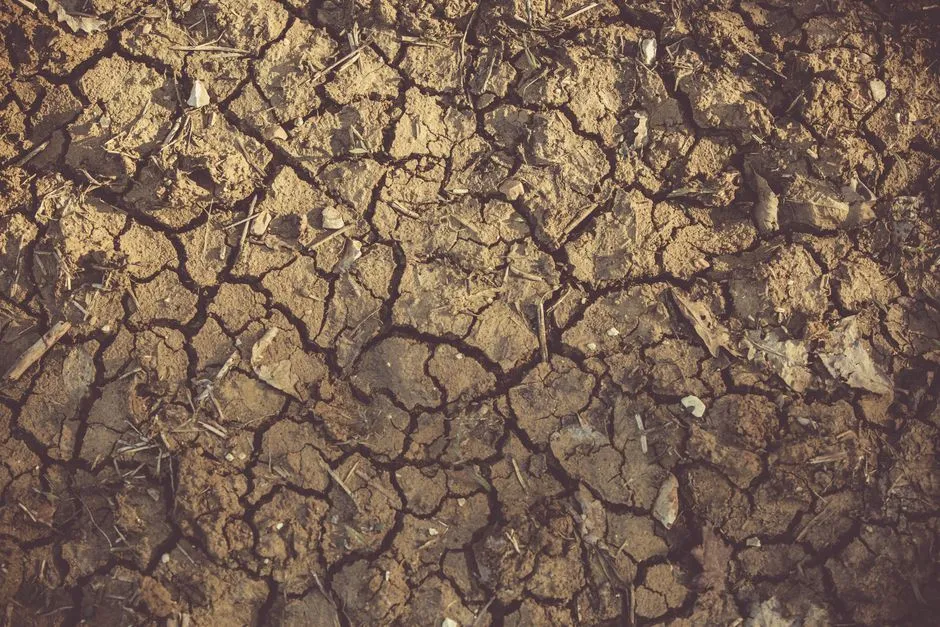
"Close-up of cracked, arid soil showing detailed textures and patterns, indicative of drought conditions." by James Frid / Pexels.
A drought occurs when a region experiences a long period without enough water. Many people think droughts happen only when rain stops falling. Evidence shows that climate change makes droughts worse in ways beyond just less rainfall. Warmer temperatures caused by climate change intensify droughts even when some rain still falls.
Scientists explain that warming worsens droughts through three main processes. First, hotter air pulls moisture from soils and plants much faster. This process, called evaporation, removes water from soil surfaces. Plants also release more water through transpiration, which is water loss through tiny leaf openings. Together, these processes drain moisture from the land more quickly. Second, climate change shifts precipitation patterns around the world. Some regions simply receive less rainfall than they did decades ago. Third, warming changes how mountain snow melts and supplies water. Snow that once melted slowly throughout summer now melts earlier in spring. Rivers fed by this snowmelt run dry before summer ends.
The American West demonstrates these climate-driven drought impacts clearly. California and neighboring states depend on mountain snowpack for summer water. As temperatures rise, snow melts weeks earlier than it did fifty years ago. Reservoirs cannot store all the early runoff. By late summer, water supplies run dangerously low. The Sahel region in Africa shows similar patterns. Shifting rainfall patterns have reduced precipitation across this area. Combined with higher temperatures that increase evaporation, severe droughts have become more frequent.
Drought effects ripple through communities and ecosystems in serious ways. Drinking water shortages force cities to ration supplies. Crops struggle without adequate irrigation, threatening food production. Dried vegetation becomes fuel for wildfires that spread rapidly. Scientists observe that climate change transforms what might have been a moderate dry spell into a severe drought. The same lack of rain causes more damage in a warmer world. Understanding this connection helps communities prepare for water challenges ahead.
Interesting Fact: Scientists can now calculate how much worse climate change makes specific droughts. Research shows that warming has made some recent droughts at least 20 percent more severe than they would have been without human-caused climate change.
According to the passage, what is a drought?
A region experiencing a long period without enough waterA type of storm that brings heavy rainfallA process that adds moisture to soilA seasonal change in temperature
What are the two processes mentioned that remove moisture from land?
Condensation and precipitationEvaporation and transpirationIrrigation and runoffSnowmelt and rainfall
What does the term 'transpiration' mean in the context of the passage?
Water flowing through riversRain falling from cloudsWater loss through tiny leaf openings in plantsSnow melting in mountains
How has climate change affected snowpack in the American West?
Snow now melts weeks earlier than fifty years agoMore snow accumulates each winterSnow melts more slowly throughout summerSnowpack has increased in mountain regions
Based on the passage, why do rivers fed by snowmelt run dry before summer ends?
Because people use too much waterBecause snow melts earlier in spring due to warmingBecause less snow falls in winterBecause reservoirs store all the water
What can scientists now calculate about droughts and climate change?
Exactly when the next drought will occurHow many droughts will happen each yearHow much worse climate change makes specific droughtsWhich regions will never experience drought
Which of the following is NOT mentioned as an effect of drought in the passage?
Drinking water shortagesStruggling cropsIncreased floodingIncreased wildfire risk
How does warmer air contribute to droughts according to the passage?
It prevents clouds from formingIt pulls moisture from soils and plants fasterIt causes more rainfall in some areasIt freezes water in reservoirs
True or False: Droughts only happen when rainfall completely stops.
TrueFalse
True or False: Climate change can make droughts more severe even when some rain still falls.
TrueFalse
Who it's for
Perfect for the way you teach
Teachers
Build comprehension skills
Auto-graded quiz
Differentiated reading
Parents
Read together at home
Improve fluency
Quiet reading time
Homeschoolers
Reading curriculum support
Independent practice
Track Lexile growth
Topics
droughtsclimate changeevaporationprecipitation patternssnowmeltwater cyclewater shortageNGSSmiddle school science
Reviews & Ratings
No reviews yet. Be the first to share your experience!
More reading you might love
19 more
What Is Earth Science?
This engaging middle school science passage introduces students to the field of Earth science, aligning with NGSS standa...
MS-ESS1MS-ESS2MS-ESS3SEP
Bird Migration and Climate Change
This engaging 400-500 word science passage explores how climate change affects bird migration patterns and populations, ...
MS-LS2-4: CONSTRUCT AN ARGUMENT SUPPORTED BY EMPIRICAL EVIDENCE THAT CHANGES TO PHYSICAL OR BIOLOGICAL COMPONENTS OF AN ECOSYSTEM AFFECT POPULATIONS.
Transportation and Climate Change
This engaging science passage for grades 6-8 explores the vital role that transportation plays in climate change. Studen...
Deforestation and Climate Change
This engaging science passage, aligned with NGSS standards, explains how deforestation contributes to climate change for...
Wildfires and Climate Change
This comprehensive 400-500 word reading passage examines the connection between wildfires and climate change for middle ...
Tools and Technology in Earth Science
This middle school science reading passage explores the wide range of tools and technologies used in Earth science, from...
MS-ESS2-2MS-ESS3-2MS-ETS1-1MS-PS4-3
Habitat Loss and Climate Change
This engaging 500-word science passage explores how climate change drives habitat loss and threatens wildlife population...
MS-LS2-4: CONSTRUCT AN ARGUMENT SUPPORTED BY EMPIRICAL EVIDENCE THAT CHANGES TO PHYSICAL OR BIOLOGICAL COMPONENTS OF AN ECOSYSTEM AFFECT POPULATIONS.
Climate Change: Solutions and Mitigation
This passage explores scientific solutions and mitigation strategies for climate change, designed for middle school scie...
MS-ESS3-4MS-ESS3-5
Amazon Rainforest and Climate Change
This 400-500 word informational science passage for grades 6-8 explores the Amazon Rainforest and Climate Change, aligne...
Extreme Weather and Climate Change
This Grade 6-8 science passage, aligned to NGSS standards, explores the impact of climate change on extreme weather even...
Climate Change and Food Security
This comprehensive 400-500 word reading passage examines the critical relationship between climate change and food secur...
Climate Change: Causes
This comprehensive middle school science passage explores the causes of climate change by examining both natural and hum...
MS-ESS3-5MS-LS2-4
Effects of Climate Change
This comprehensive middle school science passage explores the effects of climate change on Earth's systems and life, ali...
MS-ESS3-5MS-LS4-4
Arctic Fox and Climate Change
This 400-500 word informational science passage examines how climate change threatens Arctic fox populations through mul...
Flooding and Climate Change
This comprehensive 500-word reading passage examines the relationship between flooding and climate change for middle sch...
Climate Change: Vulnerable Ecosystems
This middle school science passage, aligned with NGSS standards MS-ESS3-5 and MS-LS2-4, helps students understand how cl...
MS-ESS3-5MS-LS2-4
Climate Through Earth's History
This engaging passage for grades 6-8 explores how Earth's climate has naturally changed over millions of years, highligh...
MS-ESS1-4MS-ESS2-6
Climate Change and Water Scarcity
This 400-500 word informational science reading passage for grades 6-8 examines how climate change threatens freshwater ...
MS-ESS3-5
Public Transportation and Climate Change
This 400-500 word reading passage examines the relationship between public transportation and climate change for middle ...