Bird Migration and Climate Change
Interactive passage with audio narration, comprehension questions, and printable PDF.
By completing this purchase you agree to our Terms of Use and Privacy Policy. Your subscription renews automatically until you cancel. You can cancel anytime from your account settings. All sales are final and non-refundable. Digital content is available for download in your account immediately upon purchase.
What's included
Bird Migration and Climate Change preview and details
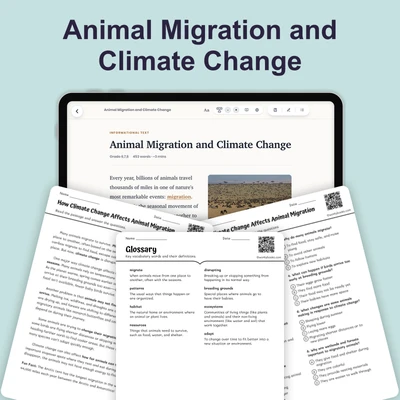
About this printable Bird Migration and Climate Change science reading passage, NGSS-aligned (Grades 5-8)
Sample passage and quiz from Bird Migration and Climate Change
Reading passage and comprehension quiz preview
Bird Migration and Climate Change
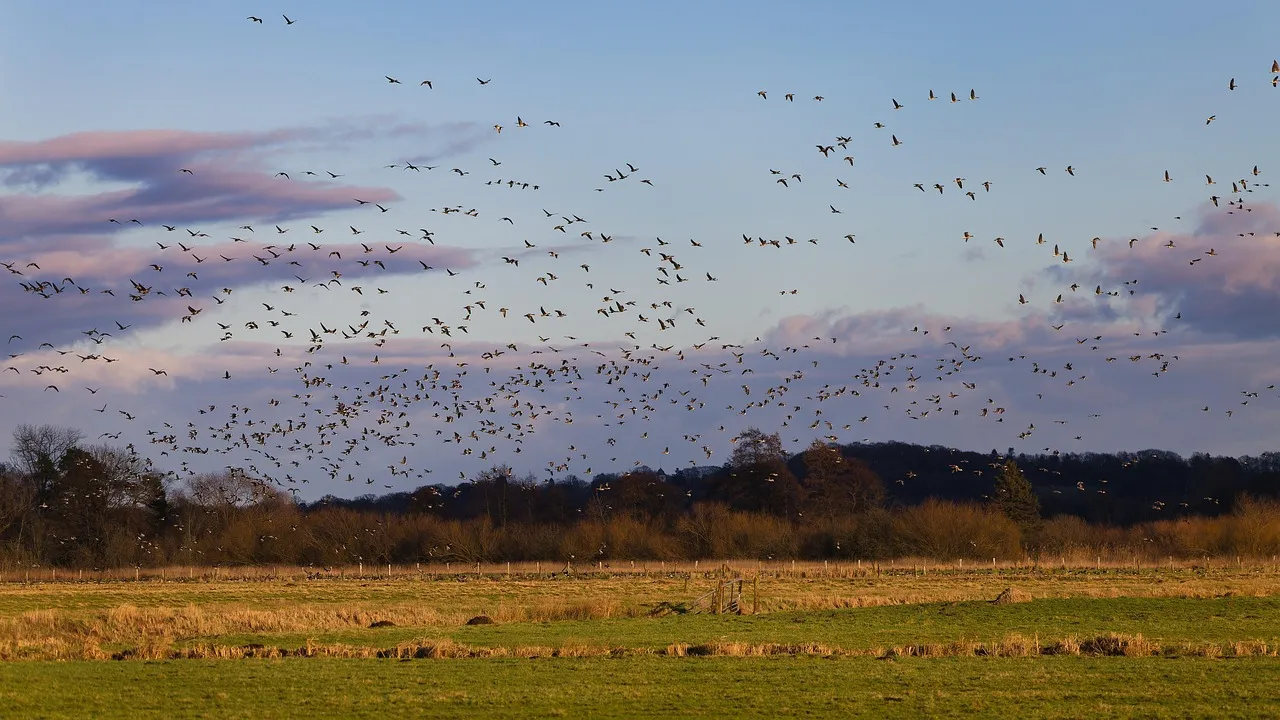
Scientists call the timing of seasonal biological events phenology. For migratory birds, phenology determines when they arrive at their summer breeding grounds..Image by hapr80 / Pixabay.
Birds are among the most visible indicators of how climate change affects ecosystems. Many bird species migrate thousands of miles each year, traveling between breeding grounds and wintering areas. These journeys depend on precise timing. Birds use environmental cues like day length and temperature to know when to begin their migrations. Climate change disrupts this finely tuned schedule in ways that threaten bird populations.
Scientists call the timing of seasonal biological events phenology. For migratory birds, phenology determines when they arrive at their summer breeding grounds. Birds time their arrival to match the peak availability of food sources. Insect-eating birds, for example, arrive when caterpillars and other insects are most abundant. However, warming temperatures cause insects to emerge earlier in spring. Many birds still arrive at their traditional times, creating a timing mismatch. The birds arrive too late and miss the peak insect abundance their chicks need to survive.
Climate change also shifts where birds can live. As temperatures warm, suitable habitats move toward the poles. Evidence shows that many bird species are shifting their ranges northward. Some birds now breed in areas that were once too cold. Meanwhile, their traditional southern ranges become too warm. This range shift can separate birds from the resources they depend on.
Migratory birds also face challenges at stopover sites along their routes. These locations, often wetlands, provide critical resting and feeding areas. Climate change causes some wetlands to dry up due to increased temperatures and altered precipitation patterns. Without these stopover habitats, birds cannot complete their long journeys. Research on the red knot, a shorebird that migrates from the Arctic to South America, shows population declines linked to lost stopover sites.
Birds serve as indicator species because they are easy to observe and count. Scientists monitor bird populations to detect early signs of ecosystem changes. When bird numbers decline, it signals broader problems in the environment. Understanding how climate change affects bird migration helps scientists predict impacts on other species and entire ecosystems.
Interesting Fact: The Arctic tern holds the record for the longest migration, traveling about 44,000 miles round-trip each year between Arctic and Antarctic regions. Climate change now threatens the food sources this champion migrator depends on at both ends of its journey.
Comprehension quiz (10 questions)
1. What environmental cues do birds use to know when to begin their migrations?
2. What is phenology?
3. What happens when warming temperatures cause insects to emerge earlier in spring?
4. According to the passage, what does 'timing mismatch' mean?
5. How does climate change affect where birds can live?
6. Why are stopover habitats important for migratory birds?
7. What evidence does the passage provide about the red knot bird?
8. Why are birds considered good indicator species?
9. Birds are among the most visible indicators of how climate change affects ecosystems.
10. Climate change has no effect on wetlands that serve as stopover sites for birds.
Perfect for the way you teach
- Build comprehension skills
- Auto-graded quiz
- Differentiated reading
- Read together at home
- Improve fluency
- Quiet reading time
- Reading curriculum support
- Independent practice
- Track Lexile growth