Addressing Climate Change
Interactive passage with audio narration, comprehension questions, and printable PDF.
By completing this purchase you agree to our Terms of Use and Privacy Policy. Your subscription renews automatically until you cancel. You can cancel anytime from your account settings. All sales are final and non-refundable. Digital content is available for download in your account immediately upon purchase.
What's included
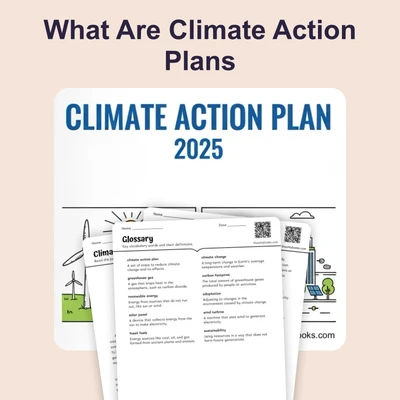
Addressing Climate Change preview and details
About this printable Addressing Climate Change science reading passage, NGSS-aligned (Grades 5-8)
Sample passage and quiz from Addressing Climate Change
Reading passage and comprehension quiz preview
Addressing Climate Change
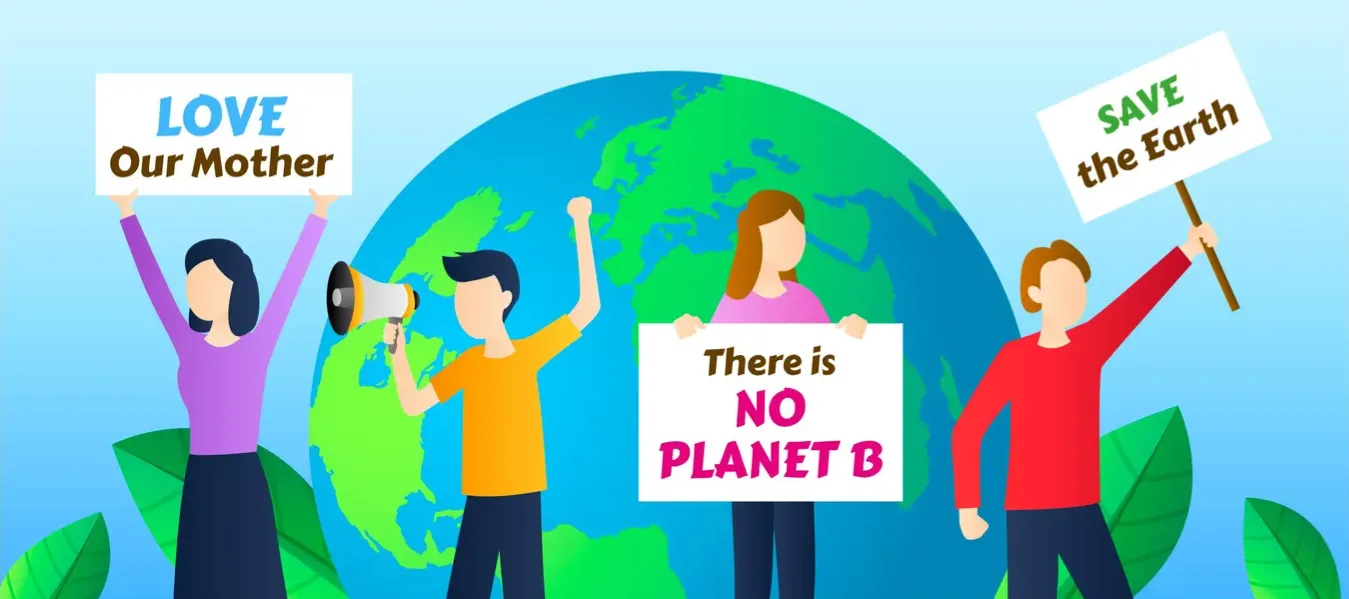
Climate change is a major challenge affecting Earth's weather patterns, sea levels, and ecosystems. Scientists have confirmed that human activities, like burning fossil fuels for energy, release large amounts of greenhouse gases such as carbon dioxide into the atmosphere. These gases trap heat, causing Earth's average temperatures to rise—a process known as global warming. The impacts include more frequent heatwaves, stronger storms, melting glaciers, and rising oceans, threatening both natural environments and human societies.
Mechanisms of Climate Change and Mitigation
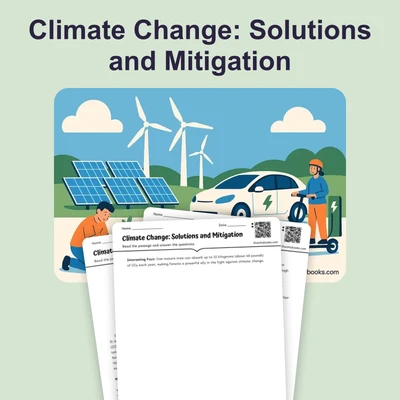
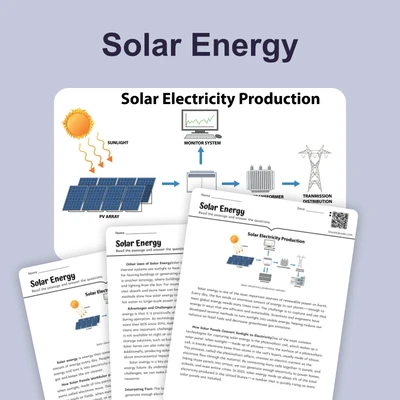
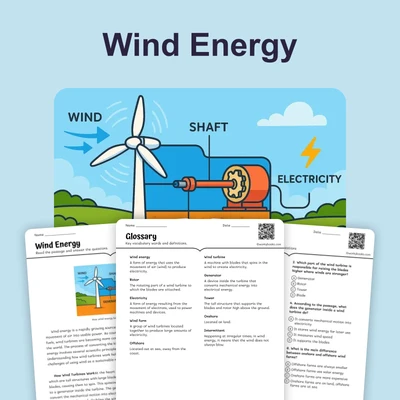
The main driver of climate change is the increase in greenhouse gases, which act like a blanket around the planet. To slow down or reduce climate change, scientists and engineers focus on mitigation—actions that limit or prevent further emissions. One important strategy is switching to renewable energy sources like solar, wind, and hydropower, which produce electricity without polluting the air. Increasing energy efficiency in buildings, factories, and transportation also reduces energy waste. For example, LED lights use about 75% less energy than traditional bulbs. Reforestation, or planting new trees, removes carbon dioxide from the air because trees absorb CO2 during photosynthesis. New technology, such as carbon capture, can trap CO2 from factories and power plants before it enters the atmosphere. These efforts work together to slow the pace of climate change.
Adaptation, Policy, and Individual Actions
Even with mitigation, some climate changes are unavoidable, so communities must also focus on adaptation. This means preparing for impacts by building flood defenses, changing farming methods, or developing drought-resistant crops. Governments and organizations use policy tools like carbon pricing, which charges companies for emitting greenhouse gases. International agreements, such as the Paris Agreement, encourage countries to work together to reduce emissions. Individuals can help by using public transportation, reducing energy use, or eating less meat, which can lower their carbon footprint. Technology solutions, like smart grids and electric vehicles, also help society adapt and reduce emissions.
Systems Thinking and Hope for the Future
Addressing climate change requires systems thinking—understanding how energy, technology, policy, and human behavior interact. Scientific research provides evidence that coordinated actions can make a real difference. For example, the European Union reduced greenhouse gas emissions by over 20% between 1990 and 2020 by combining renewable energy policies and efficiency measures. While the challenge is complex, every step—from planting a tree to changing international laws—contributes to a more sustainable planet. The choices society makes today will shape the Earth's climate for generations to come.
Interesting Fact: Every hour, the sun provides enough energy to power the entire Earth for a year if it could be fully captured and used.
Comprehension quiz (10 questions)
1. What is the main cause of climate change described in the passage?
2. Which of the following is an example of mitigation?
3. What is adaptation in the context of climate change?
4. How can individuals help reduce their carbon footprint?
5. What does 'energy efficiency' mean in the passage?
6. What does the term 'carbon capture' refer to?
7. Why are international agreements like the Paris Agreement important?
8. If a city builds flood defenses to prepare for rising sea levels, what action is this?
9. True or False: Renewable energy sources like wind and solar do not pollute the air.
10. True or False: Every step, big or small, can help address climate change.
Perfect for the way you teach
- Build comprehension skills
- Auto-graded quiz
- Differentiated reading
- Read together at home
- Improve fluency
- Quiet reading time
- Reading curriculum support
- Independent practice
- Track Lexile growth