This learning resource is available in interactive and printable formats. The interactive worksheet can be played online and assigned to students. The Printable PDF version can be downloaded and printed for completion by hand.
This comprehensive middle school science passage explores the effects of climate change on Earth's systems and life, aligning with NGSS standards MS-ESS3-5 and MS-LS4-4. Students will learn how greenhouse gases trap heat, leading to global warming, extreme weather, and melting ice. The passage explains the science behind sea level rise, ocean acidification, and ecosystem shifts, using real-world examples and scientific evidence. It emphasizes cause-and-effect relationships, showing how changes in one system can cascade into others. The passage is accompanied by a glossary of key terms, differentiated reading versions, Spanish translations, and a variety of activities including a multiple-choice quiz, writing prompts, and graphic organizers. Audio integration is supported for accessibility. This resource is ideal for engaging grades 6-8 students in scientific thinking and helping them understand the interconnected impacts of climate change.
CONTENT PREVIEW
Expand content preview
Effects of Climate Change
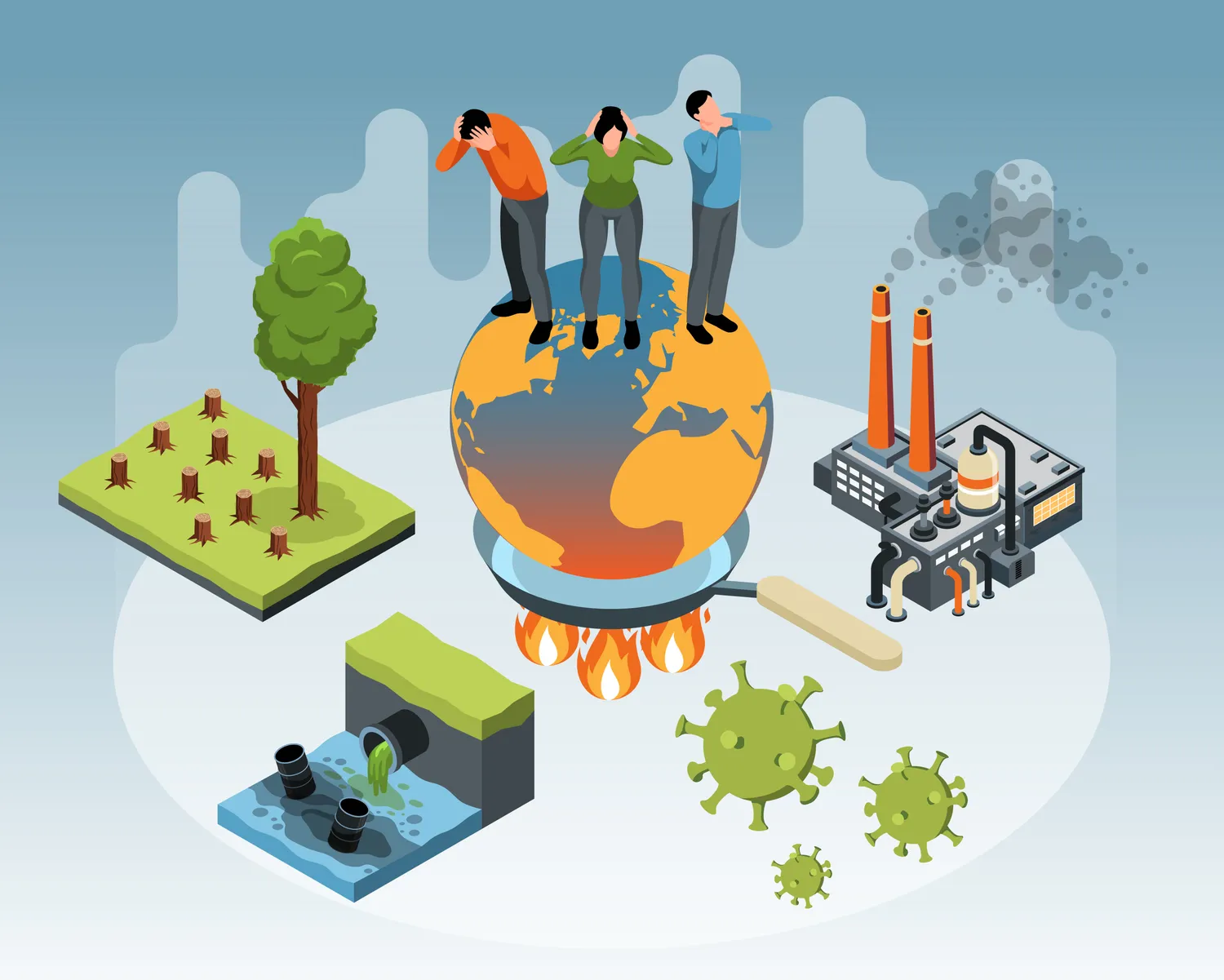
Climate change is a major shift in Earth's average weather patterns over time. In recent decades, scientists have observed rising global temperatures, more frequent weather extremes, and changes in ecosystems. These changes are connected to increased levels of greenhouse gases in the atmosphere, mainly from human activities like burning fossil fuels. Understanding how climate change affects Earth’s systems helps us prepare for the future and protect the planet.
How Climate Change Affects Earth’s Systems
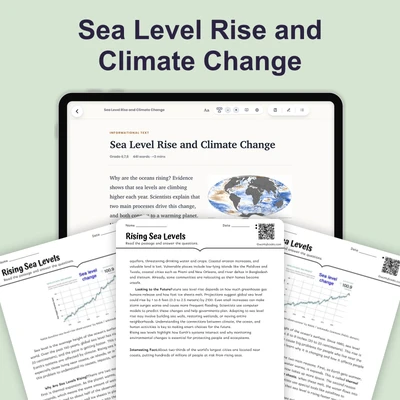
The mechanism behind climate change begins with greenhouse gases such as carbon dioxide and methane. These gases trap heat in Earth's atmosphere, a process known as the greenhouse effect. As humans release more greenhouse gases, mostly by burning coal, oil, and natural gas, the planet warms. Since the late 1800s, Earth's average surface temperature has increased by about 1.1°C (2°F). This warming causes ice sheets and glaciers to melt, adding water to the oceans and raising sea levels. For example, between 1993 and 2020, global sea level rose about 9 centimeters (3.5 inches). Warmer air also holds more moisture, leading to heavier rainfall in some places and droughts in others.
Impacts on Oceans and Ecosystems
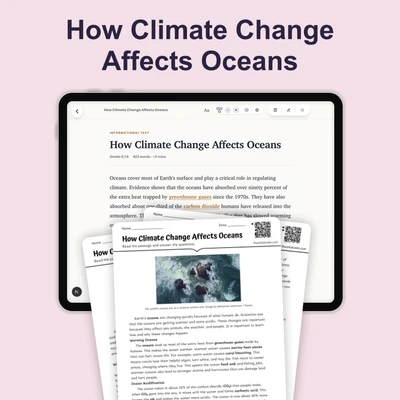
Rising temperatures are not the only way climate change affects the planet. The oceans absorb much of the excess heat, causing sea surface temperatures to rise. Warmer oceans can fuel stronger hurricanes and disrupt marine food webs. Additionally, oceans absorb about 30% of the carbon dioxide released by humans, leading to ocean acidification. This makes it harder for organisms like corals and shellfish to build their skeletons and shells. On land, plants and animals are shifting their ranges in response to changing temperatures and rainfall. Some species are moving toward the poles or higher elevations, while others struggle to survive.
Cascading and Human Effects
Climate change creates cascading effects—changes in one system cause impacts in others. For instance, melting Arctic ice not only raises sea levels but also reduces habitat for species like polar bears. As permafrost thaws, it can release more greenhouse gases, further speeding up warming. Human societies also face risks: coastal cities may flood, farming may become less reliable, and health problems can increase due to heat waves and new diseases. Scientists use data, models, and long-term observations to understand these complex interactions, helping communities adapt and reduce emissions.
By recognizing the interconnectedness of Earth's systems, we can see why climate change is a global issue that requires scientific understanding and cooperation.
Interesting Fact: Earth’s atmosphere now contains more carbon dioxide than at any time in at least 800,000 years.
What is the main cause of recent climate change, according to scientists?
Increased greenhouse gases from human activitiesNatural changes in Earth’s orbitVolcanic eruptionsSolar flares
What has happened to Earth’s average surface temperature since the late 1800s?
It has increased by about 1.1°C (2°F)It has stayed the sameIt has decreased by 1°CIt changes randomly
What does the term 'ocean acidification' mean as used in the passage?
Oceans becoming more acidic as they absorb carbon dioxideOceans losing saltOceans freezing overOceans becoming warmer
What are cascading effects in the context of climate change?
Chain reactions where changes in one system cause changes in othersRainfall increasing everywhereAll animals moving to new placesClouds moving faster
What is one way climate change affects animals and plants, according to the passage?
They shift their habitats to cooler areasThey stop growing entirelyThey become immune to diseasesThey all move to the ocean
Which process describes how greenhouse gases trap heat in Earth's atmosphere?
Why do scientists use data, models, and long-term observations when studying climate change?
To understand complex interactions and predict future impactsTo make weather forecasts onlyTo find fossilsTo grow new plants
Which statement is true based on the passage?
Oceans absorb both heat and carbon dioxide from the atmosphereOceans are not affected by climate changeAll glaciers are growing largerAnimals are not affected by climate change
True or False: Sea levels are rising because ice sheets and glaciers are melting.
TrueFalse
True or False: Human health can be impacted by climate change through heat waves and new diseases.
TrueFalse
Perfect For:
👩🏫 Teachers
• Reading comprehension practice
• Auto-graded assessments
• Literacy skill development
👨👩👧👦 Parents
• Reading practice at home
• Comprehension improvement
• Educational reading time
🏠 Homeschoolers
• Reading curriculum support
• Independent reading practice
• Progress monitoring
Reading Features:
📖
Reading Passage
Engaging fiction or nonfiction text
❓
Comprehension Quiz
Auto-graded questions
📊
Instant Feedback
Immediate results and scoring
📄
Printable Version
Download for offline reading
🔊
Read Aloud
Voice-over with word highlighting
Reviews & Ratings
No reviews yet. Be the first to share your experience!
Related Content
Natural Disaster: Hurricanes
Hurricanes are massive storms with strong winds and rain. Tracking and preparing for them helps protect people in their ...
RI.3.1RI.4.4RI.4.2RI.5.2
The Giant Isopod: Biological Evolution
This NGSS passage examines how giant isopods evolved for deep-sea survival, including slow metabolism for food scarcity,...
MS-LS4-4RI.6.3RI.7.3RI.8.8
How Climate Change Affects Animal Migration
This NGSS-aligned science reading passage explains how climate change affects animal migration by altering seasonal cues...
MS-LS2-6MS-ESS3-5
What Is Global Warming?
This NGSS-aligned reading passage explains global warming, the greenhouse effect, and how human activities like burning ...
MS-ESS3-5
What Causes Global Warming?
This NGSS-aligned reading passage explains what causes global warming, focusing on how human activities like burning fos...
MS-ESS3-5
How to Stop Global Warming
This NGSS-aligned reading passage helps students understand how to stop global warming by reducing greenhouse gases. It ...
MS-ESS3-5
Human Impacts: Climate Change
This standards-aligned science reading passage for grades 6-8 explains the mechanisms and effects of human-driven climat...
MS-LS2-4MS-ESS3-5
What Is Biodiversity?
This comprehensive science reading passage for grades 6-8 introduces students to biodiversity and explores its importanc...
MS-LS2-5MS-LS4-4
Climate Change: Vulnerable Ecosystems
This middle school science passage, aligned with NGSS standards MS-ESS3-5 and MS-LS2-4, helps students understand how cl...
MS-ESS3-5MS-LS2-4
Climate Change: Solutions and Mitigation
This passage explores scientific solutions and mitigation strategies for climate change, designed for middle school scie...
MS-ESS3-4MS-ESS3-5
Vertebrates: Fishes
This middle school science reading passage offers an in-depth look at fishes, a major group of vertebrates. It covers fi...
MS-LS4-2MS-LS4-4
Vertebrates: Amphibians
This comprehensive middle school science passage dives into the fascinating world of amphibians, a group of vertebrates ...
MS-LS4-2MS-LS4-4
Vertebrates: Reptiles
This comprehensive science passage for grades 6-8 introduces students to reptiles, a fascinating class of vertebrates. A...
MS-LS4-2MS-LS4-4
Vertebrates: Birds
This middle school science passage explores birds as vertebrates, focusing on their unique adaptations such as feathers,...
MS-LS4-2MS-LS4-4
Vertebrates: Mammals
This comprehensive passage introduces middle school students to the class Mammalia and their defining characteristics, i...
MS-LS4-2MS-LS4-4
Invertebrates: Arthropods
This comprehensive science passage introduces middle school students to the phylum Arthropoda, the largest and most dive...
MS-LS4-2MS-LS4-4
Biodiversity and Its Importance
This comprehensive middle school science passage explores the concept of biodiversity at the genetic, species, and ecosy...
MS-LS4-4MS-LS2-5
Scientific Inquiry in Earth Science
This passage explores scientific inquiry in Earth science for grades 6-8, aligned with NGSS standards MS-ESS1-4, MS-ESS2...
MS-ESS1-4MS-ESS2-1MS-ESS3-5SEP
Galápagos Islands
This engaging science passage explores the Galápagos Islands, a volcanic archipelago located off the coast of Ecuador in...
MS-LS2-1MS-LS4-4MS-ESS3-4
Great Barrier Reef
This passage introduces middle school students to the Great Barrier Reef, the world's largest coral reef system, located...