Assassination of Archduke Franz Ferdinand — Reading Comprehension
Rate this
Premium Resource
Present
Present in classroom. No work saved
Assign
Classroom with student accounts, Track progress
Quick Play
No student accounts, assign with a link
Grades
5
6
7
8
PRINT+DIGITAL RESOURCE
This learning resource is available in interactive and printable formats. The interactive worksheet can be played online and assigned to students. The Printable PDF version can be downloaded and printed for completion by hand.
This comprehensive history reading passage explores the assassination of Archduke Franz Ferdinand and its pivotal role in sparking World War I. Students will learn about the political tensions in early 20th-century Europe, the details of the event in Sarajevo, and how this assassination led to a global conflict. The passage includes disciplinary vocabulary, references to primary sources like eyewitness accounts, and explains the human and geographic impact of the assassination. Activities include a multiple-choice quiz, writing prompts, and graphic organizers designed to develop analytical skills. The resource aligns with California HSS 10.5.1 and RH.6-8.1 standards, and provides both standard and simplified passages with read aloud audio and a full Spanish translation for classroom accessibility. This passage enables students to connect the event to broader themes like alliances, nationalism, and change over time.
CONTENT PREVIEW
Expand content preview
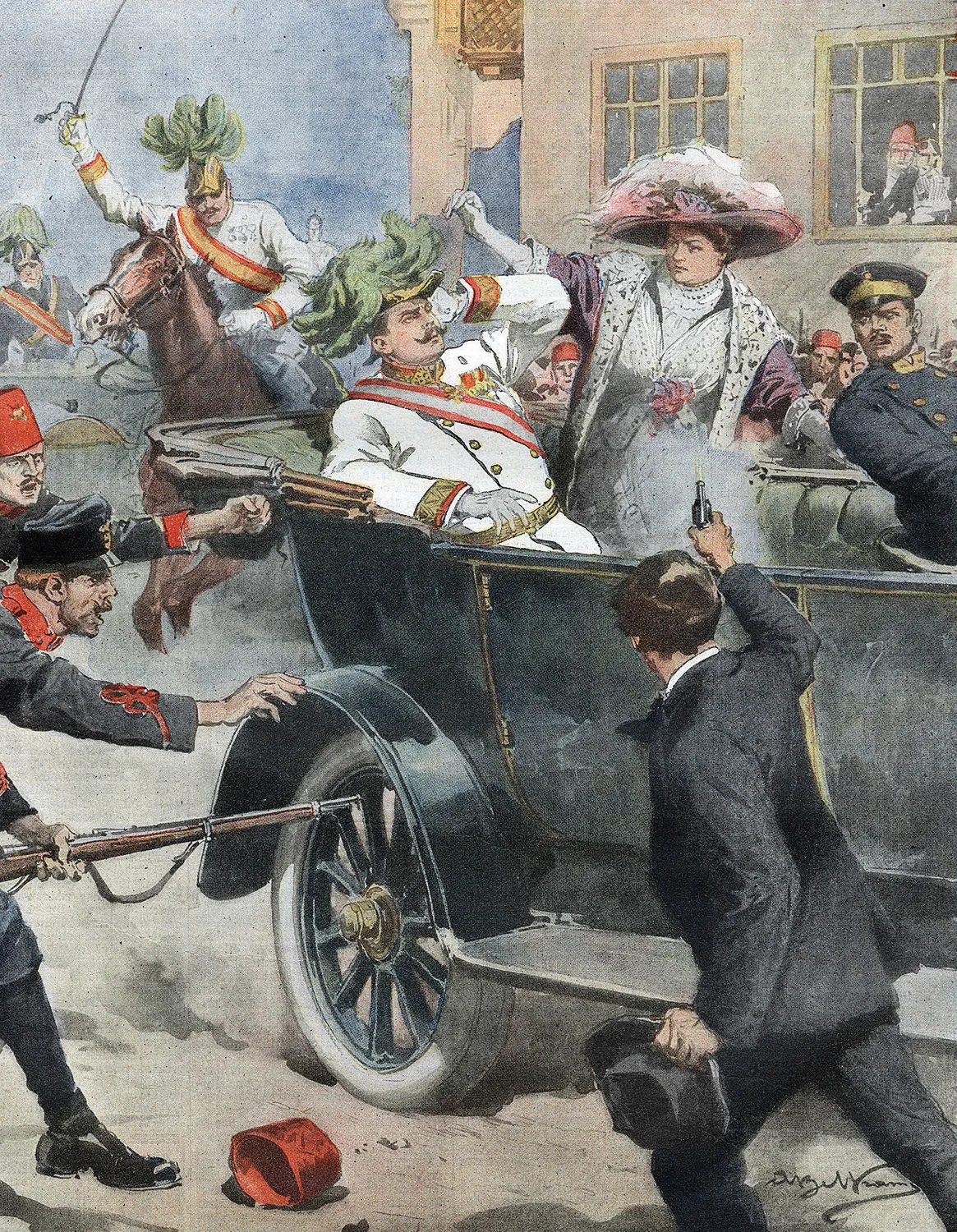
"Assassination of Archduke Franz Ferdinand"/ Wikimedia Commons (Public domain).
The assassination of Archduke Franz Ferdinand of Austria-Hungary on June 28, 1914, marked a turning point in world history. This event, which took place in the city of Sarajevo, is widely recognized as the immediate spark that ignited World War I. Understanding the causes and consequences of this moment helps explain how a single act can change the course of nations.
Archduke Franz Ferdinand was the heir to the throne of the Austro-Hungarian Empire, a vast and diverse empire in Central Europe. On June 28, 1914, he and his wife, Sophie, visited Sarajevo, the capital of Bosnia. Bosnia had recently been annexed by Austria-Hungary, which angered many Serbians and other Slavic nationalists who wanted independence. The city was filled with tension. Members of the secret organization known as the Black Hand plotted to kill the Archduke as a protest against Austro-Hungarian rule.
On the morning of the visit, several conspirators waited along the motorcade route. One man threw a grenade at the Archduke's car, but it missed. Later, as Franz Ferdinand's driver took a wrong turn, the car stopped near a café where Gavrilo Princip, one of the conspirators, happened to be standing. Seizing the opportunity, Princip fired two shots, killing both Franz Ferdinand and Sophie. This tragic event shocked Europe. Eyewitness accounts, such as the testimony of Count Harrach, who was in the car, provide details about the chaos and confusion of the scene.
The assassination had profound consequences. Austria-Hungary blamed Serbia and issued an ultimatum. When Serbia did not meet all the demands, Austria-Hungary declared war. This triggered a chain reaction among European alliances. Russia supported Serbia, while Germany backed Austria-Hungary. France and Britain were soon drawn in. Within weeks, much of Europe was at war. The assassination reveals how interconnected political alliances and rising nationalism could escalate a local event into a global conflict. Contemporary newspapers and diplomatic communications from July 1914 show how quickly tensions rose and decisions were made.
The impact of the assassination went beyond politics. It changed the daily lives of millions, as soldiers and civilians faced new hardships. The event also marked a shift in the balance of power in Europe. Over four years, World War I would reshape borders, societies, and the hierarchies within them. The assassination of Franz Ferdinand is a clear example of how local issues and rivalries can have worldwide effects.
This event connects to broader themes in world history, such as the causes of war, the impact of nationalism, and the importance of understanding complex political relationships.
Interesting Fact: The Archduke’s license plate on the day of his death read “A III 118,” which some historians note resembles the date Armistice was signed, November 11, 1918, marking the end of World War I.
When was Archduke Franz Ferdinand assassinated?
June 28, 1914July 4, 1914November 11, 1918August 1, 1914
Where did the assassination occur?
ViennaSarajevoBerlinParis
Who killed Franz Ferdinand?
Count HarrachGavrilo PrincipSophieThe Black Hand leader
Why were Serbians angry about Bosnia?
Bosnia was independentBosnia joined GermanyAustria-Hungary annexed BosniaBosnia was part of Russia
How did alliances lead to a world war?
They stopped fightingThey encouraged peaceThey drew more countries inThey made Bosnia independent
What was a consequence of the assassination?
World War I startedAustria-Hungary collapsedBosnia gained independenceThe Black Hand won
The assassination started World War I. True or false?
TrueFalse
What does 'conspirators' mean?
Leaders of a countrySecret planners of a crimeSoldiers in an armyCitizens of Sarajevo
Perfect For:
👩🏫 Teachers
• Reading comprehension practice
• Auto-graded assessments
• Literacy skill development
👨👩👧👦 Parents
• Reading practice at home
• Comprehension improvement
• Educational reading time
🏠 Homeschoolers
• Reading curriculum support
• Independent reading practice
• Progress monitoring
Reading Features:
📖
Reading Passage
Engaging fiction or nonfiction text
❓
Comprehension Quiz
Auto-graded questions
📊
Instant Feedback
Immediate results and scoring
📄
Printable Version
Download for offline reading
🔊
Read Aloud
Voice-over with word highlighting
Reviews & Ratings
No reviews yet. Be the first to share your experience!
Related Content
Causes of World War I
This comprehensive history reading passage explores the complex causes of World War I, focusing on alliances, nationalis...
World War I Impact on America
This engaging history reading passage explores World War I's impact on society and culture, highlighting key changes in ...
Trench Warfare in World War I
This comprehensive history reading passage explores the realities of life in the trenches during World War I, aligned to...
Russia Exits World War I
This comprehensive world history reading passage explores the Russian Revolution and how Russia exited World War I. Stud...
Events Leading to World War II
This passage explores the complex causes of World War II, focusing on the interwar period, the Treaty of Versailles, the...
The Western Front in World War I
This engaging history reading passage explores the major battles of the Western Front during World War I, focusing on th...
War Bonds: Financing World War II
This passage examines the critical role of war bonds in financing World War II, focusing on how the U.S. government enco...
D2.HIS.2.3-5D2.HIS.3.3-5RI.4.3RI.4.4
America Enters the War: 1917
This comprehensive history reading passage explores America’s entry into World War I in 1917, examining the causes, even...
Leaders and Decisions in World War II
This passage explores the major leaders of World War II and the critical decisions they made that shaped the course of g...
American Life During World War II
This history reading passage explores life on the home front during World War II, focusing on the experiences of ordinar...
America Enters World War II
This history reading passage analyzes America’s entry into World War II, focusing on the causes, perspectives, and conse...
D2.HIS.2.3-5D2.HIS.3.3-5RI.4.3RI.4.4
World War II Home Front
This rigorous U.S. history reading passage explores the complexities and challenges of the World War II Home Front, focu...
D2.HIS.2.3-5D2.HIS.3.3-5RI.6.3RI.6.4
Japan Surrenders: World War II Ends
This comprehensive history reading passage examines the pivotal moment when Japan surrendered in August 1945, bringing W...
D2.HIS.2.3-5D2.HIS.3.3-5RI.4.3RI.4.4
Black History Month Word Search
RF.4.3RF.5.3L.4.4L.5.4
The Korean War
This comprehensive history reading passage explores the causes, events, and impact of the Korean War, the first major co...
Word Families: —ight Words
This word families worksheet focuses on -ight words and is designed to help 4th-grade students practice their reading an...
RF.4.4
Worky World! Capitalize Locations
This capitalization sheet will help students to practice capitalizing geographic locations. Illustrated on the sheet is ...
L.2.2.AL.2.2
Easy Black History Month Word Search
RF.4.3RF.5.3L.4.4L.5.4
Anne Frank's Message to the World
This reading passage explores the life and legacy of Anne Frank, a Jewish teenager who documented her experiences during...
America Fights in the Vietnam War
This engaging world history reading passage explores the Vietnam War and the Domino Theory, a key idea that shaped U.S. ...