Beneficial and Harmful Bacteria — Reading Comprehension
Rate this
Premium Resource
Present
Present in classroom. No work saved
Assign
Classroom with student accounts, Track progress
Quick Play
No student accounts, assign with a link
Grades
6
PRINT+DIGITAL RESOURCE
This learning resource is available in interactive and printable formats. The interactive worksheet can be played online and assigned to students. The Printable PDF version can be downloaded and printed for completion by hand.
This engaging reading passage, available with audio integration, delves into the fascinating world of bacteria, exploring their dual roles as both beneficial and harmful organisms within ecosystems and for human health. Designed for Grade 6 students, it aligns with NGSS standards LS2.C (Ecosystem Dynamics) and LS4.D (Biodiversity), explaining key concepts like probiotics, pathogens, and the immune system in simple language. Through this passage, students will understand how these tiny microbes impact everything from digestion to disease, enhancing their comprehension of biodiversity and the intricate balance of life. Keywords: bacteria, beneficial bacteria, harmful bacteria, microbes, human health, ecosystems, probiotics, pathogens, immune system.
CONTENT PREVIEW
Expand content preview
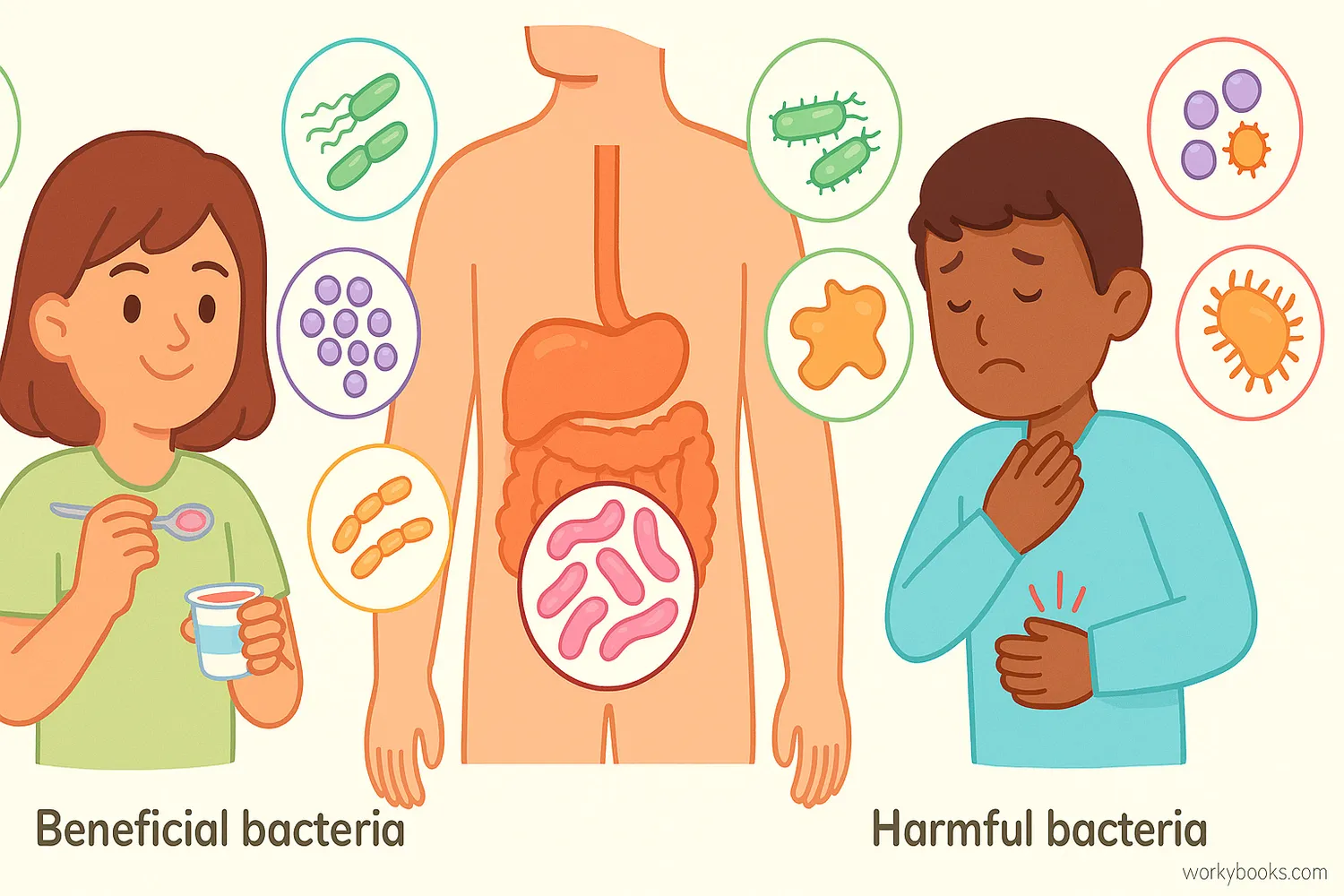
Beneficial and harmful bacteria illustrated in digestion, illness, and ecosystem roles.
Imagine a world bustling with tiny, invisible creatures all around us, even inside us! These amazing organisms are called bacteria. They are a type of microbe, meaning they are so small you can only see them with a microscope. While some bacteria have a bad reputation, many are incredibly important for life on Earth and for our own well-being. Understanding their role is key to understanding biodiversity and how ecosystems function.
Let's start with the good guys: beneficial bacteria. These helpful microbes live in many places. Inside your body, especially in your gut, they play a vital role in digestion. They break down food that your body can't process on its own, helping you absorb important nutrients. These gut bacteria are often called probiotics, and you might find them in foods like yogurt. Beneficial bacteria also help train your immune system to fight off harmful invaders. In nature, bacteria are essential decomposers. They break down dead plants and animals, returning nutrients to the soil. This process is crucial for healthy ecosystems and helps plants grow.
However, not all bacteria are friendly. Some are harmful bacteria, also known as pathogens. These are the bacteria that can make you sick. When harmful bacteria enter your body, they can multiply rapidly and produce toxins, leading to illnesses like strep throat, food poisoning, or skin infections. Your immune system works hard to combat these pathogens, but sometimes medical help, like antibiotics, is needed. It's important to practice good hygiene, like washing your hands, to prevent the spread of these harmful microbes.
So, while some bacteria can be a cause for concern, remember that the majority are either harmless or incredibly beneficial. They are a fundamental part of our world, shaping everything from our personal health to the health of our planet. Next time you eat yogurt, think about the tiny workers inside helping your body!
Interesting Fact: There are more bacterial cells in your body than human cells, outnumbering them by a ratio of roughly 10 to 1!
What are bacteria?
Invisible tiny creaturesLarge visible organismsOnly found in soilOnly found in animals
Which of these is a beneficial bacterium?
PathogensProbioticsToxinsAntibiotics
Which statement is true?
All bacteria are harmfulMost bacteria are helpful
How do beneficial bacteria help in digestion?
Absorb nutrients directlyBreak down foodCreate new foodsMake food poisonous
Why are bacteria called decomposers?
They build new soilThey eat living plantsThey break down dead matterThey create oxygen
What does 'pathogen' mean in the passage?
Helpful microbeHarmful bacteriaType of foodDigestion aid
What is one way to prevent harmful bacteria spread?
Eating more yogurtWashing your handsAvoiding all foodTaking antibiotics daily
How do beneficial bacteria help your immune system?
By producing toxinsBy making you sleepBy fighting invadersBy absorbing water
If a new probiotic drink is developed, what would it likely contain?
Harmful bacteriaBeneficial microbesPlant toxinsAntibiotic medicine
Why is bacteria being a 'decomposer' crucial for ecosystems?
It dries out soilIt keeps nutrients cyclingIt removes all plantsIt creates new species
Perfect For:
👩🏫 Teachers
• Reading comprehension practice
• Auto-graded assessments
• Literacy skill development
👨👩👧👦 Parents
• Reading practice at home
• Comprehension improvement
• Educational reading time
🏠 Homeschoolers
• Reading curriculum support
• Independent reading practice
• Progress monitoring
Reading Features:
📖
Reading Passage
Engaging fiction or nonfiction text
❓
Comprehension Quiz
Auto-graded questions
📊
Instant Feedback
Immediate results and scoring
📄
Printable Version
Download for offline reading
🔊
Read Aloud
Voice-over with word highlighting
Reviews & Ratings
No reviews yet. Be the first to share your experience!
Related Content
The Nature of Life Science
This passage, aligned with NGSS MS-LS1-1, introduces students in grades 6-8 to the foundational concepts of life science...
MS-LS1-1
Science Vocabulary
This worksheet on domain-specific words will help students learn some science vocabulary. Students will be asked to matc...
L.3.6L.3.4.A
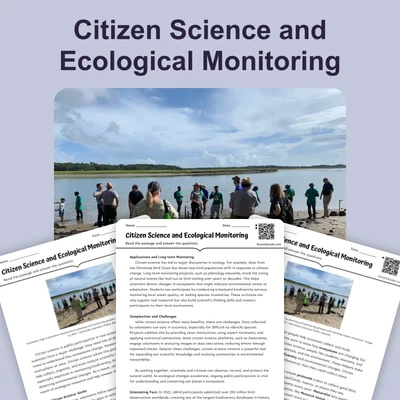
Citizen Science and Ecological Monitoring
This engaging passage for grades 6-8 introduces the concept of citizen science and its critical role in ecological monit...
MS-LS2-1
Ecosystem Services
This engaging middle school science passage introduces students to the concept of ecosystem services, the vital benefits...
MS-LS2-5MS-ESS3-3
Simple Machines Science Report
This science writing task requires students to clearly explain how three simple machines work using precise domain-speci...
W.5.4
Photosynthesis in Ecosystems
This comprehensive passage for grades 6-8 explores the fundamental role of photosynthesis in ecosystems, aligning with N...
MS-LS1-6MS-LS2-3
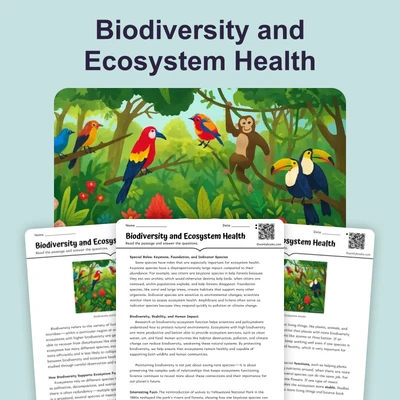
Biodiversity and Ecosystem Health
This comprehensive middle school science passage explores the relationship between biodiversity and ecosystem health, al...
MS-LS2-5
Desert Ecosystems
This informative writing worksheet on desert ecosystems supports CCSS.ELA-LITERACY.W.5.2.d on using precise language and...
W.5.2.D
Biomes: Aquatic Ecosystems
This middle school science passage, aligned with NGSS standard MS-LS2-1, introduces students to the key features and mec...
MS-LS2-1
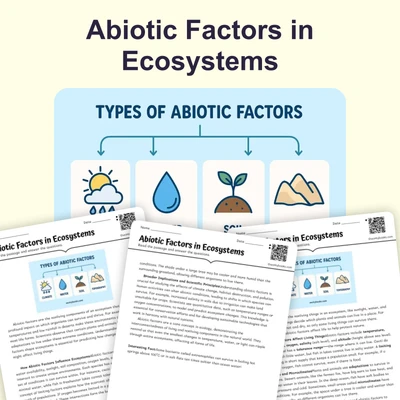
Abiotic Factors in Ecosystems
This comprehensive informational reading passage is designed for middle school science students and aligns with NGSS sta...
MS-LS2-1
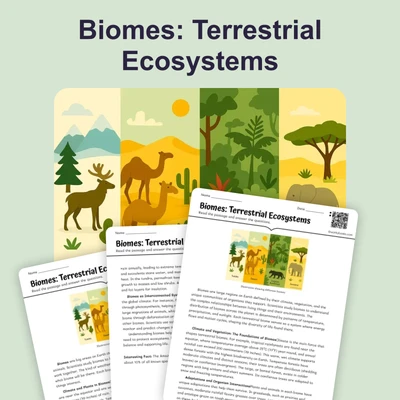
Biomes: Terrestrial Ecosystems
This NGSS-aligned science reading passage for grades 6-8 provides a comprehensive survey of Earth’s major terrestrial bi...
MS-LS2-1
Water in Ecosystems
This engaging passage for grades 6-8 explores the essential role of water in ecosystems, tracing its movement through va...
MS-LS2-3MS-ESS2-4
Producers: The Foundation of Ecosystems
This comprehensive science passage explains the critical role of producers, or autotrophs, in all ecosystems. Covering b...
MS-LS2-3MS-LS1-6
Arctic Fox Food Web and Ecosystem Role
This engaging audio-integrated passage, "Arctic Fox Food Web and Ecosystem Role," delves into the critical contributions...
What Is the Main Source of Carbon in an Ecosystem?
This NGSS-aligned science reading passage helps middle school students explore the main source of carbon in ecosystems: ...
MS-LS2-3
The Pumpkin Life Cycle
This informational worksheet explores the pumpkin lifecycle, guiding students through procedural steps in a scientific t...
RI.2.3RI.2.10
Ecosystem Interactions Word Sort
This word sort explores different types of relationships between organisms in ecosystems. Students categorize 12 differe...
What Is Earth Science?
This engaging middle school science passage introduces students to the field of Earth science, aligning with NGSS standa...
MS-ESS1MS-ESS2MS-ESS3SEP
Meadow Ecosystem
This reading passage, 'Life in the Meadow', is designed for elementary students to understand NGSS LS2.A: Interdependent...
2-LS2-1
Tools and Technology in Earth Science
This middle school science reading passage explores the wide range of tools and technologies used in Earth science, from...