Benthic Zone Organisms
Interactive passage with audio narration, comprehension questions, and printable PDF.
By completing this purchase you agree to our Terms of Use and Privacy Policy. Your subscription renews automatically until you cancel. You can cancel anytime from your account settings. All sales are final and non-refundable. Digital content is available for download in your account immediately upon purchase.
What's included
Benthic Zone Organisms preview and details
About this printable Benthic Zone Organisms science reading passage, NGSS-aligned (Grade 6)
Sample passage and quiz from Benthic Zone Organisms
Reading passage and comprehension quiz preview
Benthic Zone Organisms
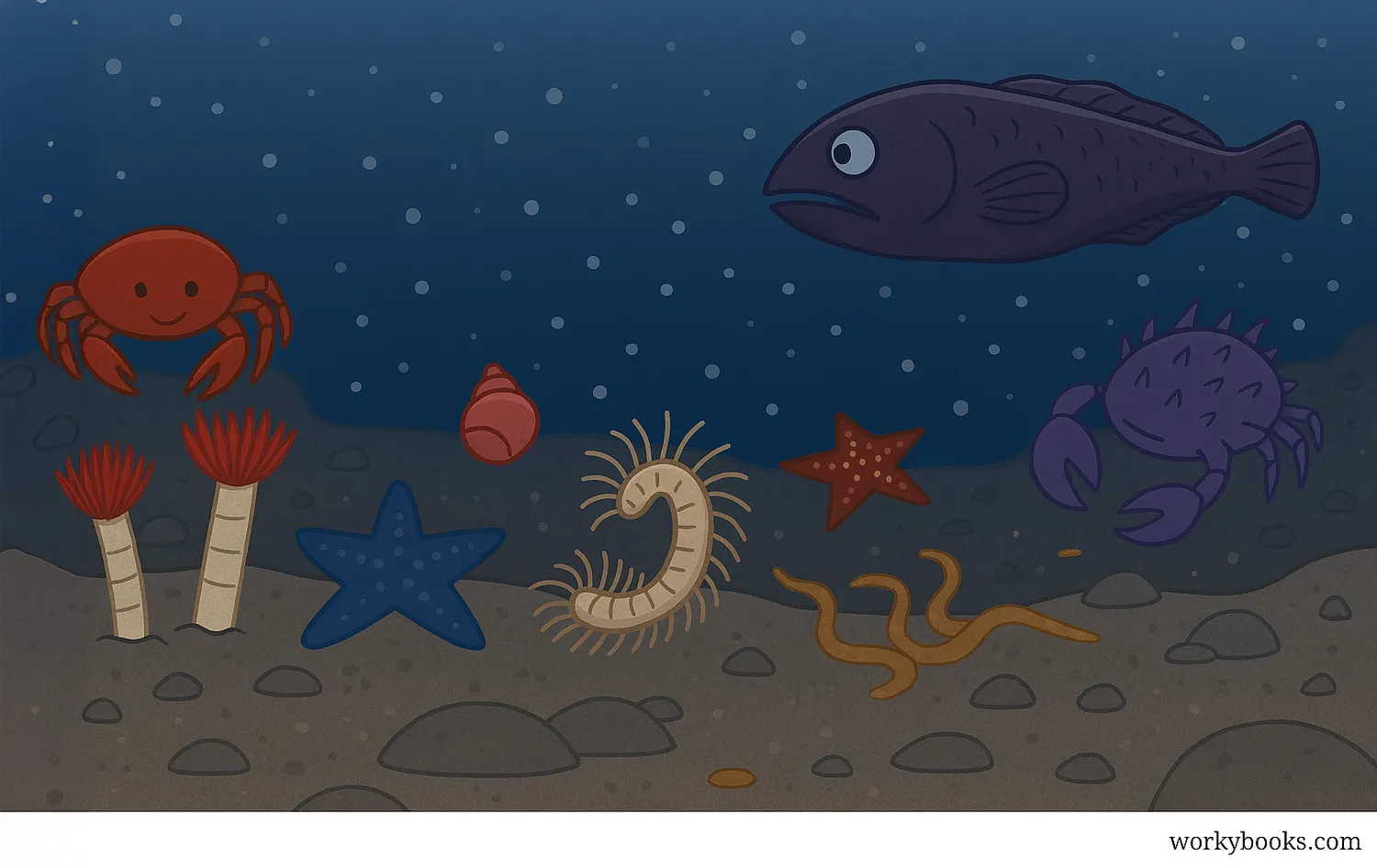
Imagine a world hidden beneath miles of water, where sunlight never reaches, and the pressure is immense. This is the benthic zone, the ecological region at the lowest level of a body of water, including the sediment surface and some sub-surface layers. It's often called the ocean floor or seabed, and it's home to an astonishing variety of creatures that have developed unique ways to survive in this extreme environment. Studying these benthic organisms is crucial to understanding the health of our planet's oceans and the intricate interdependent relationships that exist within marine ecosystems.
The benthic zone can be found in oceans, lakes, and rivers, but the deep ocean benthic zone is particularly fascinating due to its harsh conditions. Here, temperatures are near freezing, and the weight of the water above creates crushing pressure. Despite these challenges, life flourishes. Many benthic organisms are detritivores, meaning they feed on detritus—dead organic matter that drifts down from the upper layers of the ocean. This constant rain of organic material, often called "marine snow," is the primary food source for many deep-sea dwellers.
Creatures like sea stars, crabs, worms, and certain types of fish are common benthic inhabitants. Sea stars, for instance, are echinoderms that crawl along the seabed, often preying on mussels and clams. Crabs scavenge for food and shelter in crevices. Some deep-sea worms, like tube worms, can grow to incredible lengths and form symbiotic relationships with bacteria that convert chemicals from hydrothermal vents into energy, a process called chemosynthesis. This is a remarkable example of life thriving without sunlight, completely separate from the photosynthesis that powers most surface ecosystems.
These organisms play vital roles in the ocean's nutrient cycling and overall ecological balance. By consuming detritus, they help to recycle nutrients back into the ecosystem, preventing the accumulation of dead organic matter. Their movements on the seabed can also stir up sediments, releasing trapped nutrients. The diversity of life in the benthic zone, from tiny microorganisms to large deep-sea fish, highlights the incredible adaptability of life on Earth and the importance of preserving these unique marine habitats. Understanding how these organisms interact with their environment and with each other is key to protecting these fragile deep-sea ecosystems from human impacts like pollution and deep-sea mining.
Interesting Fact: Some deep-sea benthic organisms, like certain species of jellyfish and squid, can produce their own light through a process called bioluminescence, using it to attract prey or ward off predators in the perpetual darkness.
Comprehension quiz (10 questions)
1. Which zone is the lowest level of a body of water?
2. What is the primary food source for many deep-sea benthic dwellers?
3. True or False: The benthic zone is only found in oceans.
4. What does 'detritivore' mean based on the passage?
5. Why is the deep ocean benthic zone particularly fascinating?
6. How do tube worms survive near hydrothermal vents?
7. What role do benthic organisms play in nutrient cycling?
8. Why is studying benthic organisms important?
9. Which human activity might threaten deep-sea ecosystems?
10. What might happen if all detritivores disappeared?
Perfect for the way you teach
- Build comprehension skills
- Auto-graded quiz
- Differentiated reading
- Read together at home
- Improve fluency
- Quiet reading time
- Reading curriculum support
- Independent practice
- Track Lexile growth