This learning resource is available in interactive and printable formats. The interactive worksheet can be played online and assigned to students. The Printable PDF version can be downloaded and printed for completion by hand.
This educational passage delves into the fascinating world of binary fission, a fundamental process of asexual reproduction observed in single-celled organisms like bacteria. Designed for a 6th-grade reading level, the content aligns with NGSS Standard LS1.B: Growth and Development of Organisms, explaining how these microscopic life forms produce new organisms. Readers will learn about cell division, DNA replication, and the efficient way bacteria multiply, enhancing their understanding of basic biological processes. The passage uses simple language, defines key terms, and is integrated with audio for an engaging learning experience. It includes comprehension questions, a glossary, and short answer activities to reinforce learning about this vital biological mechanism.
CONTENT PREVIEW
Expand content preview
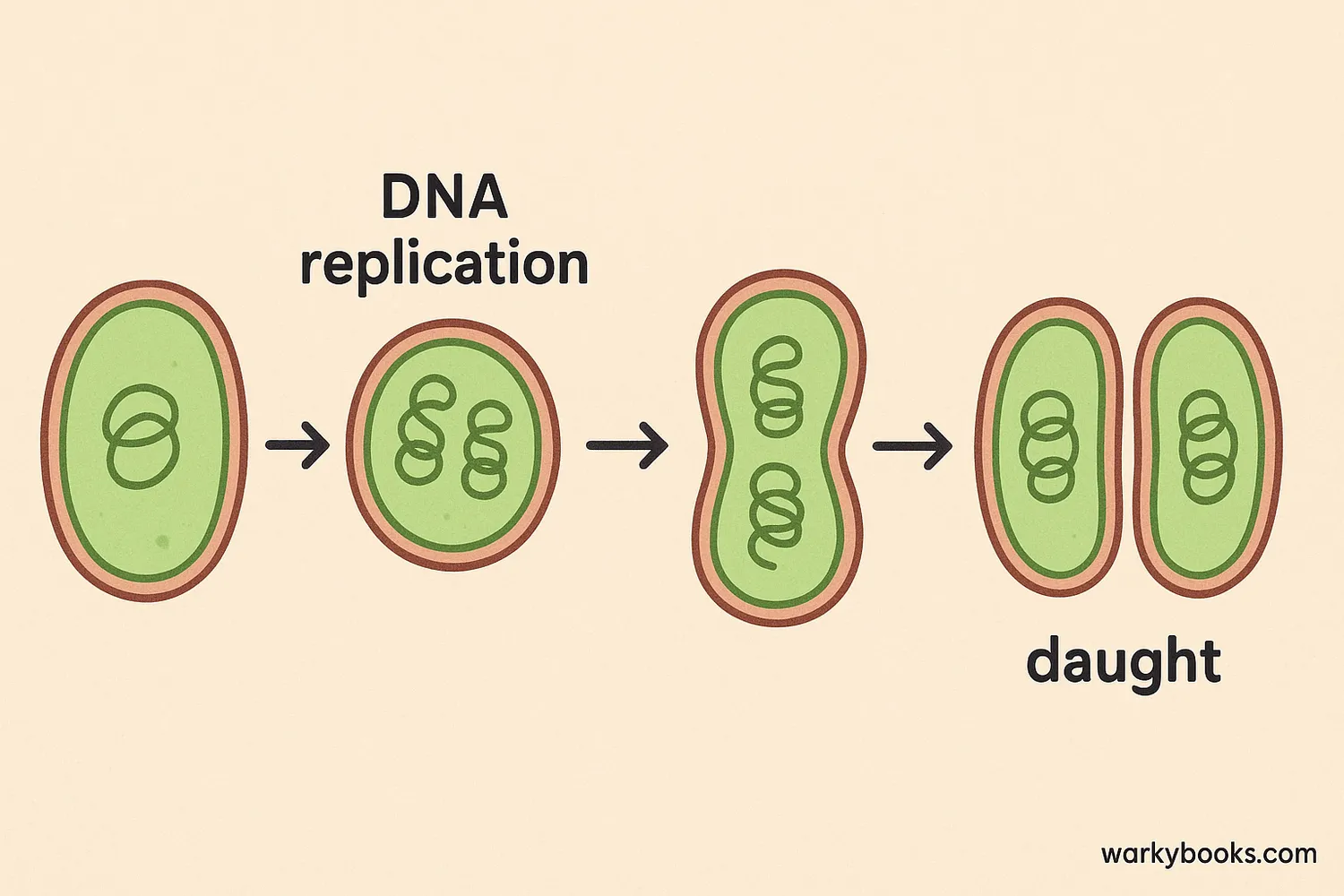
Binary fission: one cell splits into two identical daughter cells.
Imagine tiny life forms that can simply split themselves in half to create more of themselves. This amazing process is happening all around us, constantly, in the world of microscopic organisms. We're talking about binary fission, a type of asexual reproduction that single-celled organisms use to multiply.
So, what exactly is binary fission? It's a method where one parent cell divides into two identical daughter cells. Think of it like making an exact copy of yourself! This process is common in prokaryotes, which are organisms like bacteria that don't have a nucleus to hold their DNA. Unlike humans, who reproduce sexually with two parents, these tiny organisms only need one parent to create new life.
The process of binary fission starts with the cell getting ready to divide. First, the single, circular DNA molecule inside the bacterium makes a copy of itself. This is called DNA replication. It's crucial because each new daughter cell needs its own complete set of instructions to function.
Once the DNA has been copied, the two identical DNA molecules move to opposite ends of the parent cell. At the same time, the cell begins to grow larger. Then, a new cell wall and cell membrane start to form in the middle of the cell, pinching inward. This creates a barrier that will eventually separate the two new cells.
Finally, the cell completely divides, resulting in two separate, identical daughter cells. Each new cell is a clone of the original parent cell, meaning they have the exact same genetic material. This efficient way of reproducing allows bacteria populations to grow very quickly. Understanding binary fission helps us learn how single-celled organisms contribute to ecosystems and even how some infections spread. It’s a fundamental part of how life continues at the microscopic level, driving the growth and development of countless organisms.
Interesting Fact: Under ideal conditions, some bacteria can complete binary fission and double their population in as little as 20 minutes!
What is binary fission?
Cell divides in halfMaking food for cellsCells growing largerTwo cells joining
What is the result of binary fission?
Two identical cellsFour different cellsOne larger cellThree new cells
Which of these is a prokaryote?
A humanA bacteriumA plantA mushroom
Why is DNA replication important?
For cell growthTo make foodFor new cell instructionsTo remove waste
Bacteria reproduce quickly through binary fission. True or False?
TrueFalse
What does 'asexual reproduction' mean?
One parent makes offspringTwo parents make offspringOffspring are all differentOffspring are not living
In binary fission, the new cells are _____
Different from parentHalf the sizeIdentical to parentSmaller and weaker
Which structure forms in the middle?
New nucleusCell wall, membraneExtra DNAA flagellum
How is binary fission different from human reproduction?
Humans are largerHumans use two parentsHumans have more cellsHumans live longer
If a bacterium divides every 20 minutes, how many bacteria would there be after 40 minutes, starting with one?
TwoFourSixEight
Perfect For:
👩🏫 Teachers
• Reading comprehension practice
• Auto-graded assessments
• Literacy skill development
👨👩👧👦 Parents
• Reading practice at home
• Comprehension improvement
• Educational reading time
🏠 Homeschoolers
• Reading curriculum support
• Independent reading practice
• Progress monitoring
Reading Features:
📖
Reading Passage
Engaging fiction or nonfiction text
❓
Comprehension Quiz
Auto-graded questions
📊
Instant Feedback
Immediate results and scoring
📄
Printable Version
Download for offline reading
🔊
Read Aloud
Voice-over with word highlighting
Reviews & Ratings
No reviews yet. Be the first to share your experience!
Related Content
Understanding Biological Evolution and Diversity
This passage addresses the NGSS standard 3-LS4-2 focusing on biological evolution and the unity and diversity of life. T...
RI.3.3RI.4.3RI.5.33-LS4-2
Theory of Evolution
This middle school science passage explains the theory of evolution and the concept of common ancestry, aligning with NG...
MS-LS4-1MS-LS4-2
Evidence for Evolution: Comparative Anatomy
This middle school science reading passage explores the evidence for evolution through comparative anatomy, aligning wit...
MS-LS4-2MS-LS4-3
The Nature of Life Science
This passage, aligned with NGSS MS-LS1-1, introduces students in grades 6-8 to the foundational concepts of life science...
MS-LS1-1
Human Evolution
This middle school science passage explains the scientific evidence for human evolution, aligning with NGSS standards MS...
MS-LS4-1MS-LS4-2
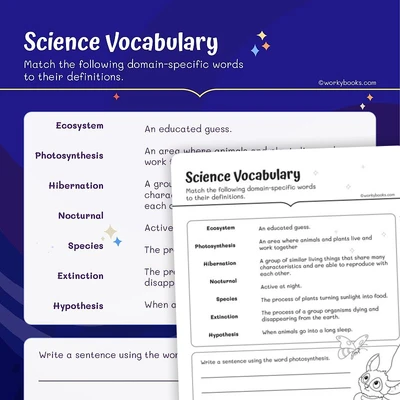
Science Vocabulary
This worksheet on domain-specific words will help students learn some science vocabulary. Students will be asked to matc...
L.3.6L.3.4.A
The Giant Isopod: Biological Evolution
This NGSS passage examines how giant isopods evolved for deep-sea survival, including slow metabolism for food scarcity,...
MS-LS4-4RI.6.3RI.7.3RI.8.8
Evidence for Evolution: The Fossil Record
This middle school science passage explains the importance of fossils as preserved evidence of ancient life and their ro...
MS-LS4-1
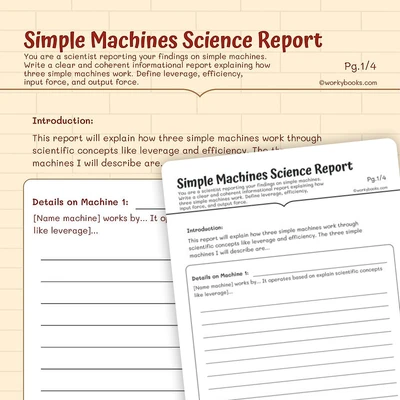
Simple Machines Science Report
This science writing task requires students to clearly explain how three simple machines work using precise domain-speci...
W.5.4
The Science of Hibernation
This educational module, featuring an audio-integrated reading passage titled 'The Science of Hibernation,' is designed ...
What is an amphibian
This audio-integrated reading passage, "The Life of Amphibians," is designed for 4th-grade students to explore the fasci...
The Levels of Australopithecus
This educational content offers an engaging, audio-integrated reading passage titled 'The Levels of Biological Classific...
The Nature of Science
This passage explores the nature of science for middle school students, aligning with NGSS standards MS-ETS1-4, MS-PS1-1...
MS-ETS1-4MS-PS1-1MS-LS1-1
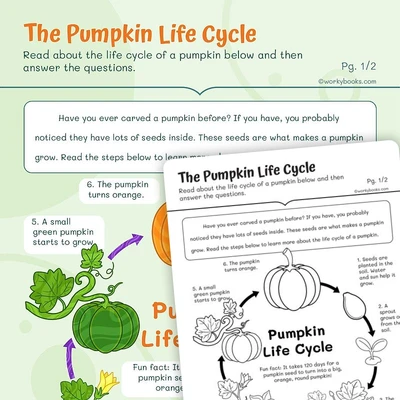
The Pumpkin Life Cycle
This informational worksheet explores the pumpkin lifecycle, guiding students through procedural steps in a scientific t...
RI.2.3RI.2.10
What Is Earth Science?
This engaging middle school science passage introduces students to the field of Earth science, aligning with NGSS standa...
MS-ESS1MS-ESS2MS-ESS3SEP
Citizen Science and Ecological Monitoring
This engaging passage for grades 6-8 introduces the concept of citizen science and its critical role in ecological monit...
MS-LS2-1
The Life Cycle of an Angiosperm
This educational content package delves into the intriguing world of angiosperms and their complex life cycles, perfectl...
Tools and Technology in Earth Science
This middle school science reading passage explores the wide range of tools and technologies used in Earth science, from...
MS-ESS2-2MS-ESS3-2MS-ETS1-1MS-PS4-3
Barnacle Life Cycle
This audio-integrated reading passage, "Barnacle Life Cycle," delves into the intriguing growth and development of barna...
History of Life on Earth
This comprehensive middle school science reading passage provides an engaging overview of the history of life on Earth, ...