Bioluminescent Bay Puerto Rico
Interactive passage with audio narration, comprehension questions, and printable PDF.
By completing this purchase you agree to our Terms of Use and Privacy Policy. Your subscription renews automatically until you cancel. You can cancel anytime from your account settings. All sales are final and non-refundable. Digital content is available for download in your account immediately upon purchase.
What's included
Bioluminescent Bay Puerto Rico preview and details
About this printable Bioluminescent Bay Puerto Rico science reading passage, NGSS-aligned (Grade 6)
Sample passage and quiz from Bioluminescent Bay Puerto Rico
Reading passage and comprehension quiz preview
Bioluminescent Bay Puerto Rico
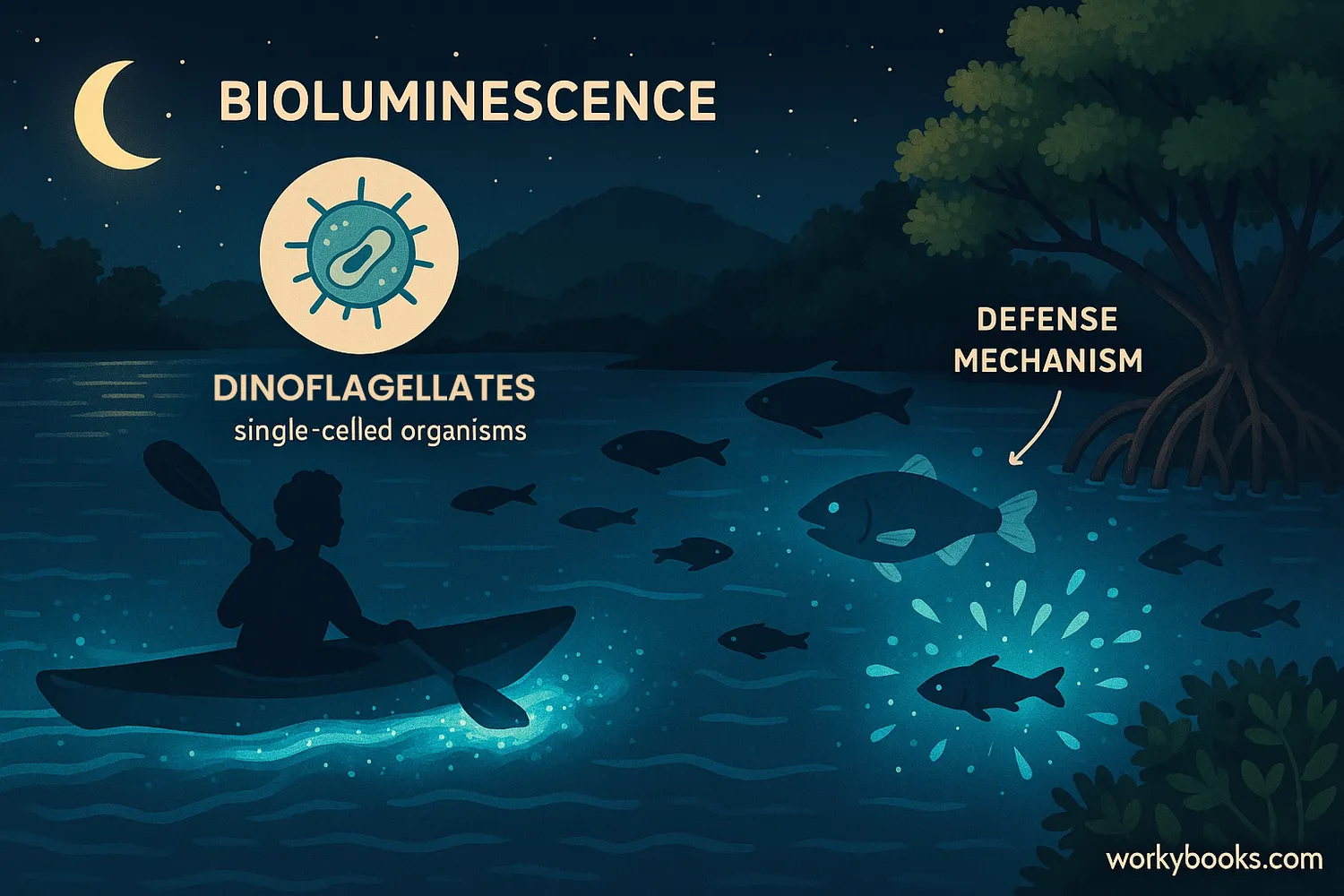
Imagine a warm night where the water around you sparkles and glows with every paddle stroke or movement. This isn't a scene from a fantasy movie; it's a real-life spectacle found in places like Puerto Rico's Bioluminescent Bays. These incredible natural wonders are home to billions of microscopic organisms that create a breathtaking light show.
The secret to this glowing water lies with tiny, single-celled organisms called dinoflagellates. These plankton are a type of algae, so small you can't see them individually with the naked eye. However, when disturbed, they react by emitting a brief flash of blue-green light. This amazing ability is known as bioluminescence – the production and emission of light by a living organism. It's a natural chemical reaction, similar to how fireflies glow.
Puerto Rico boasts three major bioluminescent bays: Laguna Grande in Fajardo, Mosquito Bay (Bahía Fosforescente) in Vieques, and La Parguera in Lajas. Each bay is a unique ecosystem, a community of living organisms interacting with their physical environment. These bays are often shallow and enclosed, which helps trap the dinoflagellates. The surrounding mangrove trees play a vital role. Their decaying leaves release nutrients into the water, providing a rich food source for the dinoflagellates, allowing their populations to thrive.
The light produced by dinoflagellates serves as a defense mechanism. When a predator, like a small fish, swims through the water, it disturbs the dinoflagellates. They light up, startling the predator and potentially attracting even larger predators that might eat the smaller fish. This is a brilliant example of the flow of energy within an ecosystem, where the energy stored in the dinoflagellates (from consuming nutrients) is momentarily converted into light energy.
The health of these bioluminescent bays is incredibly fragile. Pollution, light pollution from nearby developments, and even excessive tourism can harm the delicate balance required for the dinoflagellates to flourish. Conservation efforts are crucial to protect these stunning natural phenomena for future generations to experience the magic of the glowing waters. Understanding the unique chemical reactions involved in bioluminescence helps us appreciate the complexity of life and the intricate ways matter and energy cycle through our planet's diverse environments.
Interesting Fact: Mosquito Bay in Vieques, Puerto Rico, is recognized by the Guinness Book of World Records as the brightest bioluminescent bay in the world.
Comprehension quiz (10 questions)
1. Which organisms cause the water to glow?
2. What is bioluminescence?
3. What role do mangrove trees play?
4. Why do dinoflagellates emit light?
5. What can harm bioluminescent bays?
6. What type of organism are dinoflagellates?
7. The light from dinoflagellates is an example of converting energy.
8. Which bay is the brightest in the world?
9. If a bay becomes heavily polluted, what might happen to its dinoflagellate population?
10. What is the best definition for 'ecosystem' as used in the passage?
Perfect for the way you teach
- Build comprehension skills
- Auto-graded quiz
- Differentiated reading
- Read together at home
- Improve fluency
- Quiet reading time
- Reading curriculum support
- Independent practice
- Track Lexile growth