Cicero the Roman Orator
Interactive passage with audio narration, comprehension questions, and printable PDF.
By completing this purchase you agree to our Terms of Use and Privacy Policy. Your subscription renews automatically until you cancel. You can cancel anytime from your account settings. All sales are final and non-refundable. Digital content is available for download in your account immediately upon purchase.
What's included
Cicero the Roman Orator preview and details
About this printable Cicero the Roman Orator reading passage (Grades 6-8)
Sample passage and quiz from Cicero the Roman Orator
Reading passage and comprehension quiz preview
Cicero the Roman Orator
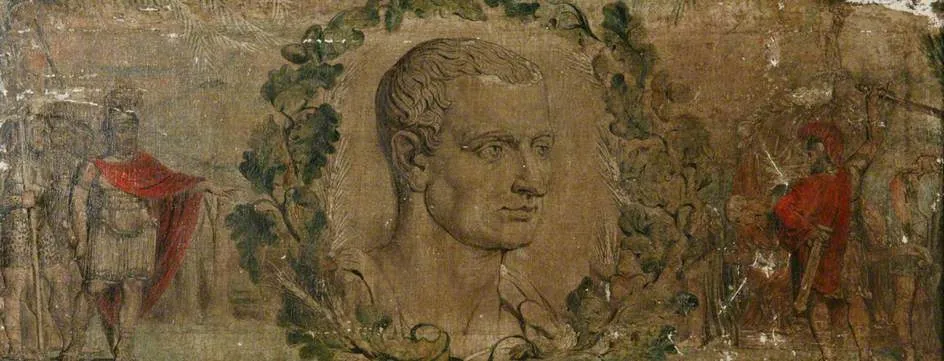
"Marcus Tullius Cicero - Tempera on canvas c 1800" by William Blake / Wikimedia Commons.
Cicero was a leading figure in the late Roman Republic, known for his skill as an orator, statesman, and writer. Born Marcus Tullius Cicero in 106 BCE in Arpinum, a town southeast of Rome, he rose to become a symbol of the Roman Senate and the ideals of the Republic. Cicero’s life and actions provide a window into the political struggles and changing values of ancient Rome.
As a young man, Cicero studied law and philosophy in Rome and Greece. He became famous for his powerful speeches in the law courts, defending citizens against corrupt officials. One of his most famous cases was in 70 BCE, when he prosecuted Gaius Verres, a former governor accused of extortion in Sicily. Cicero’s speeches, called the Verrine Orations, included detailed evidence and persuaded the jury to convict Verres. This case established Cicero’s reputation for defending justice and the rule of law.
Cicero’s political career advanced rapidly. In 63 BCE, he was elected consul, the highest office in the Republic. During his consulship, he uncovered and stopped the Catiline Conspiracy, a plot led by Lucius Sergius Catilina to overthrow the government. Cicero gave a series of speeches, known as the Catilinarian Orations, to the Senate, exposing the danger and rallying support to defend the Republic. Ancient sources, such as Sallust’s account and Cicero’s own letters, describe how Cicero’s actions prevented civil war, though some criticized his harsh treatment of the conspirators. The event highlights the tensions between security and individual rights in Roman politics.
The late Republic was marked by conflict between the Senate and powerful generals like Julius Caesar. Cicero supported the traditional government and tried to protect the constitution from dictatorship. After Caesar’s assassination in 44 BCE, Cicero opposed Mark Antony, delivering the Philippics—a series of speeches attacking Antony’s ambitions. This made Cicero a target. In 43 BCE, he was executed on the orders of Antony and his ally Octavian, ending a career devoted to public service.
Cicero’s legacy endures through his writings on law, philosophy, and government, which influenced later thinkers such as Thomas Jefferson. His efforts to balance tradition and change, and his belief in civic duty, remain central to the study of Roman history. Cicero’s life shows how individuals can shape society through words and actions, even in times of crisis.
Many themes from Cicero’s era, such as debates over power, justice, and the rights of citizens, continue to influence modern governments and political systems today.
Interesting Fact: Cicero coined many Latin phrases still used in law and politics, such as “status quo.”
Comprehension quiz (8 questions)
1. What year was Cicero born?
2. Who did Cicero prosecute in Sicily?
3. What office did Cicero hold in 63 BCE?
4. Why were the Catilinarian Orations important?
5. What happened after Cicero opposed Mark Antony?
6. How did Cicero influence later thinkers?
7. Cicero was a famous orator. True or false?
8. What does 'status quo' mean?
Perfect for the way you teach
- Build comprehension skills
- Auto-graded quiz
- Differentiated reading
- Read together at home
- Improve fluency
- Quiet reading time
- Reading curriculum support
- Independent practice
- Track Lexile growth