Maya Civilization in 300 CE
Interactive passage with audio narration, comprehension questions, and printable PDF.
By completing this purchase you agree to our Terms of Use and Privacy Policy. Your subscription renews automatically until you cancel. You can cancel anytime from your account settings. All sales are final and non-refundable. Digital content is available for download in your account immediately upon purchase.
What's included
Maya Civilization in 300 CE preview and details
About this printable Maya Civilization in 300 CE reading passage (Grades 5-8)
Sample passage and quiz from Maya Civilization in 300 CE
Reading passage and comprehension quiz preview
Maya Civilization in 300 CE
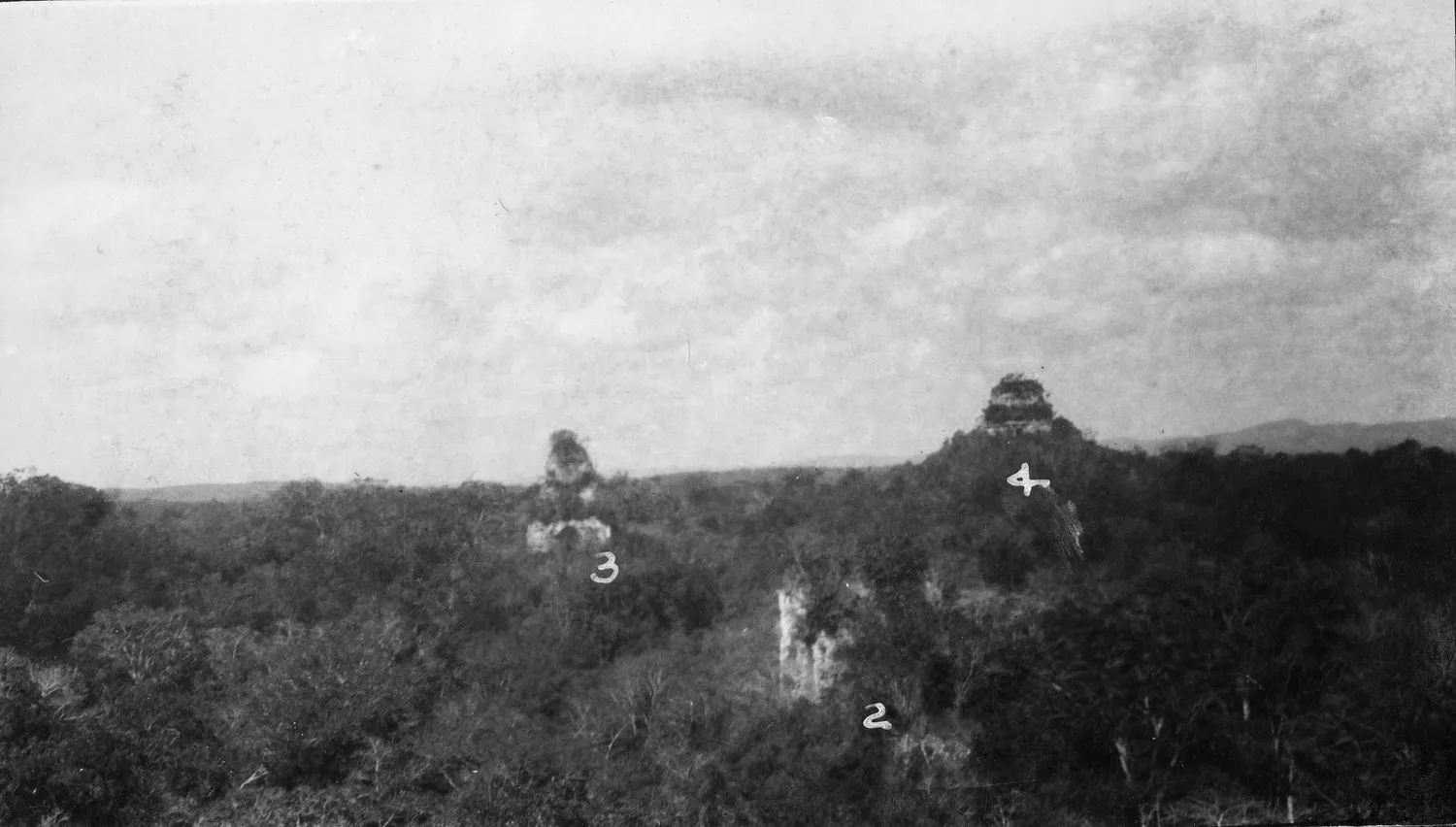
"Temples II, III, and IV, Tikal, Guatemala 1923" by Jerome O. Kilmartin / Wikimedia Commons (Public domain).
The Maya civilization emerged in the tropical forests of Mesoamerica, an area covering parts of present-day Mexico, Guatemala, Belize, Honduras, and El Salvador. By 300 CE, Maya society was flourishing, with powerful city-states such as Tikal, Copán, and Calakmul rising to prominence. The Maya developed complex systems of government, religion, and writing that set them apart from neighboring cultures.
The Maya lived in a region marked by thick jungles, rivers, and lowlands. Their success depended on their ability to adapt to their environment. They built raised fields and canals to manage water for agriculture, allowing them to grow staple crops like maize, beans, and squash. Evidence from archaeological sites shows the Maya constructed enormous stone buildings, such as pyramids and palaces, often decorated with detailed carvings. For example, Temple II at Tikal, built around 700 CE, still stands today as a testament to their engineering skills.
Maya society was organized in a social hierarchy. At the top stood the nobility and kings, who claimed to communicate with the gods. Below them were scribes, artisans, merchants, farmers, and laborers. The Maya developed a sophisticated writing system using glyphs, which were symbols that represented words or sounds. Carved inscriptions on stelae and in codices record the deeds of rulers and important events. For instance, the stelae at Copán provide names and dates of Maya kings, forming a valuable primary source for historians.
Religion played a central role in Maya life. The Maya believed in many gods linked to nature, like the maize god and the rain god. They built ceremonial centers and performed rituals to honor these deities, sometimes including human sacrifice. The Maya calendar, one of the most accurate in the ancient world, was used to plan religious festivals and agricultural activities. This calendar system shows how Maya astronomy and mathematics were advanced for their time.
The rise of the Maya civilization had a lasting impact on Mesoamerica. Their achievements in architecture, writing, and science influenced later cultures. While many Maya cities eventually declined due to factors like warfare, drought, and political unrest, Maya descendants still live in the region today, preserving aspects of their ancient heritage.
This period in Maya history connects to broader themes of world history, including the development of early civilizations, the influence of geography on culture, and the ways in which people adapt to and shape their environment.
Interesting Fact: The Maya were among the first in the Americas to use the concept of zero in their math system, hundreds of years before it appeared in Europe.
Comprehension quiz (8 questions)
1. Where did the Maya civilization emerge?
2. What was Temple II at Tikal?
3. Which crop was NOT grown by Maya?
4. Why did Maya build raised fields?
5. What was the purpose of Maya glyphs?
6. What cause led to Maya city decline?
7. The Maya used zero in math. True or false?
8. What is a city-state?
Perfect for the way you teach
- Build comprehension skills
- Auto-graded quiz
- Differentiated reading
- Read together at home
- Improve fluency
- Quiet reading time
- Reading curriculum support
- Independent practice
- Track Lexile growth