Roman Empire Around 300 CE
Interactive passage with audio narration, comprehension questions, and printable PDF.
By completing this purchase you agree to our Terms of Use and Privacy Policy. Your subscription renews automatically until you cancel. You can cancel anytime from your account settings. All sales are final and non-refundable. Digital content is available for download in your account immediately upon purchase.
What's included
Roman Empire Around 300 CE preview and details
About this printable Roman Empire Around 300 CE reading passage (Grades 5-8)
Sample passage and quiz from Roman Empire Around 300 CE
Reading passage and comprehension quiz preview
Roman Empire Around 300 CE
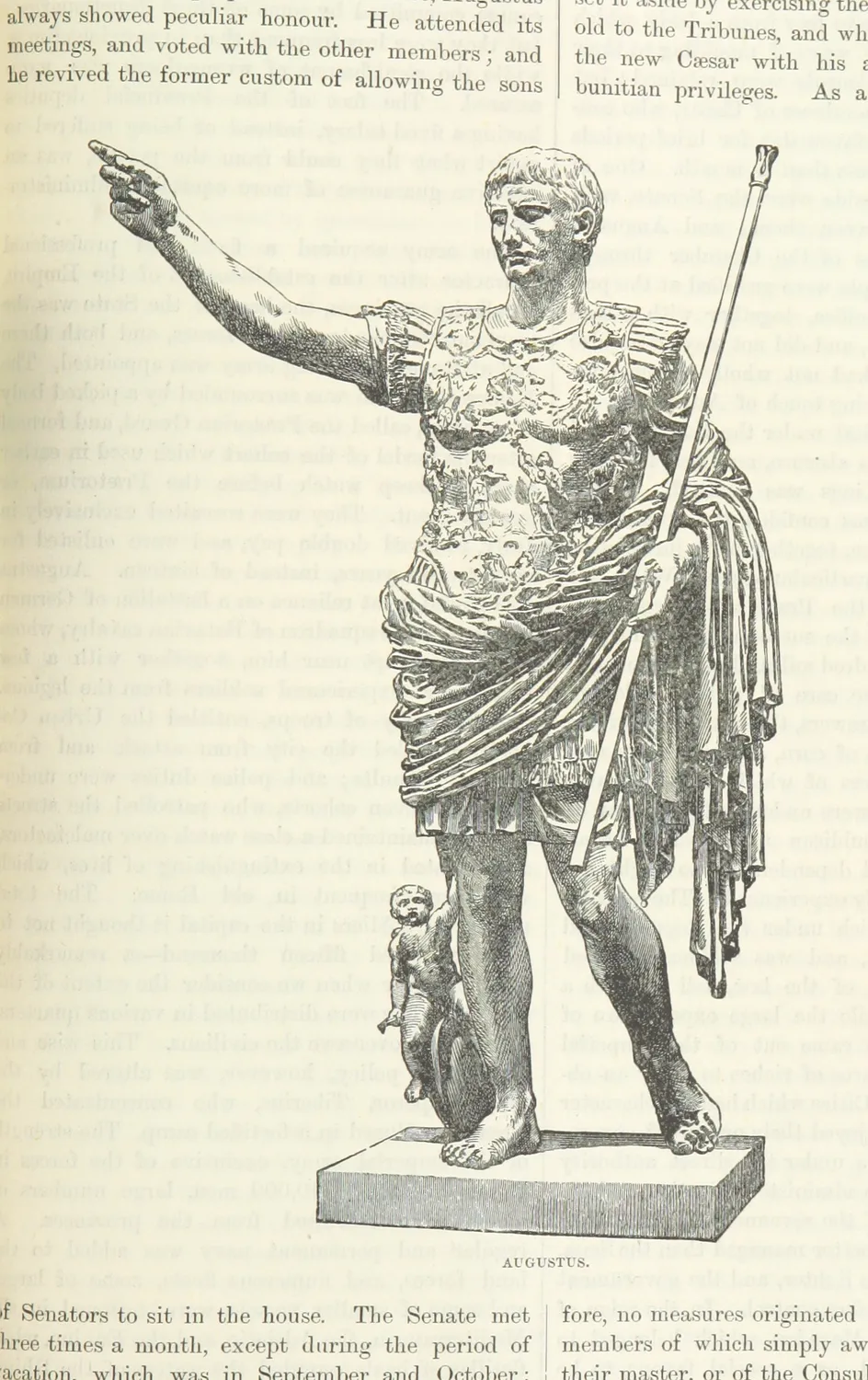
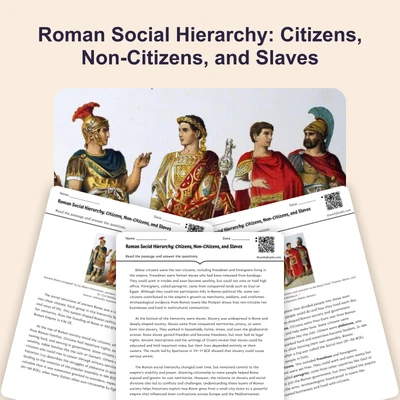
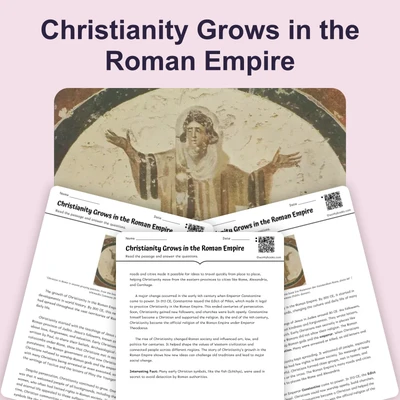
"Emperor of the Roman Empire from Cassell's Illustrated Universal History by The British Library / Europeana
The Roman Empire in the West was one of the most powerful and influential civilizations of the ancient world. At its height around 300 CE, it stretched from the Atlantic Ocean in the west to the Rhine and Danube rivers in the north and east, and as far south as North Africa. The capital city, Rome, was the center of government, trade, and cultural life.
The Western Roman Empire developed a complex system of governance, with an emperor at the top and a large administrative structure. The emperor controlled the army and made important decisions, while senators and local officials managed cities and provinces. Evidence from ancient inscriptions and the ruins of Roman forums show how laws were created and enforced. For example, the famous Twelve Tables—Rome’s earliest written legal code—set rules for daily life and justice as early as 450 BCE. These laws helped unify the diverse peoples within the empire.
Society in the Western Roman Empire was highly organized. At the top were wealthy patricians, who owned large estates and often held political power. Below them were plebeians, or common citizens, who worked as farmers, craftsmen, and merchants. Slavery was widespread, and enslaved people performed much of the manual labor. Archaeological findings, such as mosaics and household items, reveal differences in daily life between rich and poor Romans. The city of Pompeii, preserved by the eruption of Mount Vesuvius in 79 CE, provides a unique primary source for understanding Roman homes, food, and entertainment.
Geography played a crucial role in the empire’s expansion and security. The Mediterranean Sea allowed for trade and communication between regions, while natural barriers like the Alps protected Rome from invasions. As the empire grew, it faced new challenges. By the late 300s CE, internal conflict, economic troubles, and attacks by outside groups such as the Visigoths weakened the Western Empire. In 410 CE, Rome was sacked for the first time in centuries, and by 476 CE, the last Western emperor was removed from power. Despite its fall, many Roman ideas and inventions—such as roads, aqueducts, and the Latin language—continued to shape European culture.
The legacy of the Western Roman Empire is still visible today. Its systems of law, government, and engineering influenced later societies, including modern Europe and the Americas. By examining primary evidence and historical sources, historians continue to learn about the successes and struggles of this remarkable civilization.
This study of the Western Roman Empire connects to broader themes of ancient history, such as the rise and fall of civilizations, the impact of geography, and the lasting influence of cultural achievements.
Interesting Fact: The Romans built a network of over 250,000 miles of roads across their empire, many of which are still in use today!
Comprehension quiz (8 questions)
1. Who ruled the Western Roman Empire?
2. What was the capital of the Western Empire?
3. Which group sacked Rome in 410 CE?
4. Why were the Twelve Tables important?
5. How did geography help protect Rome?
6. What was a major result of Rome’s decline?
7. The Western Empire lasted until 476 CE.
8. What is a primary source?
Perfect for the way you teach
- Build comprehension skills
- Auto-graded quiz
- Differentiated reading
- Read together at home
- Improve fluency
- Quiet reading time
- Reading curriculum support
- Independent practice
- Track Lexile growth