Social Classes of Ancient Rome
Interactive passage with audio narration, comprehension questions, and printable PDF.
By completing this purchase you agree to our Terms of Use and Privacy Policy. Your subscription renews automatically until you cancel. You can cancel anytime from your account settings. All sales are final and non-refundable. Digital content is available for download in your account immediately upon purchase.
What's included
Social Classes of Ancient Rome preview and details
About this printable Social Classes of Ancient Rome reading passage (Grades 5-8)
Sample passage and quiz from Social Classes of Ancient Rome
Reading passage and comprehension quiz preview
Social Classes of Ancient Rome
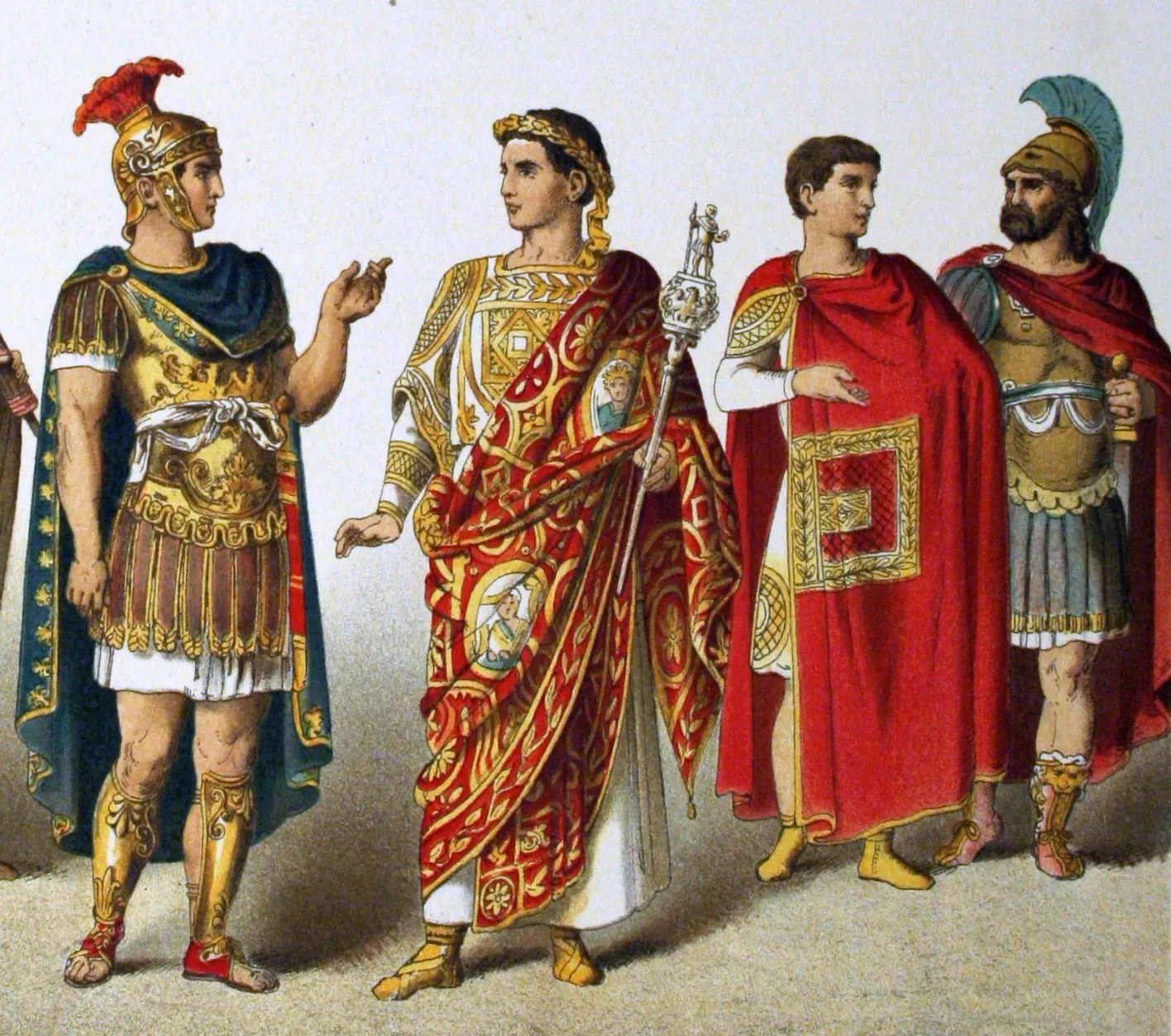
"Ancient Rome by by Albert Kretschmer, painters and costumer to the Royal Court Theatre, Berlin, and Dr. Carl Rohrbach. /
Source: Wikimedia Commons
The social structure of ancient Rome was a complex system that organized people into clear classes. Each group in this hierarchy had certain rights, responsibilities, and ways of life. This system shaped Roman politics, society, and daily experiences for centuries, from the founding of Rome in 753 BCE through the fall of the Western Roman Empire in 476 CE.
At the top of Roman society stood the citizens, who were mostly free-born men from Roman families. Citizens had important rights, such as voting in assemblies, owning land, and serving in government. Some citizens were patricians, members of wealthy, noble families like the Julii or Cornelii. Others were plebeians, ordinary citizens who could rise to power through military service or trade. The Roman historian Livy describes the struggles of plebeians to gain more political power, leading to the creation of the popular assembly in 494 BCE. Roman citizenship was so valuable that it was sometimes granted to outsiders, especially after the Social War (91–88 BCE), when many Italian allies won citizenship by fighting Rome’s enemies.
Below citizens were the non-citizens, including freedmen and foreigners living in the empire. Freedmen were former slaves who had been released from bondage. They could work in trades and even become wealthy, but could not vote or hold high office. Foreigners, called peregrini, came from conquered lands such as Gaul or Egypt. Although they could not participate fully in Roman political life, some non-citizens contributed to the empire’s growth as merchants, soldiers, and craftsmen. Archaeological evidence from Roman towns like Pompeii shows that non-citizens ran businesses and lived in multicultural communities.
At the bottom of the hierarchy were slaves. Slavery was widespread in Rome and deeply shaped society. Slaves came from conquered territories, piracy, or were born into slavery. They worked in households, farms, mines, and even the gladiatorial arenas. Some slaves gained freedom and became freedmen, but most had no legal rights. Ancient inscriptions and the writings of Cicero reveal that slaves could be educated and hold important roles, but their lives depended entirely on their owners. The revolt led by Spartacus in 73–71 BCE showed that slavery could cause serious unrest.
The Roman social hierarchy changed over time, but remained central to the empire’s stability and power. Granting citizenship to more people helped Rome expand and govern its vast territories. However, the reliance on slavery and social divisions also led to conflicts and challenges. Understanding these layers of Roman society helps historians explain how Rome grew from a small city-state to a powerful empire that influenced later civilizations across Europe and the Mediterranean.
Learning about Roman social classes connects to broader themes of power, identity, and justice in world history.
Interesting Fact: The Roman emperor Caracalla granted citizenship to almost all free people in the empire in 212 CE, dramatically changing the social structure.
Comprehension quiz (8 questions)
1. Who were patricians in Rome?
2. What did the Social War achieve?
3. Who led a slave revolt in 73–71 BCE?
4. Why were non-citizens important?
5. How did citizenship help Rome expand?
6. What was a result of Caracalla's decree?
7. Roman slaves could sometimes become freedmen. True or false?
8. What does 'hierarchy' mean?
Perfect for the way you teach
- Build comprehension skills
- Auto-graded quiz
- Differentiated reading
- Read together at home
- Improve fluency
- Quiet reading time
- Reading curriculum support
- Independent practice
- Track Lexile growth