Rise of Christianity in Rome
Interactive passage with audio narration, comprehension questions, and printable PDF.
By completing this purchase you agree to our Terms of Use and Privacy Policy. Your subscription renews automatically until you cancel. You can cancel anytime from your account settings. All sales are final and non-refundable. Digital content is available for download in your account immediately upon purchase.
What's included
Rise of Christianity in Rome preview and details
About this printable Rise of Christianity in Rome reading passage (Grades 5-8)
Sample passage and quiz from Rise of Christianity in Rome
Reading passage and comprehension quiz preview
Rise of Christianity in Rome
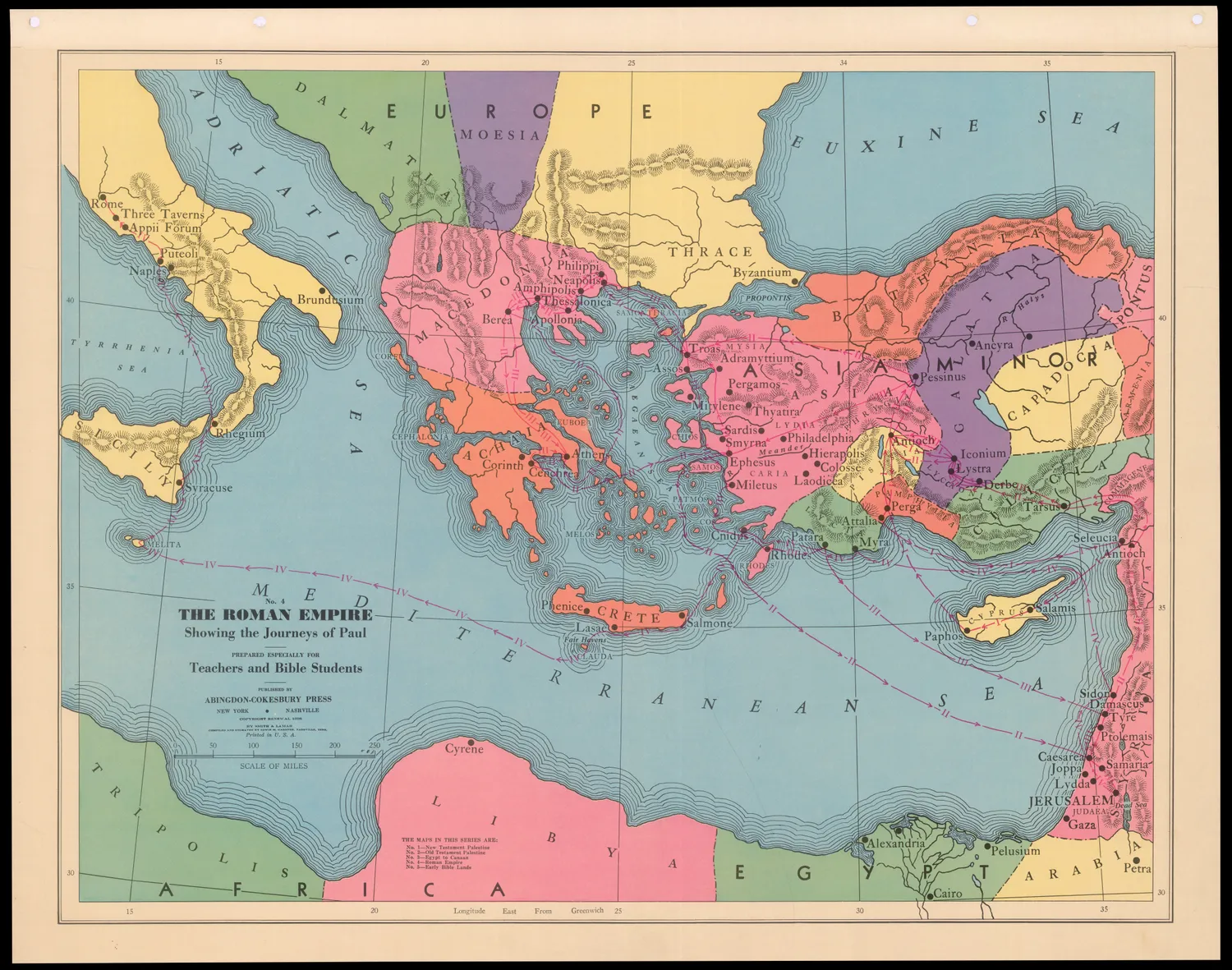
The Roman Empire showing the journeys of Paul. Compiled and Engraved by Edwin M. Gardner Nashville Tenn. Wikimedia Commons
The rise of Christianity in the Roman Empire dramatically changed the course of world history. Christianity began as a small movement in the eastern Roman province of Judea during the first century CE. The teachings of Jesus of Nazareth, who was born around 4 BCE and crucified by Roman authorities around 30 CE, became the foundation of this new religion. Jesus’s message of compassion, forgiveness, and hope for an eternal life attracted followers from different backgrounds, including the poor and marginalized.
After Jesus’s death, his disciples spread his teachings throughout the Roman Empire. Key figures like Paul of Tarsus traveled extensively, establishing communities and writing letters—some of which are now part of the New Testament. Early Christians faced persecution from Roman officials, who saw the new faith as a threat to traditional Roman religion and political authority. Archaeological evidence, such as the inscriptions and paintings found in the Roman catacombs, shows that Christians worshipped in secret. For example, the Catacombs of Callixtus in Rome contain symbols like the fish and the anchor, used by early Christians to identify each other safely.
Despite these challenges, Christianity continued to grow in urban centers like Rome, Antioch, and Alexandria. Several factors contributed to its spread. The Roman Empire’s vast network of roads and common language (Greek and Latin) made communication easier. The promise of salvation and a caring community appealed to many people living under Roman rule. Over time, some Roman officials began to tolerate Christianity, although periods of harsh persecution still occurred, such as under Emperor Nero in 64 CE. By the early fourth century, Emperor Constantine issued the Edict of Milan in 313 CE, which made Christianity legal and ended state-sponsored persecution. This event marked a turning point, and soon Christianity became the official religion of the Roman Empire.
The rise of Christianity transformed Roman society and left a lasting legacy. New religious practices, holidays, and art forms developed. Social hierarchies shifted, as Christianity taught the spiritual equality of all people. Churches became centers of learning and charity, influencing daily life for centuries to come. The influence of Christianity spread far beyond Rome, shaping the cultures of Europe, the Middle East, and eventually the world. Scholars continue to study archaeological sites and texts to better understand how Christianity changed over time and adapted to new environments.
As you study ancient civilizations, the story of Christianity’s rise shows how new ideas can challenge old traditions and reshape societies.
Interesting Fact: The word "catacomb" comes from the Latin "catacumba," meaning underground cemetery, where early Christians often gathered in secret.
Comprehension quiz (8 questions)
1. Where did Christianity begin?
2. Who was crucified around 30 CE?
3. What law legalized Christianity?
4. Why did Christians use symbols in catacombs?
5. What made Christianity appealing to many?
6. How did Roman roads help Christianity spread?
7. Christianity became official religion of Rome. True or false?
8. What is a catacomb?
Perfect for the way you teach
- Build comprehension skills
- Auto-graded quiz
- Differentiated reading
- Read together at home
- Improve fluency
- Quiet reading time
- Reading curriculum support
- Independent practice
- Track Lexile growth