Civic Participation in California
Interactive passage with audio narration, comprehension questions, and printable PDF.
By completing this purchase you agree to our Terms of Use and Privacy Policy. Your subscription renews automatically until you cancel. You can cancel anytime from your account settings. All sales are final and non-refundable. Digital content is available for download in your account immediately upon purchase.
What's included
Part of this bundle

Civic Participation in California preview and details
About this printable Civic Participation in California reading passage (Grades 3-5)
Sample passage and quiz from Civic Participation in California
Reading passage and comprehension quiz preview
Civic Participation in California
![[People carrying picket signs protesting against nuclear power and the Potomac Electric Power Company (PEPCO)]](https://assets.workybooks.com/INTERACTIVE/media/pd--People-carrying-picket-signs-protesting-against-n-1762406524661-595019172.webp)
Source: Library of Congress - O'Halloran, Thomas J.
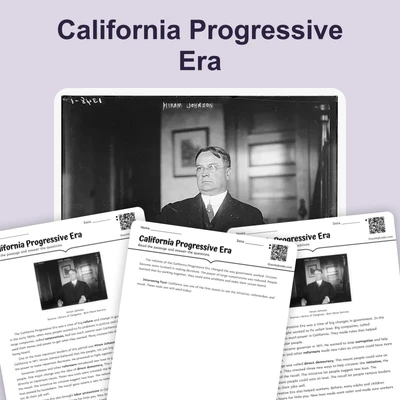
Californians help shape their communities and government every day. This is called citizen participation. By working together, people can solve problems and make their voices heard. This is an important part of living in a democracy.
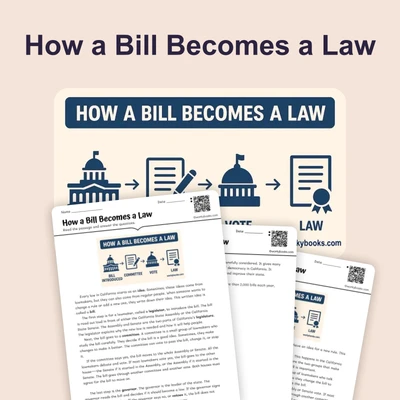
One major way Californians participate is by voting. During elections, people over 18 can choose leaders and decide on laws. Voting is a powerful tool. When more people vote, everyone’s opinion is better represented. For example, local elections can decide if a new park is built or if schools get more funding. Every vote counts.
Another way citizens get involved is by attending public meetings. Town halls or city council meetings are open to everyone. At these meetings, citizens can ask questions, share ideas, and learn about community issues. When people attend, leaders know what citizens care about. This helps leaders make better choices for everyone.
Californians also reach out to their representatives. These are people elected to speak for the community. Citizens write letters, send emails, or call their representatives. By sharing their thoughts, people help guide decisions about schools, roads, and safety. It shows leaders what is important to the community.
Volunteering is another key way to participate. Many Californians help at food banks, clean up parks, or support local groups. Volunteering makes communities stronger and brings people together. When citizens work side by side, they feel more connected and proud of their community.
All these actions are called civic engagement. Civic engagement means working to make your community better. It can be big or small, but it always matters. When citizens get involved, their voices become part of important decisions. This keeps democracy strong and fair for everyone.
In California, citizen participation has a long history. People from many backgrounds have worked for change. They have helped win rights to vote, build parks, and improve schools. Today, every Californian has the chance to shape the future by getting involved.
Interesting Fact: In 1911, California women won the right to vote almost ten years before women across the United States.
Comprehension quiz (8 questions)
1. What is citizen participation?
2. Who can vote in California elections?
3. What year did California women win the right to vote?
4. Why do people attend public meetings?
5. How does volunteering help communities?
6. What is one effect when more people vote?
7. Citizen participation is not important. True or false?
8. What does civic engagement mean?
Perfect for the way you teach
- Build comprehension skills
- Auto-graded quiz
- Differentiated reading
- Read together at home
- Improve fluency
- Quiet reading time
- Reading curriculum support
- Independent practice
- Track Lexile growth