This learning resource is available in interactive and printable formats. The interactive worksheet can be played online and assigned to students. The Printable PDF version can be downloaded and printed for completion by hand.
This middle school science passage explores the Congo Rainforest—Earth’s second-largest rainforest, located in Central Africa. Students will learn about its unique biodiversity, including gorillas, okapis, and forest elephants, and discover how it differs from the Amazon in age, species, and ecological processes. The passage explains the mechanisms that support such rich life, the interactions between species, and the impact of human activities like logging, mining, and the bushmeat trade. Students will understand cause-and-effect relationships within this ecosystem and the importance of scientific research in less-studied regions like the Congo. The lesson aligns with NGSS standards MS-LS2-1 and MS-ESS3-3, making it ideal for integrated science curricula. Activities include comprehension quizzes, writing prompts, and graphic organizers to reinforce learning, and all materials are audio integrated for accessibility. Key vocabulary is highlighted and defined for grade-level understanding.
CONTENT PREVIEW
Expand content preview
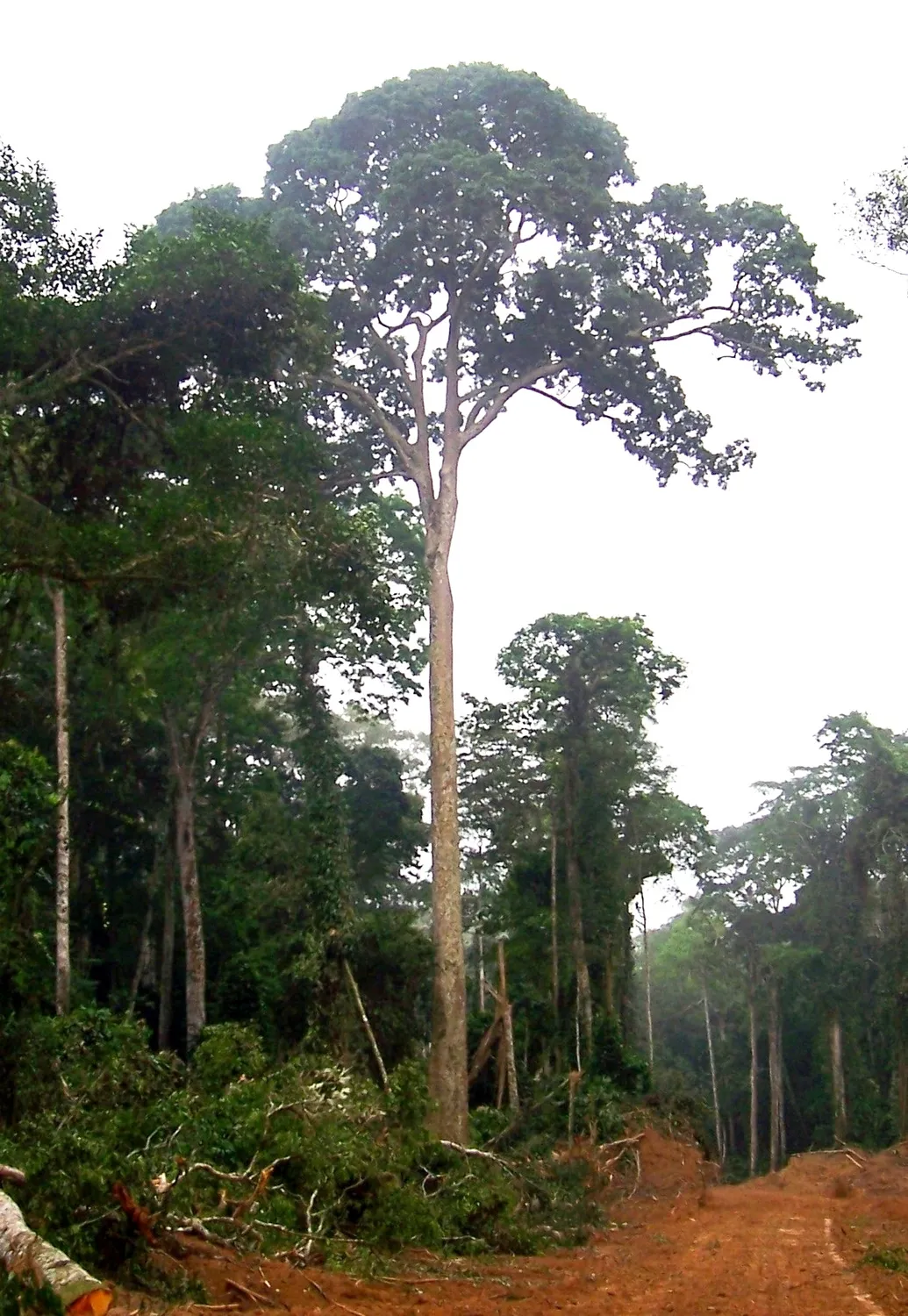
"Sapele Tree Congo Brazzaville" by Robert Sharp / Wikimedia Commons (Public domain).
Rainforests are essential ecosystems that support an incredible variety of life on Earth. The Congo Rainforest, stretching across Central Africa, is the world’s second-largest tropical rainforest, covering over 1.7 million square miles. This vast forest plays a critical role in regulating the planet’s climate and preserving biodiversity. While the Amazon is often studied and discussed, the Congo Rainforest is older, less explored, and home to many unique species found nowhere else.
The Congo’s Unique Ecosystem The Congo Rainforest’s ecosystem is shaped by its age, geography, and climate. Unlike the Amazon, the Congo is considered an ancient forest, with some tree species dating back millions of years. This age allows for the evolution of highly specialized plants and animals. For example, the okapi—a relative of the giraffe—lives only here. Gorillas and forest elephants are two other well-known residents, each adapted to the dense tree cover and abundant rainfall. Scientists study the Congo’s species diversity to understand how different organisms interact, compete, and survive. These interactions help maintain the balance of the ecosystem, with each species playing a specific role in the food web.
How the Congo Differs from the Amazon While both are tropical rainforests, the Congo and Amazon have important differences. The Congo is older, with a different climate pattern—less flooding but more consistent rainfall throughout the year. This supports a different mix of tree and animal species. For example, the Congo has more hardwood trees and fewer large rivers than the Amazon. Its soil is less fertile due to millions of years of rainfall washing away nutrients. As a result, many plants have evolved unique strategies to survive. Scientists compare these forests by measuring rates of photosynthesis, tree growth, and species interactions. The Congo’s remoteness and political challenges mean it’s less studied, so new species are still being discovered.
Threats and Conservation Despite its size, the Congo Rainforest faces serious threats from human activity. Logging removes valuable hardwood trees, which can lead to habitat loss for animals. Mining for minerals disturbs the soil and pollutes rivers, affecting both wildlife and people. The bushmeat trade—hunting animals for food—puts rare species like gorillas at risk. Scientists use satellite data to track deforestation rates, which have increased by 5% in the last decade. Conservationists are working with local communities to develop sustainable ways to use the forest’s resources without destroying its future. Protecting the Congo is vital for maintaining global biodiversity and fighting climate change, as its trees absorb large amounts of carbon dioxide.
The Congo Rainforest is a complex system where plants, animals, and people interact in delicate balance. Studying its processes helps scientists learn how ecosystems function and respond to change. The future of the Congo depends on scientific research, international cooperation, and sustainable management to protect its remarkable biodiversity for generations to come.
Interesting Fact: The Congo Rainforest is so vast and remote that scientists believe hundreds of species remain undiscovered, including plants with potential uses in medicine.
Where is the Congo Rainforest located?
Central AfricaSouth AmericaSoutheast AsiaAustralia
Which animal is only found in the Congo Rainforest?
OkapiJaguarSlothKangaroo
What is biodiversity?
The number of rivers in a regionThe variety of living things in an areaThe type of soil found in forestsThe amount of rainfall in a year
What does the 'bushmeat trade' mean in the passage?
Selling trees for woodHunting wild animals for foodTrading minerals for moneyGrowing crops in the forest
Which of the following is a difference between the Congo and the Amazon Rainforest?
The Congo has more consistent rainfall and is olderThe Amazon is smaller than the CongoThe Congo has more rivers than the AmazonBoth have the same animal species
Why is the soil in the Congo less fertile than in the Amazon?
It rains less in the CongoFloods wash away animalsMany years of rain have washed away nutrientsThe Congo is colder
What effect does logging have on the Congo Rainforest?
It increases biodiversityIt creates more riversIt leads to habitat loss for animalsIt helps plants grow faster
Why is protecting the Congo Rainforest important for the whole world?
It is the oldest forestIts trees absorb large amounts of carbon dioxideIt has more riversIt has the same species as the Amazon
True or False: The Congo Rainforest has been completely explored and all its species are known.
TrueFalse
True or False: The bushmeat trade is a threat to rare animals like gorillas in the Congo Rainforest.
TrueFalse
Perfect For:
👩🏫 Teachers
• Reading comprehension practice
• Auto-graded assessments
• Literacy skill development
👨👩👧👦 Parents
• Reading practice at home
• Comprehension improvement
• Educational reading time
🏠 Homeschoolers
• Reading curriculum support
• Independent reading practice
• Progress monitoring
Reading Features:
📖
Reading Passage
Engaging fiction or nonfiction text
❓
Comprehension Quiz
Auto-graded questions
📊
Instant Feedback
Immediate results and scoring
📄
Printable Version
Download for offline reading
🔊
Read Aloud
Voice-over with word highlighting
Reviews & Ratings
No reviews yet. Be the first to share your experience!
Related Content
Natural Disaster: Volcanic Eruptions
Volcanoes can erupt with lava and ash, changing the landscape. While dangerous, they also create fertile land and new la...
RI.3.1RI.4.4RI.4.2RI.5.2
The Leafy Sea Dragon: Nature's Living Seaweed
This NGSS-aligned passage explores how leafy sea dragons (Phycodurus eques) demonstrate key life science concepts for mi...
MS-LS2-1RI.6.3RI.7.3RI.8.8
The Narwhal: Arctic’s Unicorn of the Sea
This NGSS-aligned passage (MS-LS2-1) explores how narwhals survive in Arctic ecosystems. Students learn about specialize...
MS-LS2-1RI.6.3RI.7.3RI.8.8
The Blue-Ringed Octopus
This NGSS aligned passage explores how the tiny blue-ringed octopus impacts its ecosystem through predator-prey relation...
MS-LS2-1RI.6.3RI.7.3RI.8.8
Tardigrades: Microscopic Superheroes
Aligned to MS-LS1-1, this passage examines how tardigrade cell structures (TDP proteins, DNA-repair enzymes) allow survi...
MS-LS2-1RI.6.3RI.7.3RI.8.8
What Do Axolotls Eat?
This science reading passage, titled "What Do Axolotls Eat?", offers an engaging exploration into the feeding habits of ...
MS-LS2-1
Where Do Axolotls Live?
This science reading passage, titled "The Axolotl's Home," delves into the specific natural environment of the fascinati...
MS-LS4-DMS-LS2-1
The Blobfish
This science reading passage, titled "The Blobfish: A Deep-Sea Mystery," introduces students to one of Earth's most pecu...
MS-LS4-DMS-LS2-1
What Do Blobfish Eat?
This science reading passage, titled "What Do Blobfish Eat?", offers an engaging exploration into the feeding habits of ...
MS-LS2-1
Where Do Penguins Live?
This engaging science reading passage, titled "Where Do Penguins Live? A Cold and Coastal World," clarifies the diverse ...
MS-LS2-1
The Emperor Penguin
This science reading passage, titled "The Emperor Penguin: Antarctica's Royal Survivor," introduces students to one of t...
MS-LS2-1
The Adélie Penguin
This engaging science reading passage, titled "The Adélie Penguin: Antarctica's Little Explorer," introduces students to...
MS-LS2-1
How Does Global Warming Affect Adélie Penguins?
This comprehensive science passage, titled "How Does Global Warming Affect Adélie Penguins?", details the significant im...
MS-LS2-1
Human Impacts: Pollution
This middle school science reading passage, aligned with NGSS standards MS-LS2-4 and MS-ESS3-3, examines the mechanisms ...
MS-LS2-4MS-ESS3-3
Human Impacts: Habitat Destruction
This grade 6-8 science passage explores human impacts on ecosystems, focusing on habitat destruction as the leading caus...
MS-LS2-4MS-LS2-5MS-ESS3-3
Ecosystem Services
This engaging middle school science passage introduces students to the concept of ecosystem services, the vital benefits...
MS-LS2-5MS-ESS3-3
Environmental Problems and Solutions
This passage for grades 6-8 introduces major environmental problems such as habitat loss, pollution, climate change, inv...
MS-LS2-4MS-ESS3-3MS-ESS3-4
Desert Birds
This informational passage for grades 6-8 examines how desert birds survive and thrive in some of the harshest environme...
MS-LS2-1MS-LS2-2MS-LS1-4
Abiotic Factors in Ecosystems
This comprehensive informational reading passage is designed for middle school science students and aligns with NGSS sta...
MS-LS2-1
Biomes: Terrestrial Ecosystems
This NGSS-aligned science reading passage for grades 6-8 provides a comprehensive survey of Earth’s major terrestrial bi...