This learning resource is available in interactive and printable formats. The interactive worksheet can be played online and assigned to students. The Printable PDF version can be downloaded and printed for completion by hand.
This engaging science reading passage, titled "The Adélie Penguin: Antarctica's Little Explorer," introduces students to one of the most active and unique birds of the Antarctic continent. Aligned with NGSS Life Science standards, particularly MS-LS4-C (Adaptation) and MS-LS2-1 (Interdependent Relationships in Ecosystems), the passage highlights the Adélie penguin's distinctive appearance, its habitat in rocky coastal areas, and its crucial diet of krill. It details their fascinating breeding behaviors, including building pebble nests and sharing parental duties. The text also touches on their curious personality and the significant threats they face from climate change impacting sea ice and food availability. This resource is excellent for fostering reading comprehension, expanding vocabulary related to animal adaptations and polar ecosystems, and encouraging awareness about endangered species and environmental conservation.
CONTENT PREVIEW
Expand content preview
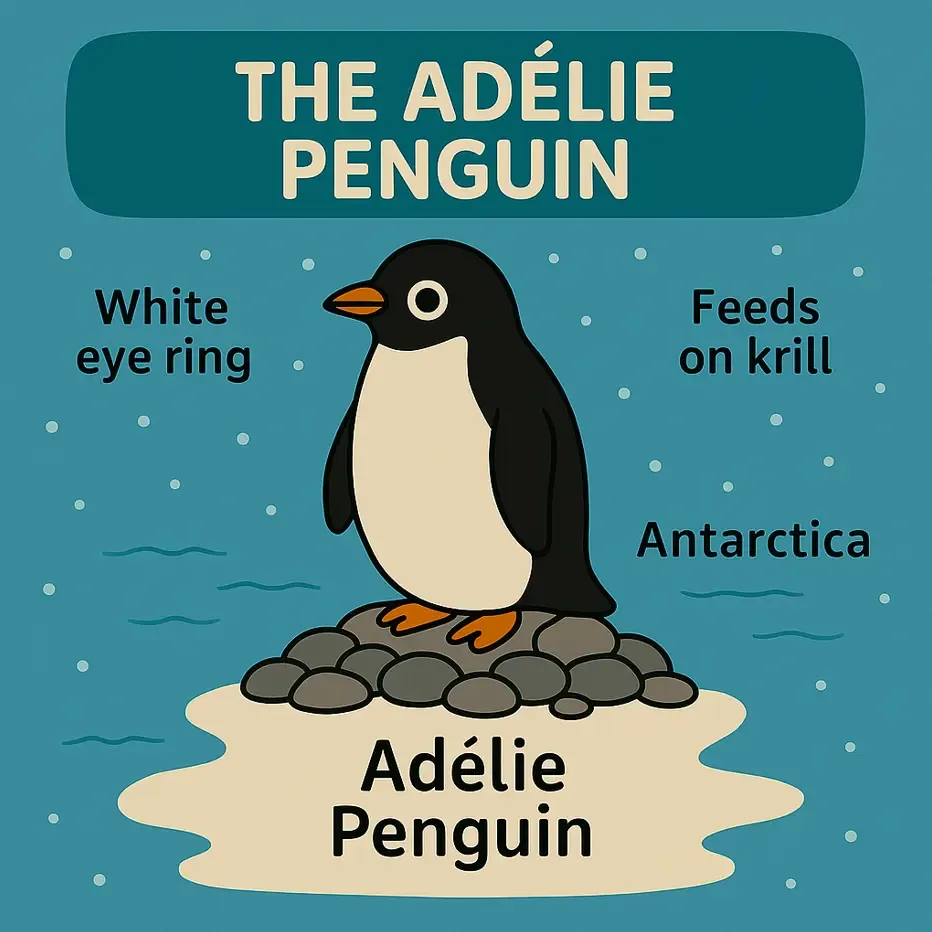
Meet the Adélie penguin, a charming and energetic resident of the icy Antarctic continent! Unlike their larger Emperor Penguin cousins, Adélies are medium-sized, highly recognizable by their classic tuxedo look: a black back, a crisp white belly, and a distinctive white ring around each eye. These active flightless birds are truly unique animals, embodying the spirit of the vast, frozen south.
Adélie penguins thrive along the rocky, ice-free coastal areas of Antarctica and its surrounding islands. They are master swimmers and divers, perfectly suited to the frigid waters of the Southern Ocean. Their diet consists almost entirely of tiny crustaceans called krill, along with some fish and squid. Their survival is closely tied to the health of the krill populations, which are a cornerstone of the Antarctic food web.
These unique birds are famous for their lively colonies and their unique nesting habits. Adélies build their nests on bare, rocky ground, painstakingly collecting small pebbles to create a raised mound for their eggs. Both parents share the duties of incubating the eggs and raising their chicks. Their curious and sometimes feisty personalities are often observed as they waddle across the ice or interact with scientific expeditions.
While Adélie populations have fluctuated, some colonies are showing declines, largely due to climate change affecting sea ice extent and the availability of krill. This highlights the importance of conservation efforts to protect these iconic Antarctic wildlife and the delicate biodiversity of the polar regions. Observing their adaptations and behaviors provides valuable insight into the resilience of life in extreme environments.
Fun Fact: Adélie penguins sometimes 'steal' pebbles from their neighbors' nests to add to their own, leading to amusing squabbles within the colony!
What is a key feature of the Adélie penguin's appearance?
Red feathersWhite eye ringsLong neckYellow feet
Where do Adélie penguins primarily live?
ArcticAntarcticaSouth AmericaAustralia
What is the main food for Adélie penguins?
FishKrillSeaweedSquid
What do Adélie penguins use to build their nests?
SticksMudFeathersPebbles
What kind of temperament do Adélie penguins have?
Shy and quietSluggish and slowLively and curiousAngry and mean
What ocean do Adélie penguins hunt in?
AtlanticPacificIndianSouthern Ocean
What is the main idea of this passage?
Adélie penguins are the biggest penguins.Adélie penguins are unique, active Antarctic birds.Adélie penguins only eat fish.Adélie penguins live alone.
What threatens Adélie penguin populations?
Too many fishClimate changeWarm temperaturesLots of land
Perfect For:
👩🏫 Teachers
• Reading comprehension practice
• Auto-graded assessments
• Literacy skill development
👨👩👧👦 Parents
• Reading practice at home
• Comprehension improvement
• Educational reading time
🏠 Homeschoolers
• Reading curriculum support
• Independent reading practice
• Progress monitoring
Reading Features:
📖
Reading Passage
Engaging fiction or nonfiction text
❓
Comprehension Quiz
Auto-graded questions
📊
Instant Feedback
Immediate results and scoring
📄
Printable Version
Download for offline reading
🔊
Read Aloud
Voice-over with word highlighting
Reviews & Ratings
No reviews yet. Be the first to share your experience!
Related Content
The Narwhal: Arctic’s Unicorn of the Sea
This NGSS-aligned passage (MS-LS2-1) explores how narwhals survive in Arctic ecosystems. Students learn about specialize...
MS-LS2-1RI.6.3RI.7.3RI.8.8
The Blue-Ringed Octopus
This NGSS aligned passage explores how the tiny blue-ringed octopus impacts its ecosystem through predator-prey relation...
MS-LS2-1RI.6.3RI.7.3RI.8.8
Tardigrades: Microscopic Superheroes
Aligned to MS-LS1-1, this passage examines how tardigrade cell structures (TDP proteins, DNA-repair enzymes) allow survi...
MS-LS2-1RI.6.3RI.7.3RI.8.8
The Leafy Sea Dragon: Nature's Living Seaweed
This NGSS-aligned passage explores how leafy sea dragons (Phycodurus eques) demonstrate key life science concepts for mi...
MS-LS2-1RI.6.3RI.7.3RI.8.8
What Do Axolotls Eat?
This science reading passage, titled "What Do Axolotls Eat?", offers an engaging exploration into the feeding habits of ...
MS-LS2-1
Where Do Axolotls Live?
This science reading passage, titled "The Axolotl's Home," delves into the specific natural environment of the fascinati...
MS-LS4-DMS-LS2-1
The Blobfish
This science reading passage, titled "The Blobfish: A Deep-Sea Mystery," introduces students to one of Earth's most pecu...
MS-LS4-DMS-LS2-1
What Do Blobfish Eat?
This science reading passage, titled "What Do Blobfish Eat?", offers an engaging exploration into the feeding habits of ...
MS-LS2-1
Where Do Penguins Live?
This engaging science reading passage, titled "Where Do Penguins Live? A Cold and Coastal World," clarifies the diverse ...
MS-LS2-1
The Emperor Penguin
This science reading passage, titled "The Emperor Penguin: Antarctica's Royal Survivor," introduces students to one of t...
MS-LS2-1
How Does Global Warming Affect Adélie Penguins?
This comprehensive science passage, titled "How Does Global Warming Affect Adélie Penguins?", details the significant im...
MS-LS2-1
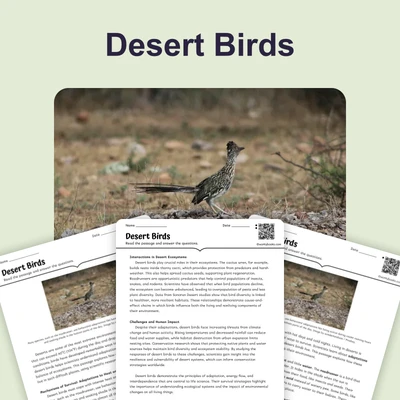
Desert Birds
This informational passage for grades 6-8 examines how desert birds survive and thrive in some of the harshest environme...
MS-LS2-1MS-LS2-2MS-LS1-4
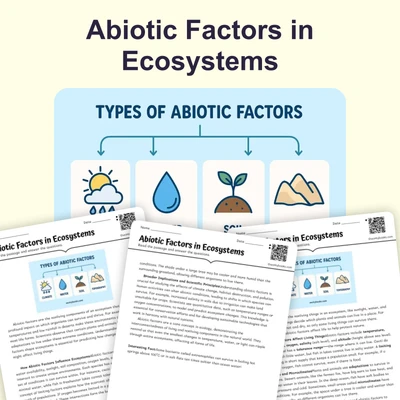
Abiotic Factors in Ecosystems
This comprehensive informational reading passage is designed for middle school science students and aligns with NGSS sta...
MS-LS2-1
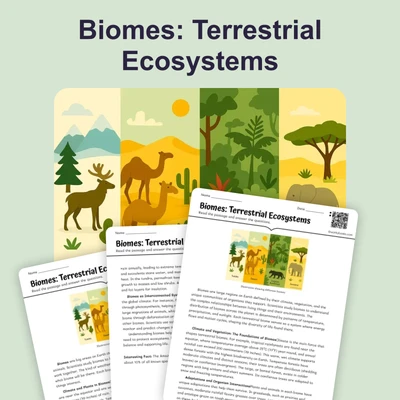
Biomes: Terrestrial Ecosystems
This NGSS-aligned science reading passage for grades 6-8 provides a comprehensive survey of Earth’s major terrestrial bi...
MS-LS2-1
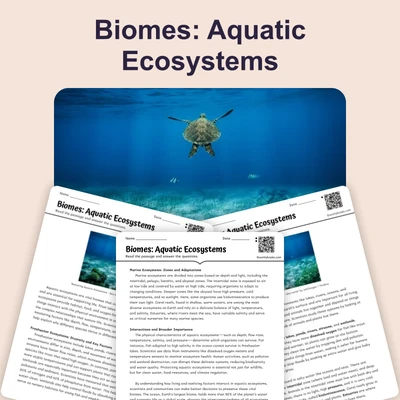
Biomes: Aquatic Ecosystems
This middle school science passage, aligned with NGSS standard MS-LS2-1, introduces students to the key features and mec...
MS-LS2-1
Galápagos Islands
This engaging science passage explores the Galápagos Islands, a volcanic archipelago located off the coast of Ecuador in...
MS-LS2-1MS-LS4-4MS-ESS3-4
Florida Everglades
This comprehensive passage introduces middle school students to the Florida Everglades, a distinctive wetland ecosystem ...
MS-LS2-1MS-LS2-4MS-ESS3-3MS-ESS3-4
Great Barrier Reef
This passage introduces middle school students to the Great Barrier Reef, the world's largest coral reef system, located...
MS-LS2-1MS-LS2-4MS-ESS3-5
Wetland Biomes
This comprehensive science passage introduces middle school students to the concept of wetland biomes. Aligned with NGSS...