The Blue-Ringed Octopus
Interactive passage with audio narration, comprehension questions, and printable PDF.
What's included
The Blue-Ringed Octopus preview and details
About this printable The Blue-Ringed Octopus science reading passage, NGSS-aligned (Grades 5-8)
Sample passage and quiz from The Blue-Ringed Octopus
Reading passage and comprehension quiz preview
The Blue-Ringed Octopus: A Tiny But Deadly Ecosystem Engineer
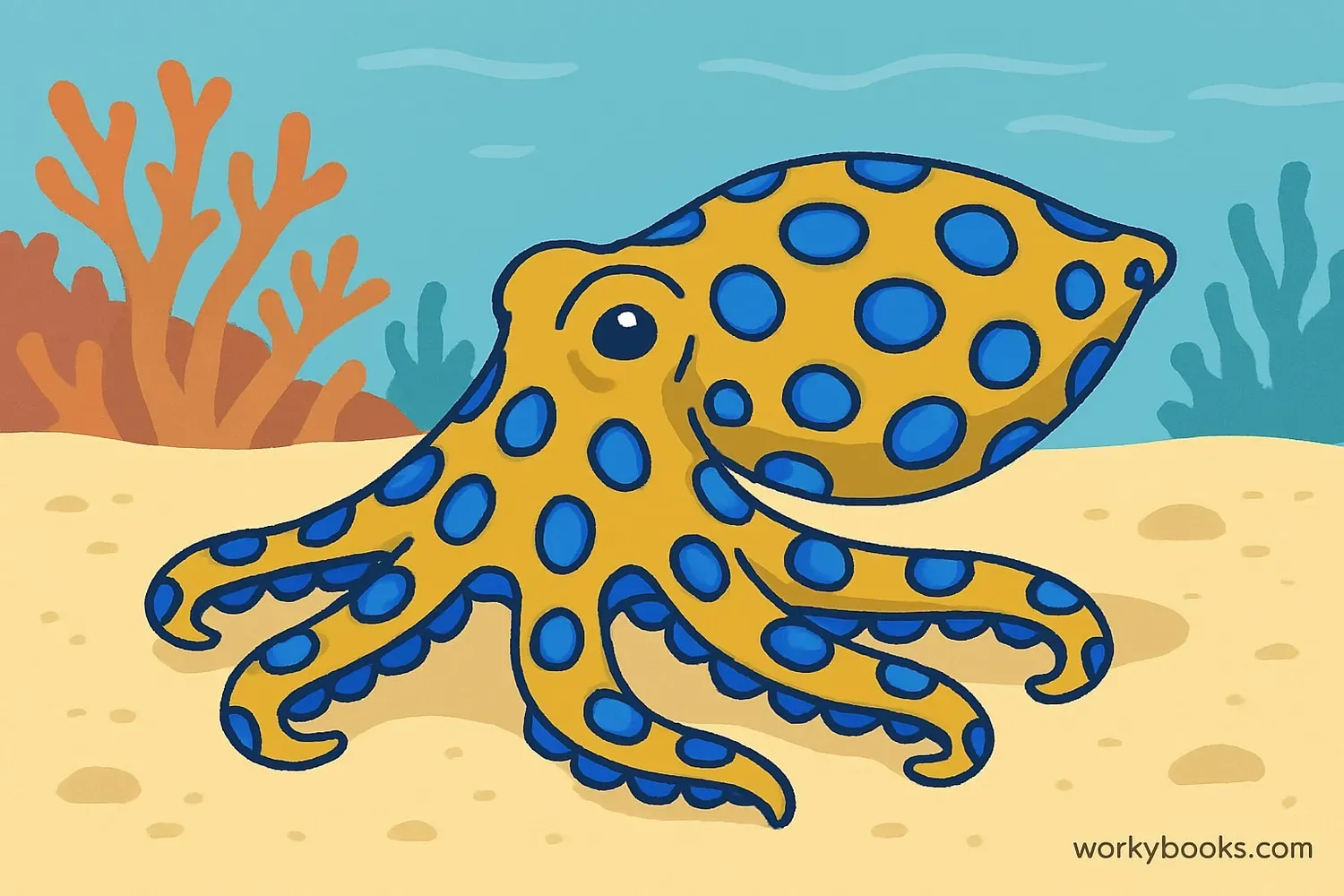
The blue-ringed octopus (Hapalochlaena species) is a master of survival in its coastal ecosystem. Though small enough to fit in your palm, this creature plays several critical roles in maintaining balance in its environment.
Found throughout the tidal pools and coral reefs of the Pacific and Indian Oceans, these octopuses thrive in shallow waters from Australia to Japan. As both predator and prey, they occupy a vital position in the food web, controlling populations of small crustaceans while providing food for larger reef species.
Their hunting activities help regulate the numbers of crabs and shrimp, preventing these species from overgrazing on important reef organisms. By creating small dens in rocky crevices, they modify their microenvironment, providing shelter for other small creatures when abandoned.
Deadly Adaptations
This small octopus contains some of the ocean's most remarkable survival tools:
● Warning Display: When threatened, vibrant blue rings flash across its skin as one of nature's clearest "don't touch" signals.
● Potent Venom: Carries enough tetrodotoxin to paralyze 26 adult humans - making it one of the most venomous marine animals.
● Surgical Strike System: The venom, produced by symbiotic bacteria, is only injected when hunting prey through its beak.
● Stealth Mode: Can change color and texture to disappear into surroundings when not actively warning predators.
Fun Fact: A single blue-ringed octopus can influence an area 10 times its size by creating a "halo effect" - prey species avoid its territory, which indirectly protects nearby coral and algae from overgrazing!
Comprehension quiz (8 questions)
1. Where are blue-ringed octopuses primarily found?
2. Which organism is NOT part of the octopus's food web?
3. Why is this small octopus important to its ecosystem?
4. What is the main function of their blue rings?
5. How does the octopus obtain its venom?
6. The word "tetrodotoxin" refers to:
7. In this passage, "symbiotic" means:
8. What would happen if blue-ringed octopuses disappeared?
Perfect for the way you teach
- Build comprehension skills
- Auto-graded quiz
- Differentiated reading
- Read together at home
- Improve fluency
- Quiet reading time
- Reading curriculum support
- Independent practice
- Track Lexile growth