How Does Global Warming Affect Adélie Penguins?
Interactive passage with audio narration, comprehension questions, and printable PDF.
By completing this purchase you agree to our Terms of Use and Privacy Policy. Your subscription renews automatically until you cancel. You can cancel anytime from your account settings. All sales are final and non-refundable. Digital content is available for download in your account immediately upon purchase.
What's included
How Does Global Warming Affect Adélie Penguins? preview and details
About this printable How Does Global Warming Affect Adélie Penguins? science reading passage, NGSS-aligned (Grades 3-8)
Sample passage and quiz from How Does Global Warming Affect Adélie Penguins?
Reading passage and comprehension quiz preview
How Does Global Warming Affect Adélie Penguins?
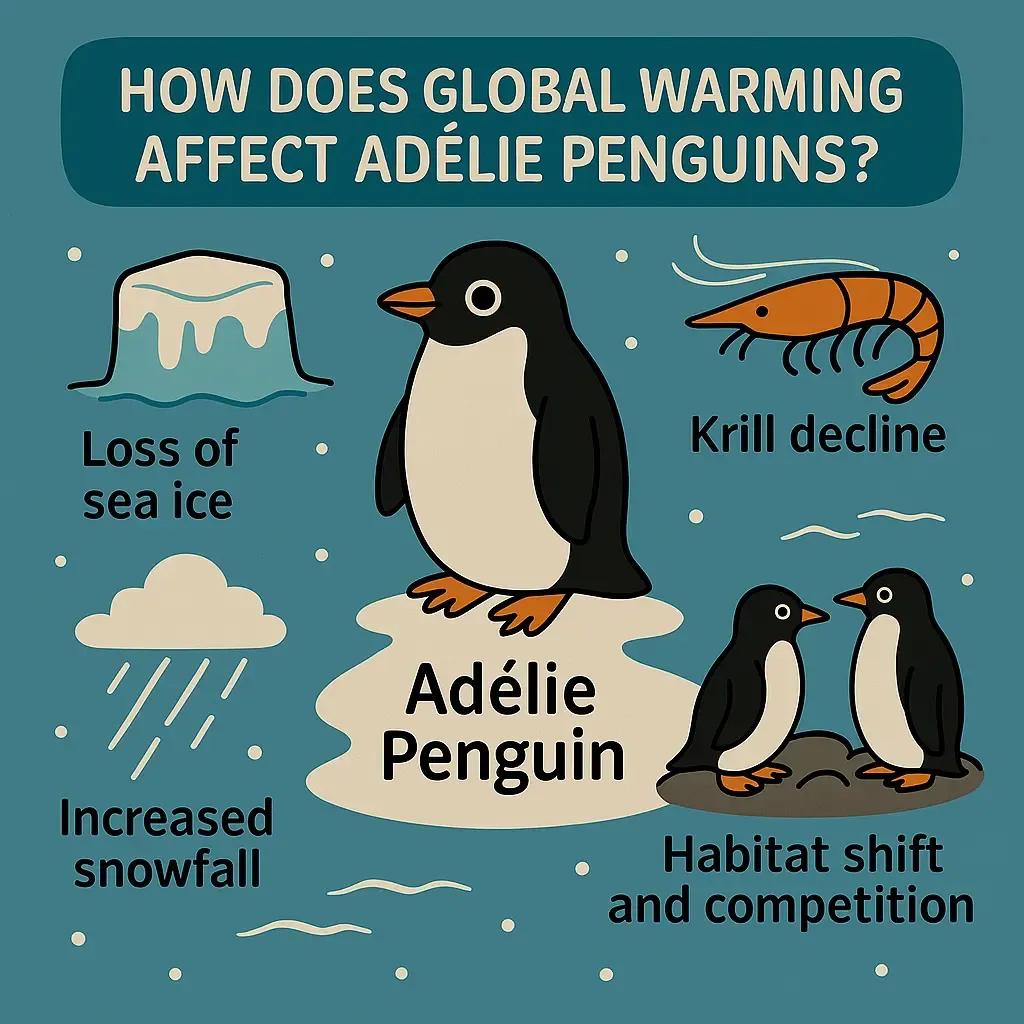
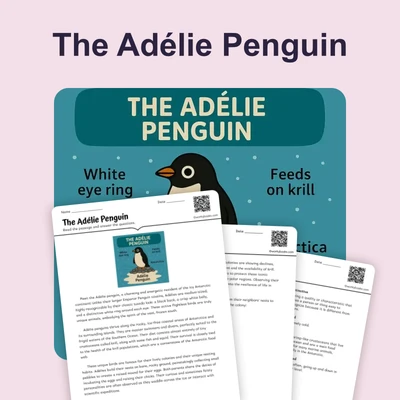
Global warming significantly impacts Adélie penguins, primarily through its effects on their Antarctic habitat and their primary food source, krill. Adélie penguins are considered "ice obligates," meaning they rely heavily on sea ice for various aspects of their lives.
Here's how global warming affects them:
- Loss of Sea Ice: Adélie penguins depend on sea ice for several critical reasons. The timing of sea ice breakup is crucial for them to reach their breeding grounds. If sea ice persists too long, it can prevent access, but if it breaks up too early or is absent, it impacts their ability to find food. Sea ice also provides platforms for penguins to rest during foraging trips. More importantly, it's vital for krill, their main food source. Krill graze on algae that grow on the underside of sea ice. A reduction in sea ice leads to a decline in krill populations, making it harder for penguins to find food, especially when raising chicks. This can lead to lower breeding success and increased adult mortality. Less sea ice can also force penguins to travel farther for food during migrations, increasing their energy expenditure.
- Changes in Food Availability (Krill Decline): As mentioned, the decline in sea ice directly impacts krill, which forms the base of the Antarctic food web. Warmer ocean temperatures and reduced sea ice lead to a decrease in krill abundance. Since Adélie penguins are highly dependent on krill, this decline in their primary food source causes widespread population drops in affected areas.
- Increased Snowfall: Ironically, warming temperatures in parts of Antarctica can lead to increased snowfall in coastal areas. Heavy snowfall during the summer can cover nesting sites, making it difficult for Adélie penguins to build their pebble nests on bare ground. This can lead to eggs being submerged or chilled, impacting hatching success.
- Habitat Shift and Competition: As sea ice conditions change, some Adélie colonies in the rapidly warming West Antarctic Peninsula have seen dramatic declines. In contrast, other penguin species that are more "ice-intolerant," like Gentoo penguins, are expanding their range southward into areas historically dominated by Adélies, potentially leading to increased competition for resources and nesting sites.
While some Adélie penguin populations in other parts of Antarctica (where climate conditions are more stable or even cooling) have remained steady or increased, the overall trend in warming regions points to significant challenges for this iconic species, underscoring the urgency of addressing global warming.
Comprehension quiz (8 questions)
1. What do Adélie penguins rely heavily on?
2. What is the primary food for Adélie penguins?
3. What grows on the underside of sea ice?
4. What happens if sea ice declines for krill?
5. How does more snowfall affect nesting sites?
6. What happens if sea ice forces penguins to travel farther?
7. What penguin species might compete with Adélies due to warming?
8. What is the main cause of these effects on Adélies?
Perfect for the way you teach
- Build comprehension skills
- Auto-graded quiz
- Differentiated reading
- Read together at home
- Improve fluency
- Quiet reading time
- Reading curriculum support
- Independent practice
- Track Lexile growth