This learning resource is available in interactive and printable formats. The interactive worksheet can be played online and assigned to students. The Printable PDF version can be downloaded and printed for completion by hand.
This science reading passage, titled "The Emperor Penguin: Antarctica's Royal Survivor," introduces students to one of the world's most iconic and unique birds. Aligned with NGSS Life Science standards, particularly MS-LS4-C (Adaptations) and MS-LS4-D (Biodiversity and Humans), the passage highlights the Emperor Penguin's status as the largest penguin species and its exclusive habitat in the extreme cold of Antarctica. It details its remarkable physical and behavioral adaptations, such as blubber and huddling, that allow it to survive harsh conditions. The text emphasizes its extraordinary breeding cycle, including the male's crucial role in incubating the egg through winter. The passage also addresses the significant threats from climate change and the importance of conservation efforts. This resource is excellent for fostering reading comprehension, expanding vocabulary related to animal adaptations and polar ecosystems, and encouraging awareness about endangered species and climate impacts.
CONTENT PREVIEW
Expand content preview
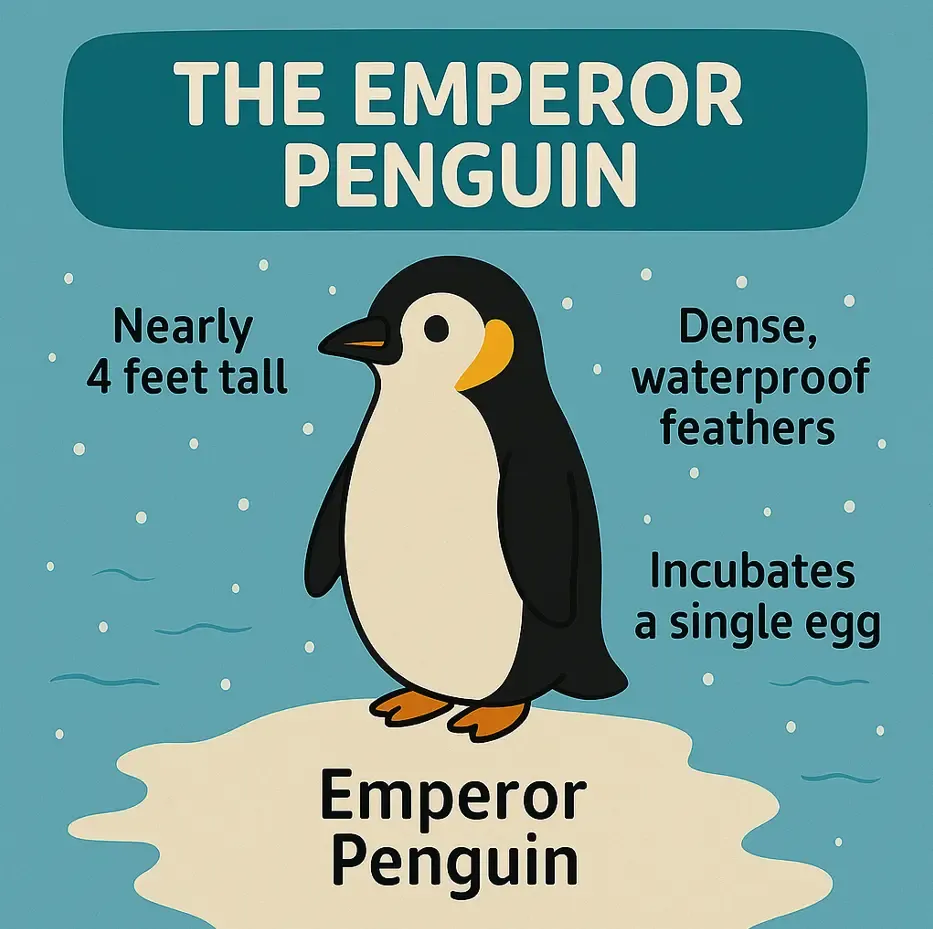
Imagine standing tall in one of the harshest places on Earth, enduring freezing winds and months of darkness. That's the extraordinary life of the Emperor Penguin, the largest and arguably most majestic of all penguin species! These iconic flightless birds are truly unique animals, exclusively native to the icy continent of Antarctica.
Emperor Penguins are masterpieces of adaptation to their extreme cold habitat. Standing nearly four feet tall, they are covered in dense, waterproof feathers that act like a thick, insulating coat. Beneath their skin, a thick layer of blubberprovides further warmth. When temperatures plummet and blizzards rage, thousands of Emperor Penguins huddle together in tight formations, taking turns in the warmer center, showcasing incredible cooperative behavior.
What truly sets the Emperor Penguin apart is its remarkable breeding cycle. Unlike most animals that breed in warmer months, Emperor Penguins begin their courtship and lay a single egg in the brutal Antarctic winter. After the female lays the egg, she returns to the sea to feed. The male then takes on the extraordinary responsibility of incubating the egg, balancing it on his feet under a brood patch, for over 60 days without eating, enduring the darkest and coldest part of winter.
These marine birds are powerful swimmers, diving to incredible depths to hunt for fish, squid, and krill in the frigid ocean. Sadly, the Emperor Penguin faces significant threats from climate change, particularly the loss of sea ice which is vital for their breeding and feeding. Conservation efforts are crucial to protect these incredible Antarctica residents and preserve their unique place in biodiversity.
Fun Fact: Male Emperor Penguins can go without food for up to four months while incubating their egg and waiting for the female to return from feeding!
When do Emperor Penguins begin their breeding cycle?
SummerSpringAntarctic winterAutumn
What is one adaptation for extreme cold?
Thin furBright colorsThick blubberLong wings
Who primarily incubates the Emperor Penguin egg?
The femaleBoth parentsThe maleOther penguins
What do Emperor Penguins mainly eat?
PlantsInsectsFish and squidSeals
What is the main idea of this passage?
Emperor Penguins are the best swimmers.Emperor Penguins are large, adapted, and endangered Antarctic birds.Emperor Penguins live in warm places.Emperor Penguins are easy to find.
What is a big threat to Emperor Penguins?
Too much foodClimate changeToo many nesting sitesWarm ocean currents
Perfect For:
👩🏫 Teachers
• Reading comprehension practice
• Auto-graded assessments
• Literacy skill development
👨👩👧👦 Parents
• Reading practice at home
• Comprehension improvement
• Educational reading time
🏠 Homeschoolers
• Reading curriculum support
• Independent reading practice
• Progress monitoring
Reading Features:
📖
Reading Passage
Engaging fiction or nonfiction text
❓
Comprehension Quiz
Auto-graded questions
📊
Instant Feedback
Immediate results and scoring
📄
Printable Version
Download for offline reading
🔊
Read Aloud
Voice-over with word highlighting
Reviews & Ratings
No reviews yet. Be the first to share your experience!
Related Content
The Narwhal: Arctic’s Unicorn of the Sea
This NGSS-aligned passage (MS-LS2-1) explores how narwhals survive in Arctic ecosystems. Students learn about specialize...
MS-LS2-1RI.6.3RI.7.3RI.8.8
The Blue-Ringed Octopus
This NGSS aligned passage explores how the tiny blue-ringed octopus impacts its ecosystem through predator-prey relation...
MS-LS2-1RI.6.3RI.7.3RI.8.8
Tardigrades: Microscopic Superheroes
Aligned to MS-LS1-1, this passage examines how tardigrade cell structures (TDP proteins, DNA-repair enzymes) allow survi...
MS-LS2-1RI.6.3RI.7.3RI.8.8
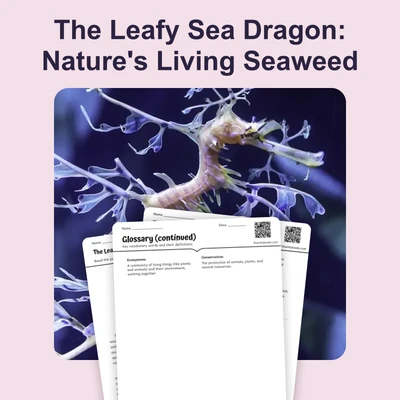
The Leafy Sea Dragon: Nature's Living Seaweed
This NGSS-aligned passage explores how leafy sea dragons (Phycodurus eques) demonstrate key life science concepts for mi...
MS-LS2-1RI.6.3RI.7.3RI.8.8
What Do Axolotls Eat?
This science reading passage, titled "What Do Axolotls Eat?", offers an engaging exploration into the feeding habits of ...
MS-LS2-1
Where Do Axolotls Live?
This science reading passage, titled "The Axolotl's Home," delves into the specific natural environment of the fascinati...
MS-LS4-DMS-LS2-1
The Blobfish
This science reading passage, titled "The Blobfish: A Deep-Sea Mystery," introduces students to one of Earth's most pecu...
MS-LS4-DMS-LS2-1
What Do Blobfish Eat?
This science reading passage, titled "What Do Blobfish Eat?", offers an engaging exploration into the feeding habits of ...
MS-LS2-1
Where Do Penguins Live?
This engaging science reading passage, titled "Where Do Penguins Live? A Cold and Coastal World," clarifies the diverse ...
MS-LS2-1
The Adélie Penguin
This engaging science reading passage, titled "The Adélie Penguin: Antarctica's Little Explorer," introduces students to...
MS-LS2-1
How Does Global Warming Affect Adélie Penguins?
This comprehensive science passage, titled "How Does Global Warming Affect Adélie Penguins?", details the significant im...
MS-LS2-1
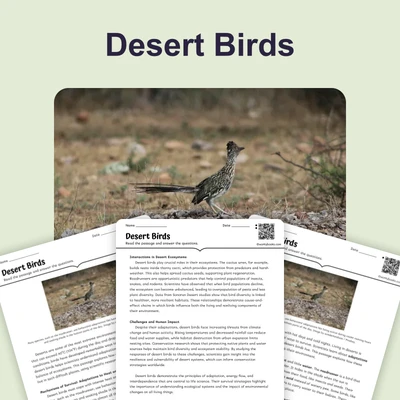
Desert Birds
This informational passage for grades 6-8 examines how desert birds survive and thrive in some of the harshest environme...
MS-LS2-1MS-LS2-2MS-LS1-4
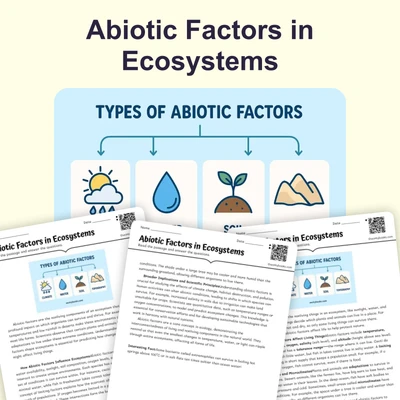
Abiotic Factors in Ecosystems
This comprehensive informational reading passage is designed for middle school science students and aligns with NGSS sta...
MS-LS2-1
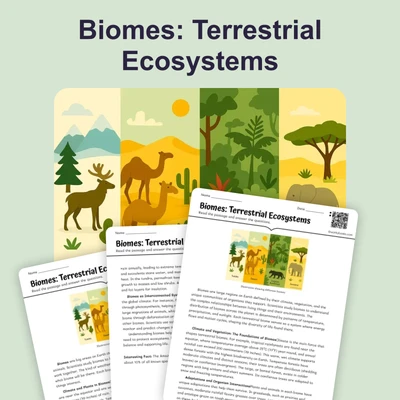
Biomes: Terrestrial Ecosystems
This NGSS-aligned science reading passage for grades 6-8 provides a comprehensive survey of Earth’s major terrestrial bi...
MS-LS2-1
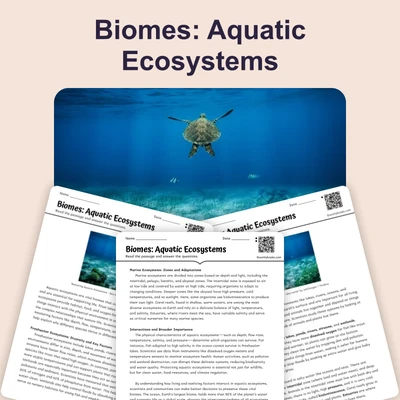
Biomes: Aquatic Ecosystems
This middle school science passage, aligned with NGSS standard MS-LS2-1, introduces students to the key features and mec...
MS-LS2-1
Galápagos Islands
This engaging science passage explores the Galápagos Islands, a volcanic archipelago located off the coast of Ecuador in...
MS-LS2-1MS-LS4-4MS-ESS3-4
Florida Everglades
This comprehensive passage introduces middle school students to the Florida Everglades, a distinctive wetland ecosystem ...
MS-LS2-1MS-LS2-4MS-ESS3-3MS-ESS3-4
Great Barrier Reef
This passage introduces middle school students to the Great Barrier Reef, the world's largest coral reef system, located...
MS-LS2-1MS-LS2-4MS-ESS3-5
Wetland Biomes
This comprehensive science passage introduces middle school students to the concept of wetland biomes. Aligned with NGSS...