This learning resource is available in interactive and printable formats. The interactive worksheet can be played online and assigned to students. The Printable PDF version can be downloaded and printed for completion by hand.
This engaging science reading passage, titled "Where Do Penguins Live? A Cold and Coastal World," clarifies the diverse geographic distribution of penguins. Aligned with NGSS Life Science standards, particularly MS-LS2-1 (Interdependent Relationships in Ecosystems) and MS-LS4-C (Adaptation), the passage explains that these unique flightless birds are exclusively found in the Southern Hemisphere, dispelling the common Arctic misconception. It details their varied coastal and marine habitats, including Antarctica, sub-Antarctic islands, and the coasts of South America, Africa, Australia, and New Zealand, even mentioning the equatorial Galapagos penguin. The text highlights their specialized adaptations for cold, watery environments and underscores the critical importance of conservation efforts due to threats like climate change and pollution. This resource is excellent for fostering reading comprehension, expanding vocabulary related to animal habitats and adaptations, and promoting awareness of global biodiversity and environmental challenges.
CONTENT PREVIEW
Expand content preview
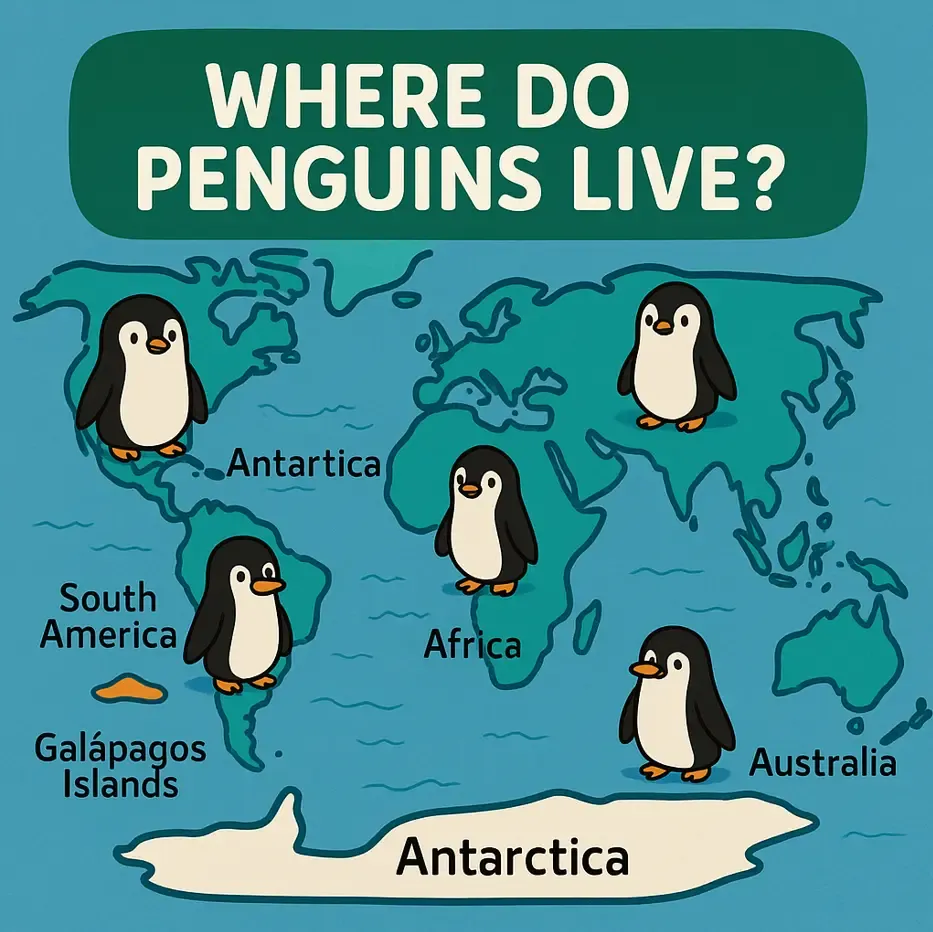
When you think of penguins, you probably imagine snowy, icy places. And you'd be right for many species! But did you know that no penguins live naturally at the North Pole or in the Arctic? These fascinating flightless birds are exclusively found in the Southern Hemisphere, making their homes in some of the coldest and most remote coastal and marine environments on Earth.
Their main stronghold is Antarctica and its surrounding sub-Antarctic islands, where vast colonies of Emperor and Adélie penguins thrive amidst the ice. However, penguins also live in surprising places! You can find t\hem along the chilly coasts of South America (like Chile and Argentina), Africa (such as South Africa and Namibia), Australia, and New Zealand. Each region offers a unique habitat perfectly suited to different penguin species.
Even more surprising, there's a species of penguin that lives near the equator! The Galapagos penguin makes its home on the Galapagos Islands, thanks to the cold currents that bring plenty of fish for them to eat. Regardless of the specific location, all penguins depend on cold, nutrient-rich ocean waters for their food.
These unique birds are perfectly adapted to their watery world. Their sleek, torpedo-shaped bodies, strong flippers, and waterproof feathers make them incredible swimmers and divers, allowing them to hunt for fish and krill. Understanding where do penguins live and the importance of their diverse ecosystems is vital, as many penguin populations are threatened by climate change and ocean pollution, making conservation efforts incredibly important.
Fun Fact: Despite living in cold places, the Galapagos penguin is the only penguin species that lives north of the equator!
Do penguins live at the North Pole?
Yes, all of them.No, never.Only some.In summer.
What hemisphere are penguins found in?
NorthernSouthernEasternWestern
What kind of environments do they prefer?
DesertsCoastal and marineMountainsRainforests
Which continent has many penguins?
AsiaEuropeAntarcticaNorth America
What country has penguins on its coast?
RussiaEgyptSouth AfricaCanada
What makes penguins great swimmers?
Long legsStrong flippersBright feathersBig beaks
What is the main idea of this passage?
Penguins only eat fish. Penguins live in diverse Southern Hemisphere habitats.Penguins can fly.Penguins are the same size.
What threatens many penguin populations?
Too much foodClimate changeWarm waterLots of land
Perfect For:
👩🏫 Teachers
• Reading comprehension practice
• Auto-graded assessments
• Literacy skill development
👨👩👧👦 Parents
• Reading practice at home
• Comprehension improvement
• Educational reading time
🏠 Homeschoolers
• Reading curriculum support
• Independent reading practice
• Progress monitoring
Reading Features:
📖
Reading Passage
Engaging fiction or nonfiction text
❓
Comprehension Quiz
Auto-graded questions
📊
Instant Feedback
Immediate results and scoring
📄
Printable Version
Download for offline reading
🔊
Read Aloud
Voice-over with word highlighting
Reviews & Ratings
No reviews yet. Be the first to share your experience!
Related Content
The Narwhal: Arctic’s Unicorn of the Sea
This NGSS-aligned passage (MS-LS2-1) explores how narwhals survive in Arctic ecosystems. Students learn about specialize...
MS-LS2-1RI.6.3RI.7.3RI.8.8
The Blue-Ringed Octopus
This NGSS aligned passage explores how the tiny blue-ringed octopus impacts its ecosystem through predator-prey relation...
MS-LS2-1RI.6.3RI.7.3RI.8.8
Tardigrades: Microscopic Superheroes
Aligned to MS-LS1-1, this passage examines how tardigrade cell structures (TDP proteins, DNA-repair enzymes) allow survi...
MS-LS2-1RI.6.3RI.7.3RI.8.8
The Leafy Sea Dragon: Nature's Living Seaweed
This NGSS-aligned passage explores how leafy sea dragons (Phycodurus eques) demonstrate key life science concepts for mi...
MS-LS2-1RI.6.3RI.7.3RI.8.8
What Do Axolotls Eat?
This science reading passage, titled "What Do Axolotls Eat?", offers an engaging exploration into the feeding habits of ...
MS-LS2-1
Where Do Axolotls Live?
This science reading passage, titled "The Axolotl's Home," delves into the specific natural environment of the fascinati...
MS-LS4-DMS-LS2-1
The Blobfish
This science reading passage, titled "The Blobfish: A Deep-Sea Mystery," introduces students to one of Earth's most pecu...
MS-LS4-DMS-LS2-1
What Do Blobfish Eat?
This science reading passage, titled "What Do Blobfish Eat?", offers an engaging exploration into the feeding habits of ...
MS-LS2-1
The Emperor Penguin
This science reading passage, titled "The Emperor Penguin: Antarctica's Royal Survivor," introduces students to one of t...
MS-LS2-1
The Adélie Penguin
This engaging science reading passage, titled "The Adélie Penguin: Antarctica's Little Explorer," introduces students to...
MS-LS2-1
How Does Global Warming Affect Adélie Penguins?
This comprehensive science passage, titled "How Does Global Warming Affect Adélie Penguins?", details the significant im...
MS-LS2-1
Desert Birds
This informational passage for grades 6-8 examines how desert birds survive and thrive in some of the harshest environme...
MS-LS2-1MS-LS2-2MS-LS1-4
Abiotic Factors in Ecosystems
This comprehensive informational reading passage is designed for middle school science students and aligns with NGSS sta...
MS-LS2-1
Biomes: Terrestrial Ecosystems
This NGSS-aligned science reading passage for grades 6-8 provides a comprehensive survey of Earth’s major terrestrial bi...
MS-LS2-1
Biomes: Aquatic Ecosystems
This middle school science passage, aligned with NGSS standard MS-LS2-1, introduces students to the key features and mec...
MS-LS2-1
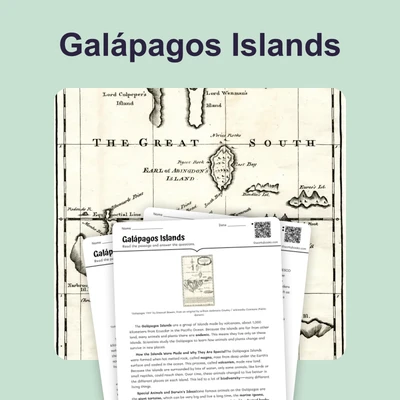
Galápagos Islands
This engaging science passage explores the Galápagos Islands, a volcanic archipelago located off the coast of Ecuador in...
MS-LS2-1MS-LS4-4MS-ESS3-4
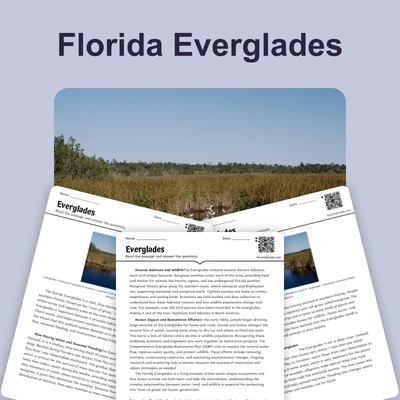
Florida Everglades
This comprehensive passage introduces middle school students to the Florida Everglades, a distinctive wetland ecosystem ...
MS-LS2-1MS-LS2-4MS-ESS3-3MS-ESS3-4
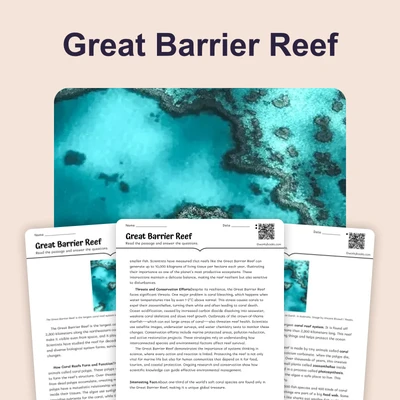
Great Barrier Reef
This passage introduces middle school students to the Great Barrier Reef, the world's largest coral reef system, located...
MS-LS2-1MS-LS2-4MS-ESS3-5
Wetland Biomes
This comprehensive science passage introduces middle school students to the concept of wetland biomes. Aligned with NGSS...