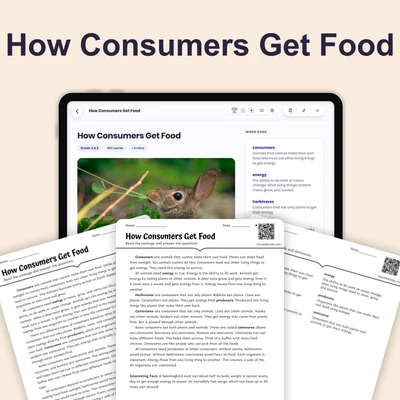
Consumers Get Energy By Eating — Reading Comprehension
Rate this
Premium Resource
Present
Present in classroom. No work saved
Assign
Classroom with student accounts, Track progress
Quick Play
No student accounts, assign with a link
Grades
6
PRINT+DIGITAL RESOURCE
This learning resource is available in interactive and printable formats. The interactive worksheet can be played online and assigned to students. The Printable PDF version can be downloaded and printed for completion by hand.
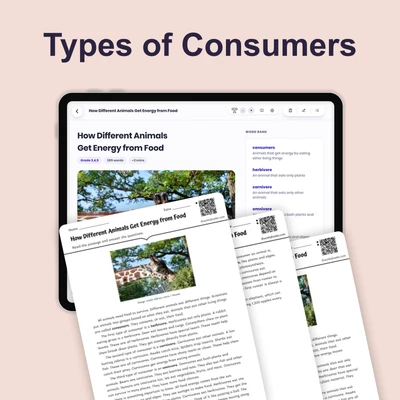
This educational resource, aligned with NGSS 5-LS2-1, helps students understand how consumers obtain energy by eating. The passage, 'Consumers Get Energy By Eating,' explains the roles of producers, consumers, and decomposers in an ecosystem and how matter moves through these living things. It uses simple language and defines key scientific terms, making complex ideas accessible for Grade 5 learners. The accompanying activities include reading comprehension questions at various DOK levels, a vocabulary-building glossary, and short answer questions to deepen understanding. All components are audio integrated to support diverse learning styles and enhance engagement with science concepts like food chains and energy transfer.
CONTENT PREVIEW
Expand content preview
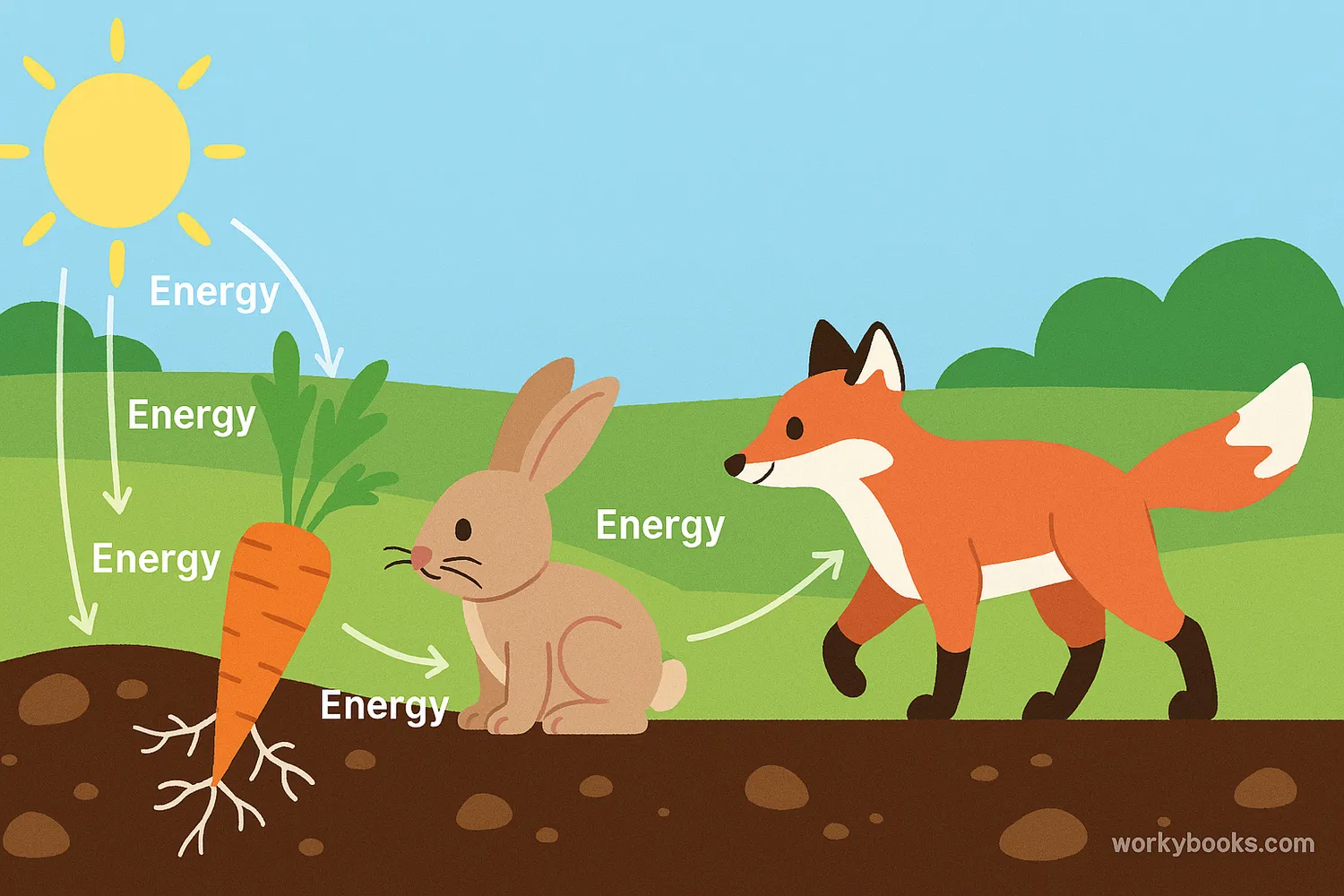
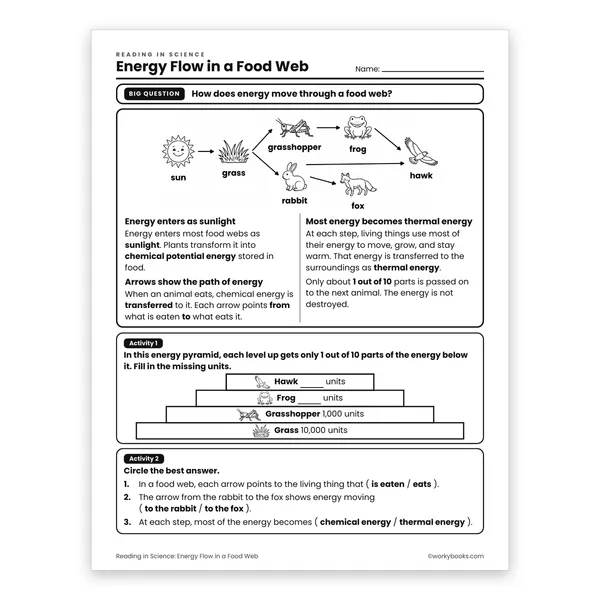
Energy flows from sun to producer to consumers in a wide ecosystem food chain.
Consumers Get Energy By Eating
All living things need energy to survive. But not all living things get their energy in the same way. Consumers are living things that cannot make their own food. Unlike plants, which are called producers, consumers must eat other organisms to get the energy they need.
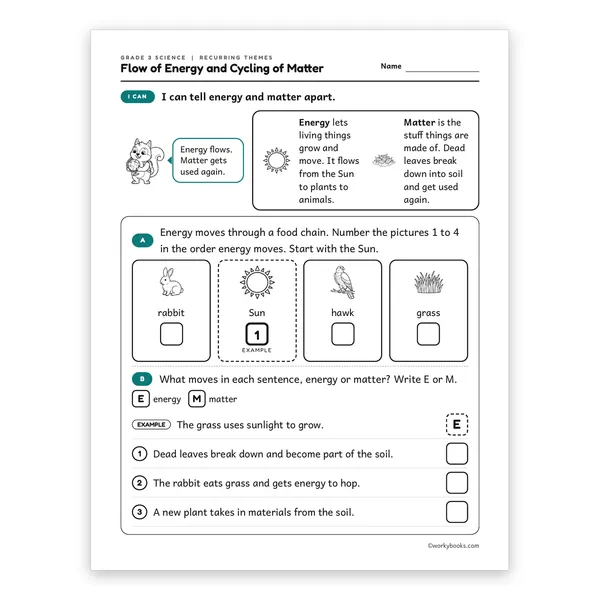
The flow of energy starts with the sun. The sun gives energy to Earth. Producers like plants use sunlight to make food in a process called photosynthesis. When a consumer, such as a rabbit, eats a plant, it gets the energy that the plant made from sunlight. If a hawk eats the rabbit, the energy passes to the hawk. Each time an organism eats another, energy moves along what is called a food chain.
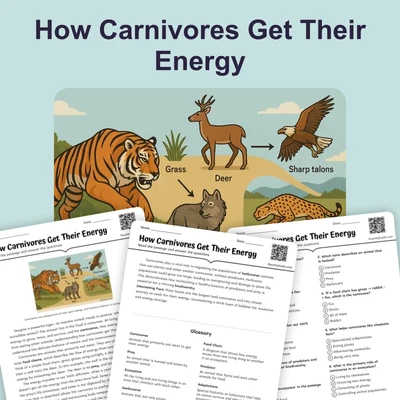
There are different types of consumers. Herbivores eat only plants. Examples are rabbits, deer, and caterpillars. Carnivores eat only other animals. Lions, hawks, and sharks are carnivores. Omnivores eat both plants and animals. Bears, humans, and pigs are omnivores. Each type of consumer gets energy from what it eats.
Consumers must eat because they cannot capture sunlight like plants do. Animals, including humans, need food energy to move, grow, think, and stay warm. When consumers eat, their bodies break down the food through digestion. This releases the energy stored in the food so the animal can use it.
Not all the energy from food gets passed on. Some energy is lost as heat at each step. This is why food chains usually have just a few levels.
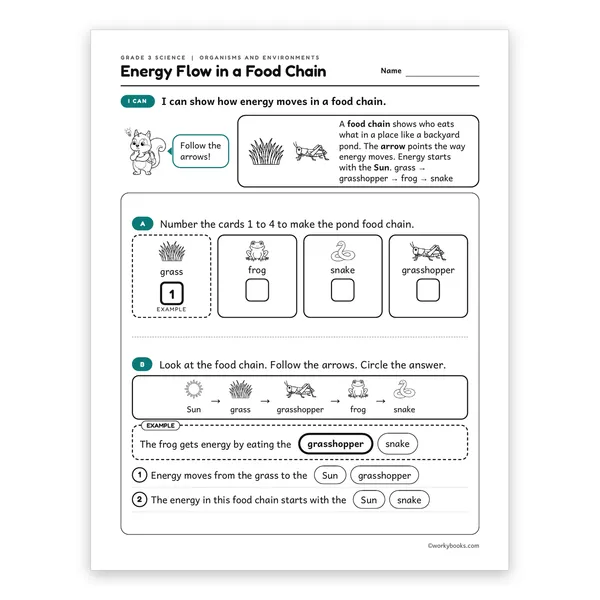
Here is an example of a food chain: grass (producer) → grasshopper (consumer) → frog (consumer) → snake (consumer) → hawk (consumer).
Humans are consumers too! Everything we eat was once alive or came from something alive. You can think of consumers as batteries that need recharging—they cannot make their own power, so they have to 'plug in' by eating food to get energy!
Interesting Fact: If you follow the energy in your lunch back far enough, it always starts with the sun!
What is a consumer?
An organism that eats othersA plant making foodSunlight energyA part of a plant
What do producers do?
Eat other animalsMake their own foodLose energy as heatEat only plants
Which is a herbivore?
LionRabbitHawkShark
Why must consumers eat?
They can't use sunlight directlyTo become producersTo lose energy as heatTo make sunlight
What happens to some energy in a food chain?
It is lost as heatIt multipliesIt becomes a producerIt disappears forever
If a hawk eats a snake, what happens?
Energy goes to the hawkEnergy goes to the sunSnake becomes a plantHawk becomes a producer
Humans are consumers. True or false?
TrueFalse
What is 'digestion'?
Breaking down food for energyMaking food from sunlightEating only plantsLosing energy as heat
Perfect For:
👩🏫 Teachers
• Reading comprehension practice
• Auto-graded assessments
• Literacy skill development
👨👩👧👦 Parents
• Reading practice at home
• Comprehension improvement
• Educational reading time
🏠 Homeschoolers
• Reading curriculum support
• Independent reading practice
• Progress monitoring
Reading Features:
📖
Reading Passage
Engaging fiction or nonfiction text
❓
Comprehension Quiz
Auto-graded questions
📊
Instant Feedback
Immediate results and scoring
📄
Printable Version
Download for offline reading
🔊
Read Aloud
Voice-over with word highlighting
Reviews & Ratings
No reviews yet. Be the first to share your experience!
Related Content
The Nature of Life Science
This passage, aligned with NGSS MS-LS1-1, introduces students in grades 6-8 to the foundational concepts of life science...
MS-LS1-1
Science Vocabulary
This worksheet on domain-specific words will help students learn some science vocabulary. Students will be asked to matc...
L.3.6L.3.4.A
Citizen Science and Ecological Monitoring
This engaging passage for grades 6-8 introduces the concept of citizen science and its critical role in ecological monit...
MS-LS2-1
Ecosystem Services
This engaging middle school science passage introduces students to the concept of ecosystem services, the vital benefits...
MS-LS2-5MS-ESS3-3
Simple Machines Science Report
This science writing task requires students to clearly explain how three simple machines work using precise domain-speci...
W.5.4
Photosynthesis in Ecosystems
This comprehensive passage for grades 6-8 explores the fundamental role of photosynthesis in ecosystems, aligning with N...
MS-LS1-6MS-LS2-3
Desert Ecosystems
This informative writing worksheet on desert ecosystems supports CCSS.ELA-LITERACY.W.5.2.d on using precise language and...
W.5.2.D
Biodiversity and Ecosystem Health
This comprehensive middle school science passage explores the relationship between biodiversity and ecosystem health, al...
MS-LS2-5
Biomes: Aquatic Ecosystems
This middle school science passage, aligned with NGSS standard MS-LS2-1, introduces students to the key features and mec...
MS-LS2-1
Abiotic Factors in Ecosystems
This comprehensive informational reading passage is designed for middle school science students and aligns with NGSS sta...
MS-LS2-1
Biomes: Terrestrial Ecosystems
This NGSS-aligned science reading passage for grades 6-8 provides a comprehensive survey of Earth’s major terrestrial bi...
MS-LS2-1
Water in Ecosystems
This engaging passage for grades 6-8 explores the essential role of water in ecosystems, tracing its movement through va...
MS-LS2-3MS-ESS2-4
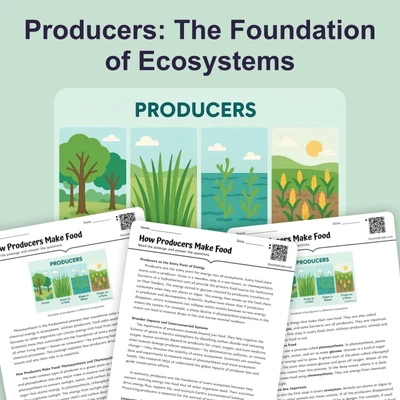
Producers: The Foundation of Ecosystems
This comprehensive science passage explains the critical role of producers, or autotrophs, in all ecosystems. Covering b...
MS-LS2-3MS-LS1-6
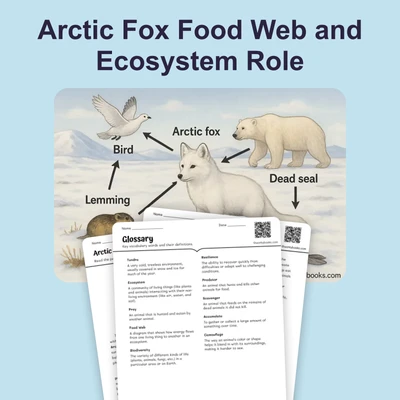
Arctic Fox Food Web and Ecosystem Role
This engaging audio-integrated passage, "Arctic Fox Food Web and Ecosystem Role," delves into the critical contributions...
The Pumpkin Life Cycle
This informational worksheet explores the pumpkin lifecycle, guiding students through procedural steps in a scientific t...
RI.2.3RI.2.10
What Is the Main Source of Carbon in an Ecosystem?
This NGSS-aligned science reading passage helps middle school students explore the main source of carbon in ecosystems: ...
MS-LS2-3
Ecosystem Interactions Word Sort
This word sort explores different types of relationships between organisms in ecosystems. Students categorize 12 differe...
Meadow Ecosystem
This reading passage, 'Life in the Meadow', is designed for elementary students to understand NGSS LS2.A: Interdependent...
2-LS2-1
What Is Earth Science?
This engaging middle school science passage introduces students to the field of Earth science, aligning with NGSS standa...
MS-ESS1MS-ESS2MS-ESS3SEP
The Desert Rain Frog's Ecosystem and Habitat
This educational passage, audio-integrated, delves into the fascinating world of the desert rain frog, exploring its uni...