Cowboys and Cattle Drives
Interactive passage with audio narration, comprehension questions, and printable PDF.
By completing this purchase you agree to our Terms of Use and Privacy Policy. Your subscription renews automatically until you cancel. You can cancel anytime from your account settings. All sales are final and non-refundable. Digital content is available for download in your account immediately upon purchase.
What's included
Part of this bundle

Cowboys and Cattle Drives preview and details
About this printable Cowboys and Cattle Drives reading passage (Grades 3-5)
Sample passage and quiz from Cowboys and Cattle Drives
Reading passage and comprehension quiz preview
Cowboys Cattle Drives
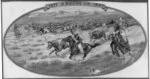
Source: Library of Congress
The era of cattle drives began after the Civil War in the United States. Cowboys moved huge herds of cattle from Texas ranches to railroad towns in the North. The cattle were then shipped by train to cities in the East, where beef was in high demand.
Cowboys had a tough job. They rode horses all day and watched over the cattle. The drives often lasted several months. Cowboys faced dangers like sudden storms, wild rivers, and stampedes. They had to be brave and work as a team to keep the herd safe.
The most famous cattle trail was the Chisholm Trail. This route started in Texas and ended in Kansas. Cowboys led thousands of cattle along this trail. At night, they slept under the stars and took turns watching the herd. Their meals were cooked over an open fire by a cook, who traveled with the group in a chuck wagon.
Cattle drives were important for ranchers. In Texas, cattle were worth little money. But in the North and East, beef was very valuable. Cowboys moved the herds so ranchers could sell their cattle for a better price. This helped grow the cattle industry and towns along the trails.
Life on the trail was not easy. Cowboys faced tough weather and long days. They had to cross rivers, avoid quicksand, and protect cattle from thieves. Despite these challenges, many cowboys enjoyed the adventure and freedom of the open range.
Cattle drives began to end in the late 1800s. Railroads were built closer to Texas ranches, so cattle no longer needed to be driven so far. Barbed wire fences also divided the land, making long drives harder. Still, the story of the cowboy and the cattle drive remains a symbol of the American West.
Interesting Fact: Some cattle drives covered over 1,000 miles and took up to three months to finish!
Comprehension quiz (8 questions)
1. Where did cattle drives begin?
2. What was the main job of cowboys?
3. Which trail was most famous?
4. Why were cattle drives needed?
5. What made cattle drives end?
6. What danger did cowboys face?
7. Cowboys slept under the stars. True or false?
8. What is a chuck wagon?
Common Core standards for Cowboys and Cattle Drives
Explain events, procedures, ideas, or concepts in a historical, scientific, or technical text, including what happened and why, based on specific information in the text.
Determine the meaning of general academic and domain-specific words or phrases in a text relevant to a grade 4 topic or subject area.
Explain the relationships or interactions between two or more individuals, events, ideas, or concepts in a historical, scientific, or technical text based on specific information in the text.
Determine the meaning of general academic and domain-specific words and phrases in a text relevant to a grade 5 topic or subject area.
Perfect for the way you teach
- Build comprehension skills
- Auto-graded quiz
- Differentiated reading
- Read together at home
- Improve fluency
- Quiet reading time
- Reading curriculum support
- Independent practice
- Track Lexile growth