The First Political Parties Form
Interactive passage with audio narration, comprehension questions, and printable PDF.
What's included
Part of this bundle

The First Political Parties Form preview and details
About this printable The First Political Parties Form reading passage (Grades 3-5)
Sample passage and quiz from The First Political Parties Form
Reading passage and comprehension quiz preview
First Political Parties
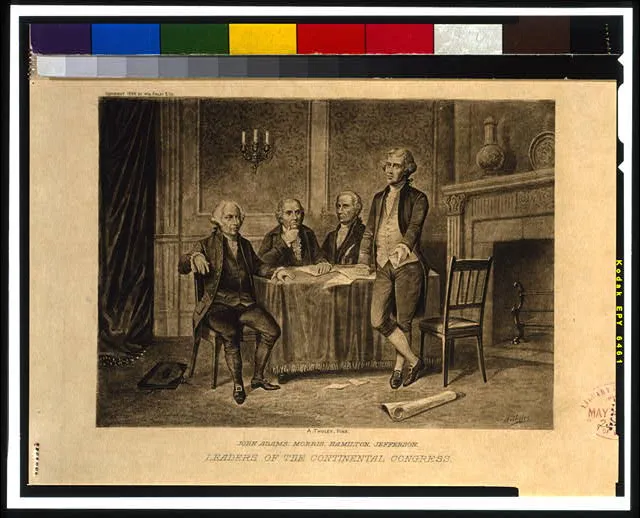
Source: Library of Congress - Tholey, A. (Augustus)
The first political parties in the United States formed soon after the country won its independence. At first, the new nation had no political parties. Many leaders worked together to write the Constitution and start a government. But soon, disagreements grew about how the country should be run.
One big argument was about the power of the national government. Some leaders, like Alexander Hamilton, believed the government needed to be strong to keep the country safe and united. These leaders formed a group called the Federalists. The Federalists wanted a powerful central government that could collect taxes, build an army, and make laws for all states.
Other leaders, like Thomas Jefferson, disagreed. They worried that a strong national government might become too powerful and take away people's freedom. Jefferson and his followers started a group called the Democratic-Republicans. They wanted most power to stay with the states so people could make their own choices.
The Federalists and Democratic-Republicans had different ideas about the economy, too. The Federalists supported banks, businesses, and trade with other countries. The Democratic-Republicans thought farmers and ordinary people should have more say. They believed in a simple government that helped everyone, not just the rich.
These disagreements led to the first political parties. Newspapers and leaders argued for their side. Sometimes, friends became opponents. But both groups wanted America to succeed. They just saw different paths to reach that goal.
Over time, political parties became part of American life. People joined the party that matched their ideas. Parties helped organize elections and debates. They also made it easier for voters to choose leaders who stood for their beliefs.
Even though the Federalists and Democratic-Republicans did not always agree, their debates helped shape the United States. By arguing and compromising, they found ways to solve problems. This made the new government stronger and more flexible.
Interesting Fact: Some leaders who once fought together in the American Revolution later became rivals in politics. Their debates helped create the political system we have today.
Comprehension quiz (8 questions)
1. Who led the Federalists?
2. What did Federalists want?
3. Who led the Democratic-Republicans?
4. Why did Democratic-Republicans fear a strong government?
5. What did the Federalists support?
6. What was the effect of political disagreements?
7. Political parties helped organize elections. True or false?
8. What is a compromise?
Common Core standards for The First Political Parties Form
Explain events, procedures, ideas, or concepts in a historical, scientific, or technical text, including what happened and why, based on specific information in the text.
Determine the meaning of general academic and domain-specific words or phrases in a text relevant to a grade 4 topic or subject area.
Perfect for the way you teach
- Build comprehension skills
- Auto-graded quiz
- Differentiated reading
- Read together at home
- Improve fluency
- Quiet reading time
- Reading curriculum support
- Independent practice
- Track Lexile growth