James Monroe and the Monroe Doctrine — Reading Comprehension
Rate this
Premium Resource
Present
Present in classroom. No work saved
Assign
Classroom with student accounts, Track progress
Quick Play
No student accounts, assign with a link
Grades
3
4
5
Standards
D2.HIS.1-4.3-5
RI.4.1
RI.4.2
RI.4.3
PRINT+DIGITAL RESOURCE
This learning resource is available in interactive and printable formats. The interactive worksheet can be played online and assigned to students. The Printable PDF version can be downloaded and printed for completion by hand.
This engaging U.S. history reading passage introduces students to President James Monroe and the Monroe Doctrine, a key moment in early American foreign policy. The text highlights Monroe’s role in shaping the nation and explains the cause-and-effect relationship leading to the famous doctrine that warned European nations not to interfere in the Americas. Students will build foundational literacy skills as they learn about Monroe’s leadership, the importance of unity, and the challenges the young country faced. The passage includes a student-friendly glossary, a timeline of key events, a fun 'Did You Know?' fact, and multiple activities to build knowledge and comprehension. This resource aligns with the C3 Framework and Common Core standards, and includes read aloud audio and a full Spanish translation to support diverse learners.
CONTENT PREVIEW
Expand content preview
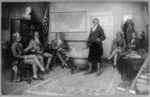
Birth of the Monroe Doctrine Source: Library of Congress - Library of Congress
The Monroe Doctrine was an important policy in United States history. In 1823, President James Monroe spoke to Congress. He made a strong statement to protect the lands of North and South America.
At this time, many countries in Central and South America were gaining their independence from European rulers. European nations like Spain, France, and Britain had controlled these lands for many years. The people living there wanted to govern themselves. The United States also wanted to keep European powers out of the Western Hemisphere.
President Monroe was worried that European countries might try to take back their old colonies or even build new ones. He believed that if European nations kept interfering in the Americas, it would threaten peace and freedom in the region. Monroe decided to take action.
On December 2, 1823, Monroe gave a speech to Congress. He announced the Monroe Doctrine. This policy warned European powers not to create new colonies or try to control new lands in North or South America. Monroe said that if any European nation tried to interfere, the United States would see it as a threat to its own safety.
The Monroe Doctrine had two main ideas. First, the Americas were no longer open to new colonization by European countries. Second, the United States would stay out of European wars and affairs. In return, Europe should not get involved in the Americas.
This policy was a bold move for the young United States. It showed other countries that America wanted to protect its neighbors and itself. The Monroe Doctrine became an important part of U.S. foreign policy. It was used many times later to stop European actions in the Western Hemisphere.
President Monroe’s words helped shape the future of the Americas. Many people in the United States felt proud of this stand. The doctrine was not always easy to enforce, but it sent a clear message: the Americas were for Americans.
Interesting Fact: The Monroe Doctrine was later used by other presidents to justify U.S. actions in Latin America, showing its lasting importance.
Who was president during the Monroe Doctrine?
James MonroeThomas JeffersonGeorge WashingtonAbraham Lincoln
When did Monroe announce his doctrine?
1823177618001845
What did the Monroe Doctrine warn Europe?
Not to make new coloniesTo start tradeTo give up landTo send more soldiers
Why did Monroe announce the Doctrine?
To protect the AmericasTo invite EuropeTo make peace with EuropeTo start a war
What was a main idea of the Doctrine?
No new European coloniesMore European controlNew U.S. coloniesTrade with Europe
How did the Doctrine affect the Americas?
It protected their freedomIt ended all warsIt made new coloniesIt helped Europe
The Monroe Doctrine is still important today.
TrueFalse
What does 'foreign policy' mean?
A country's plan with othersPlanting cropsBuilding housesMaking food
Perfect For:
👩🏫 Teachers
• Reading comprehension practice
• Auto-graded assessments
• Literacy skill development
👨👩👧👦 Parents
• Reading practice at home
• Comprehension improvement
• Educational reading time
🏠 Homeschoolers
• Reading curriculum support
• Independent reading practice
• Progress monitoring
Reading Features:
📖
Reading Passage
Engaging fiction or nonfiction text
❓
Comprehension Quiz
Auto-graded questions
📊
Instant Feedback
Immediate results and scoring
📄
Printable Version
Download for offline reading
🔊
Read Aloud
Voice-over with word highlighting
Reviews & Ratings
No reviews yet. Be the first to share your experience!
Related Content
Trade and Trading Routes Between Tribes
This engaging history reading passage explores the important role of trade and trading routes between Native American tr...
D2.HIS.1-4.3-5RI.4.1RI.4.3RI.4.4
The 13 Original Colonies: An Overview
This engaging U.S. history reading passage introduces students to the 13 original colonies. It presents the story of how...
D2.HIS.1-4.3-5RI.4.3RI.4.4RI.4.10
The French and Indian War
This educational history reading passage explores the French and Indian War, a major conflict in North America before th...
D2.HIS.1-4.3-5RI.4.1RI.4.3RI.4.4
Unfair Taxes and the Stamp Act
This engaging U.S. history reading passage explores the story of the Stamp Act and unfair taxes in colonial America. Ali...
D2.HIS.1-4.3-5RI.4.1RI.4.3
Paul Revere's Midnight Ride
This U.S. History reading passage explores the famous Midnight Ride of Paul Revere, a key event in the American Revoluti...
D2.HIS.1-4.3-5RI.4.3RI.4.4RI.4.10
The Declaration of Independence and Thomas Jefferson
This engaging passage teaches students about the Declaration of Independence and Thomas Jefferson, one of America's Foun...
D2.HIS.1-4.3-5RI.4.1RI.4.2RI.4.3
Soldiers at Valley Forge in Winter
Explore the inspiring story of the Continental Army at Valley Forge during the harsh winter of 1777-1778. This history r...
D2.HIS.1-4.3-5RI.4.3RI.4.4RI.5.3
The Treaty of Paris 1783
This passage introduces students to the Treaty of Paris 1783, the important agreement that officially ended the American...
D2.HIS.1-4.3-5RI.4.3RI.4.4RI.4.10
The Star-Spangled Banner and War
This reading passage explores the inspiring story of 'The Star-Spangled Banner' and its origins during the War of 1812. ...
D2.HIS.1-4.3-5RI.4.1RI.4.3RI.4.4
Thomas Jefferson and the Louisiana Purchase
This engaging U.S. history reading passage teaches students about Thomas Jefferson and the Louisiana Purchase, one of th...
D2.HIS.1-4.3-5RI.4.3RI.5.3
James Madison and the War of 1812
This engaging U.S. history reading passage focuses on James Madison and the War of 1812. Students learn about key events...
D2.HIS.1-4.3-5RI.4.1RI.4.3RI.4.4
The First Political Parties Form
This engaging passage explores the formation of America's first political parties, highlighting the Federalists and Demo...
D2.HIS.1-4.3-5RI.4.3RI.4.4
Americans Move West: The Oregon Trail
This engaging history passage explores the Oregon Trail and the westward movement of Americans in the 1800s. Students wi...
D2.HIS.1-4.3-5RI.4.3RI.4.4RI.5.3
Cowboys and Cattle Drives
This engaging U.S. History reading passage introduces students to the world of cowboys and cattle drives, a key part of ...
D2.HIS.1-4.3-5RI.4.3RI.4.4RI.5.3
Life in a Frontier Town
This passage explores the daily life and challenges faced by people living in a frontier town in the early United States...
D2.HIS.1-4.3-5RI.4.3RI.4.4W.4.2
Homestead Act: Free Land for Settlers
This engaging history reading passage explores the Homestead Act and its impact on American settlers moving west. Studen...
D2.HIS.1-4.3-5RI.4.3RI.4.4
Dangers on the Oregon Trail
This reading passage explores the many dangers faced by pioneers on the Oregon Trail, one of the most significant journe...
D2.HIS.1-4.3-5RI.4.1RI.4.3RI.4.4
Native Americans Lose Their Lands: The Trail of Tears
This reading passage explores the story of the Trail of Tears, focusing on the experiences of Native Americans as they l...
D2.HIS.1-4.3-5RI.4.3RI.4.4RI.4.7
Sherman's March to the Sea
This U.S. history reading passage explores Sherman's March to the Sea, a turning point during the Civil War. Students wi...