Native Americans Lose Their Lands: The Trail of Tears
Interactive passage with audio narration, comprehension questions, and printable PDF.
What's included
Part of this bundle

Native Americans Lose Their Lands: The Trail of Tears preview and details
About this printable Native Americans Lose Their Lands: The Trail of Tears reading passage (Grades 3-5)
Sample passage and quiz from Native Americans Lose Their Lands: The Trail of Tears
Reading passage and comprehension quiz preview
Native American Removal
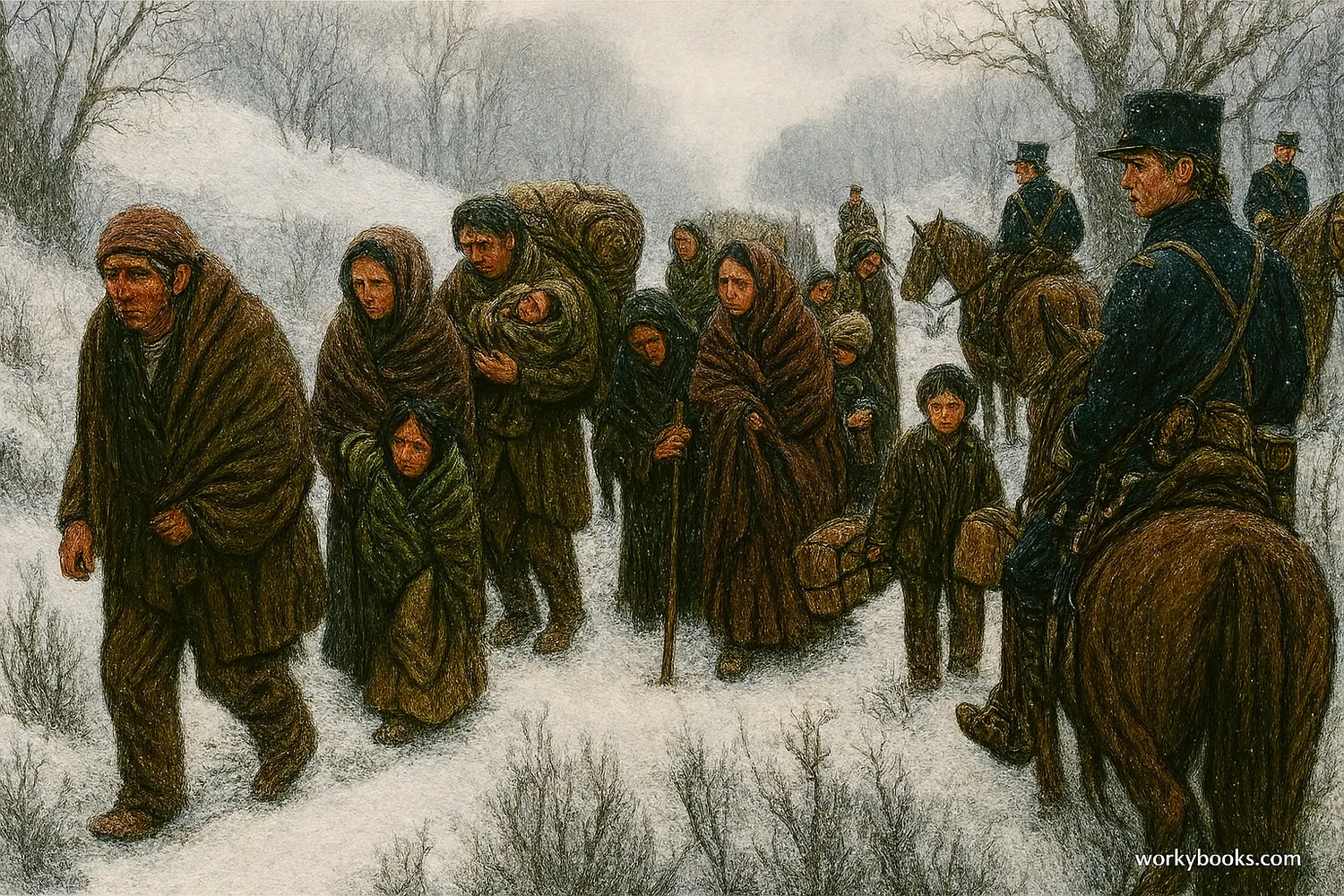
The Native American Removal was a major event in U.S. history during the 1800s. The United States government wanted more land for settlers. Many white settlers wanted to move west. However, Native Americans already lived on these lands for hundreds of years. The government passed a law called the Indian Removal Act in 1830. This law allowed the government to force Native Americans to move to new lands west of the Mississippi River.
President Andrew Jackson supported the Indian Removal Act. He and others believed that moving Native Americans would help the country grow. Many Native American groups, like the Cherokee, Creek, Choctaw, Chickasaw, and Seminole, did not want to leave their homes. They tried to resist by using the courts and peaceful protest. Some even won cases in the Supreme Court. But the government did not listen to their victories.
Between 1831 and 1850, thousands of Native Americans were forced from their homes. Soldiers made them walk hundreds of miles to unfamiliar land called "Indian Territory," which is now Oklahoma. The journey was very hard. Many people did not have enough food, warm clothes, or shelter. Illness spread quickly. Thousands died along the way. This journey became known as the Trail of Tears because of the great suffering and loss.
The Trail of Tears changed Native American life forever. Families were separated. Many lost their homes, culture, and traditions. But Native Americans showed great bravery and strength. Even in these hard times, they tried to keep their cultures alive. They built new communities in Indian Territory. They continued to share their stories, songs, and beliefs.
The Native American Removal is a reminder of the difficult choices and struggles people faced in the past. It teaches us about the importance of respecting all communities and learning from history. Today, many people honor the bravery of those who walked the Trail of Tears and remember their stories.
Interesting Fact: The Cherokee called the Trail of Tears "Nunna daul Tsuny," which means "The Trail Where They Cried."
Comprehension quiz (8 questions)
1. What year was the Indian Removal Act passed?
2. Who was president during the Indian Removal Act?
3. Where were Native Americans forced to move?
4. Why did the Trail of Tears get its name?
5. What did many Native Americans try to do?
6. What was one effect of removal?
7. The Trail of Tears was an easy journey.
8. What does 'bravery' mean in this passage?
Common Core standards for Native Americans Lose Their Lands: The Trail of Tears
Explain events, procedures, ideas, or concepts in a historical, scientific, or technical text, including what happened and why, based on specific information in the text.
Determine the meaning of general academic and domain-specific words or phrases in a text relevant to a grade 4 topic or subject area.
Interpret information presented visually, orally, or quantitatively (e.g., in charts, graphs, diagrams, time lines, animations, or interactive elements on Web pages) and explain how the information contributes to an understanding of the text in which it appears.
Explain the relationships or interactions between two or more individuals, events, ideas, or concepts in a historical, scientific, or technical text based on specific information in the text.
Determine the meaning of general academic and domain-specific words and phrases in a text relevant to a grade 5 topic or subject area.
Perfect for the way you teach
- Build comprehension skills
- Auto-graded quiz
- Differentiated reading
- Read together at home
- Improve fluency
- Quiet reading time
- Reading curriculum support
- Independent practice
- Track Lexile growth