Effects of High Altitude on the Human Body — Reading Comprehension
Rate this
Premium Resource
Present
Present in classroom. No work saved
Assign
Classroom with student accounts, Track progress
Quick Play
No student accounts, assign with a link
Grades
6
PRINT+DIGITAL RESOURCE
This learning resource is available in interactive and printable formats. The interactive worksheet can be played online and assigned to students. The Printable PDF version can be downloaded and printed for completion by hand.
This audio-integrated reading passage, 'Effects of High Altitude on the Human Body,' is designed for Grade 6 students. It explains how our bodies react to less oxygen at high elevations, covering important concepts like air pressure, red blood cells, and the process of acclimatization. The passage defines key terms such as 'hypoxia' and 'acute mountain sickness,' making complex scientific ideas accessible. While the NGSS standard MS-ESS2-4 focuses on Earth's systems, this passage provides foundational knowledge about atmospheric conditions and their impact on living organisms, offering insights into environmental interactions. It's a great resource for understanding human physiology in different environments and includes relevant SEO keywords for easy discovery.
CONTENT PREVIEW
Expand content preview
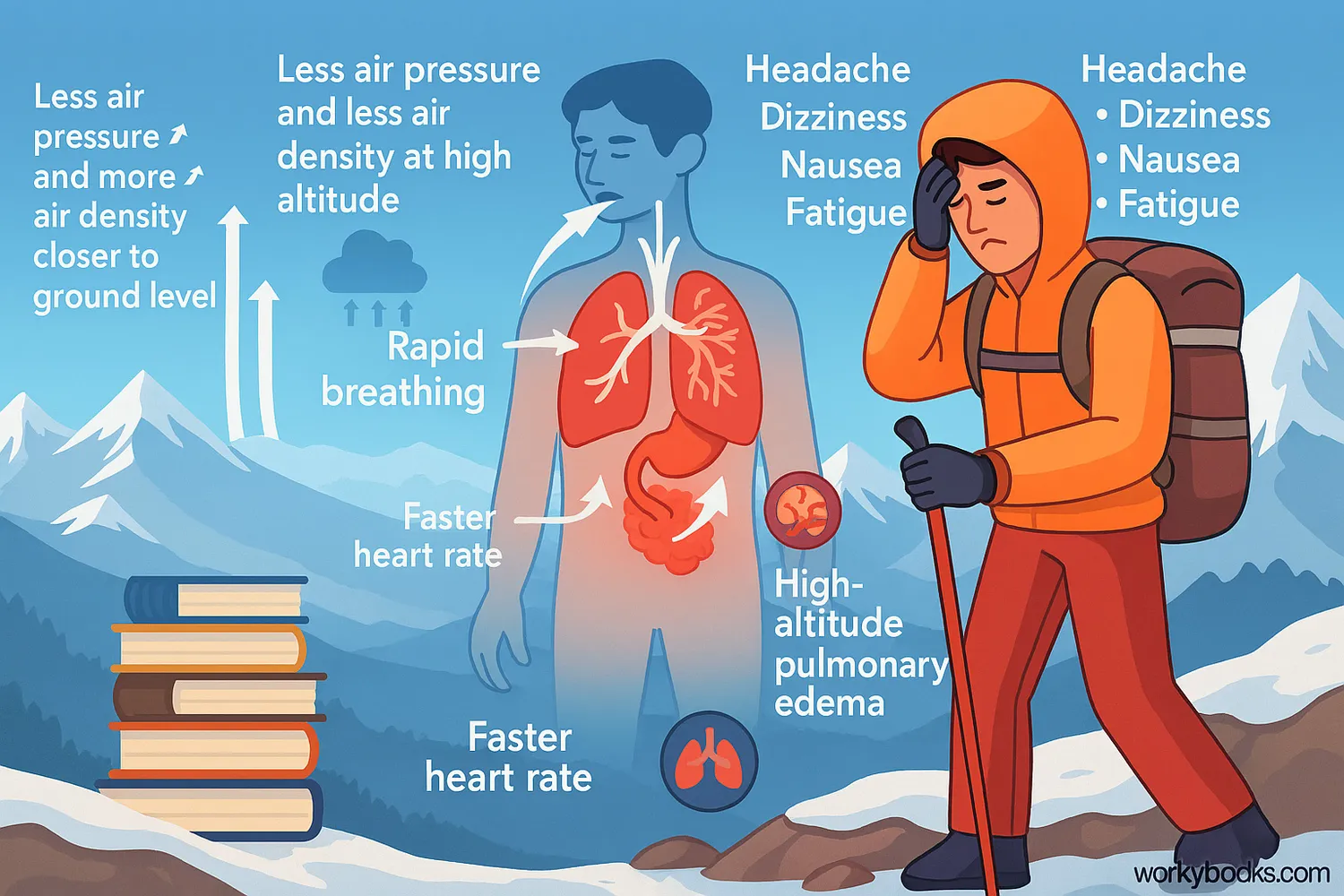
High-altitude changes in the body: oxygen drop, faster breathing, red blood cell boost.
Have you ever wondered what happens to your body when you climb a tall mountain? When you go to a high altitude, like the top of Mount Everest or even a high-flying airplane, there is less oxygen in the air. This happens because the air pressure is lower at higher elevations. Imagine a big stack of books; the books at the bottom have more weight on them than the books at the top. It's similar with air – the air closer to the ground has more air pressing down on it, making it denser and full of oxygen. As you go higher, there's less air above you, so the air is thinner and has less oxygen.
Our bodies need oxygen to work properly. When there isn't enough oxygen, a condition called hypoxia occurs. Your body tries to cope with this change. One of the first things it does is make you breathe faster and deeper. This helps you take in more of the available oxygen. Your heart also beats faster to pump more blood, carrying what oxygen it can to your muscles and organs.
If you stay at a high altitude for a few days or weeks, your body begins to acclimatize, which means it adjusts to the new environment. Your body starts to produce more red blood cells. Red blood cells are like tiny trucks that carry oxygen around your body. With more red blood cells, your blood can carry more oxygen, even when the air is thin. This process can take time, which is why climbers often spend several days at different camps as they ascend a mountain.
However, if you go to a high altitude too quickly, or if your body doesn't acclimatize well, you can get acute mountain sickness (AMS). Symptoms of AMS include headaches, dizziness, nausea, and tiredness. In very serious cases, people can develop more dangerous conditions like high-altitude cerebral edema (HACE) or high-altitude pulmonary edema (HAPE), which affect the brain and lungs, respectively. These conditions can be life-threatening and require immediate medical attention, often meaning a quick descent to a lower altitude.
Understanding how high altitude affects the human body is very important for anyone traveling to mountainous regions. Taking time to acclimatize and being aware of the symptoms of altitude sickness can help keep you safe and healthy during your high-altitude adventures.
Interesting Fact: The highest permanent human settlement is La Rinconada, Peru, at an elevation of over 16,700 feet (5,100 meters) above sea level!
What happens to oxygen in the air at high altitudes?
There is more oxygenThere is less oxygenOxygen stays the sameOxygen increases
What do red blood cells do in the body?
Carry waterCarry oxygenFight germsStore food
Why does air pressure decrease at high altitudes?
More air aboveLess air aboveAir gets warmerAir gets thicker
How does the body first react to less oxygen?
Sleeps moreBreathes fasterEats more foodSweats more
What does 'acclimatize' mean for the body?
Gets weakerAdjusts to environmentNeeds less sleepGets colder
Why do climbers spend days at different camps?
To enjoy viewsTo acclimatizeTo find foodTo avoid animals
Which is a symptom of Acute Mountain Sickness?
Increased appetiteHeadache and dizzinessClear thinkingMore energy
Why is it important to descend if HACE or HAPE occurs?
To get a better viewTo eat more foodConditions are life-threateningTo find a warmer place
Hypoxia is a condition of having too much oxygen in the body.
TrueFalse
What is another word for 'thin air' in the passage?
Dense airOxygen-rich airLess oxygen airHeavy air
Perfect For:
👩🏫 Teachers
• Reading comprehension practice
• Auto-graded assessments
• Literacy skill development
👨👩👧👦 Parents
• Reading practice at home
• Comprehension improvement
• Educational reading time
🏠 Homeschoolers
• Reading curriculum support
• Independent reading practice
• Progress monitoring
Reading Features:
📖
Reading Passage
Engaging fiction or nonfiction text
❓
Comprehension Quiz
Auto-graded questions
📊
Instant Feedback
Immediate results and scoring
📄
Printable Version
Download for offline reading
🔊
Read Aloud
Voice-over with word highlighting
Reviews & Ratings
No reviews yet. Be the first to share your experience!
Related Content
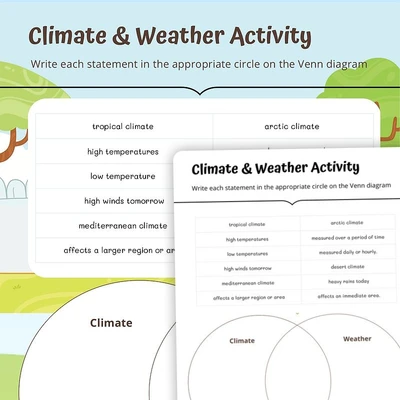
Climate and weather activity
This worksheet is perfect for understanding the differences between climate and weather. Students will read the phrases ...
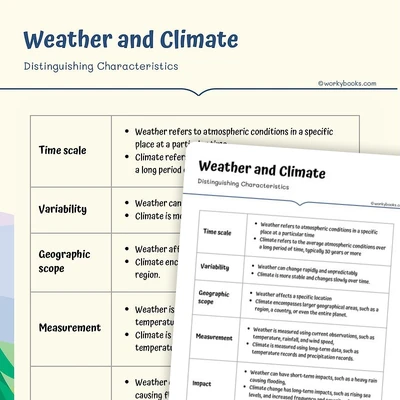
Climate and Weather — Distinguishing Characterstics
This worksheet highlights the differences between climate and weather. The chart format makes comparing and contrasting ...
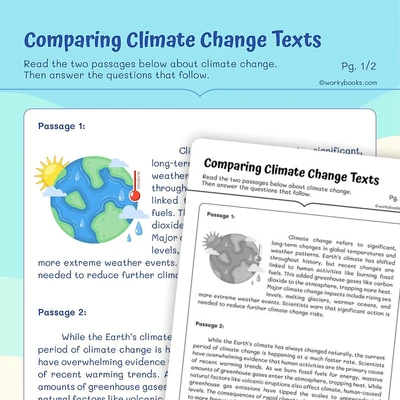
Comparing Weather and Climate Texts
This reading comprehension worksheet has 5th graders read two informational texts about Weather and Climate. Students th...
RI.5.9
Tools and Technology in Earth Science
This middle school science reading passage explores the wide range of tools and technologies used in Earth science, from...
MS-ESS2-2MS-ESS3-2MS-ETS1-1MS-PS4-3
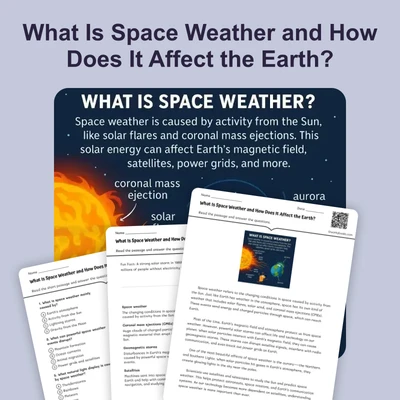
What Is Space Weather and How Does It Affect the Earth?
This NGSS-aligned science passage for middle school explains what space weather is and how it affects Earth. Students le...
MS-ESS2-2
What Is Earth Science?
This engaging middle school science passage introduces students to the field of Earth science, aligning with NGSS standa...
MS-ESS1MS-ESS2MS-ESS3SEP
Extreme Weather and Climate Change
This Grade 6-8 science passage, aligned to NGSS standards, explores the impact of climate change on extreme weather even...
What Is The Difference Between Climate Model And Weather Model?
This reading passage delves into the fundamental differences between weather models and climate models, explaining their...
Scientific Inquiry in Earth Science
This passage explores scientific inquiry in Earth science for grades 6-8, aligned with NGSS standards MS-ESS1-4, MS-ESS2...
MS-ESS1-4MS-ESS2-1MS-ESS3-5SEP
Earth's Major Climate Zones Explained
This engaging science passage for grades 6-8 explains Earth's major climate zones, including tropical, temperate, and po...
Climate Through Earth's History
This engaging passage for grades 6-8 explores how Earth's climate has naturally changed over millions of years, highligh...
MS-ESS1-4MS-ESS2-6
Weather vs. Climate
This comprehensive passage for grades 6-8 explores the difference between weather and climate, aligning with NGSS standa...
MS-ESS2-6
How is Climate Different from Weather?
This passage distinguishes climate from weather for young readers. It defines climate as the usual weather patterns over...
RI.3.1RI.4.14.ESS2.D
Earth: Our Home in Space
This engaging Grade 4-5 science passage, aligned to NGSS, introduces students to Earth's special place in the solar syst...
Air Masses and Weather
This audio-integrated passage, "Air Masses and Weather," is designed for 6th-grade students to understand how the moveme...
Antarctica Climate
This engaging science passage for grades 6-8 explores Antarctica, the coldest climate zone on Earth. Students will learn...
Climate Zones Word Sort
This word sort activity helps students understand different climate zones through real-world locations. Students classif...
How Climate Change Affects Weather
This middle school science passage explores how and why weather patterns are changing globally. Students will learn abou...
MS-ESS3-5
Escape Velocity and Space Travel
This middle school science passage introduces students to the concept of escape velocity—the minimum speed required to b...
MS-ESS1-2MS-PS2-4
Polar Bears and Climate
This informational text on polar bears is a great way to practice reading comprehension. Students will read the passage ...