Egypt's Black Land and Red Land — Reading Comprehension
Rate this
Premium Resource
Present
Present in classroom. No work saved
Assign
Classroom with student accounts, Track progress
Quick Play
No student accounts, assign with a link
Grades
5
6
7
8
PRINT+DIGITAL RESOURCE
This learning resource is available in interactive and printable formats. The interactive worksheet can be played online and assigned to students. The Printable PDF version can be downloaded and printed for completion by hand.
This comprehensive history reading passage explores the significance of the Black Land and Red Land in Ancient Egypt, emphasizing the role of the Nile River, geography, agriculture, and social hierarchy. Students will learn how the Black Land’s fertile soils and the surrounding Red Land deserts shaped Egyptian civilization, daily life, and historical development. The passage integrates primary archaeological evidence, explains cause-and-effect relationships, and connects to broader themes in ancient history. Included are a detailed glossary, multiple-choice quiz, explanatory writing prompts with sample answers, and two graphic organizers (Cause-and-Effect and Chronological Development tables). A timeline highlights key developments, and a Spanish translation is provided for accessibility. This resource aligns with CA HSS 6.2.1 and CCSS RI.6.1, making it ideal for building content knowledge and ELA skills. A read aloud audio option supports diverse learners.
CONTENT PREVIEW
Expand content preview
The contrast between the Black Land and Red Land shaped Egyptian society.
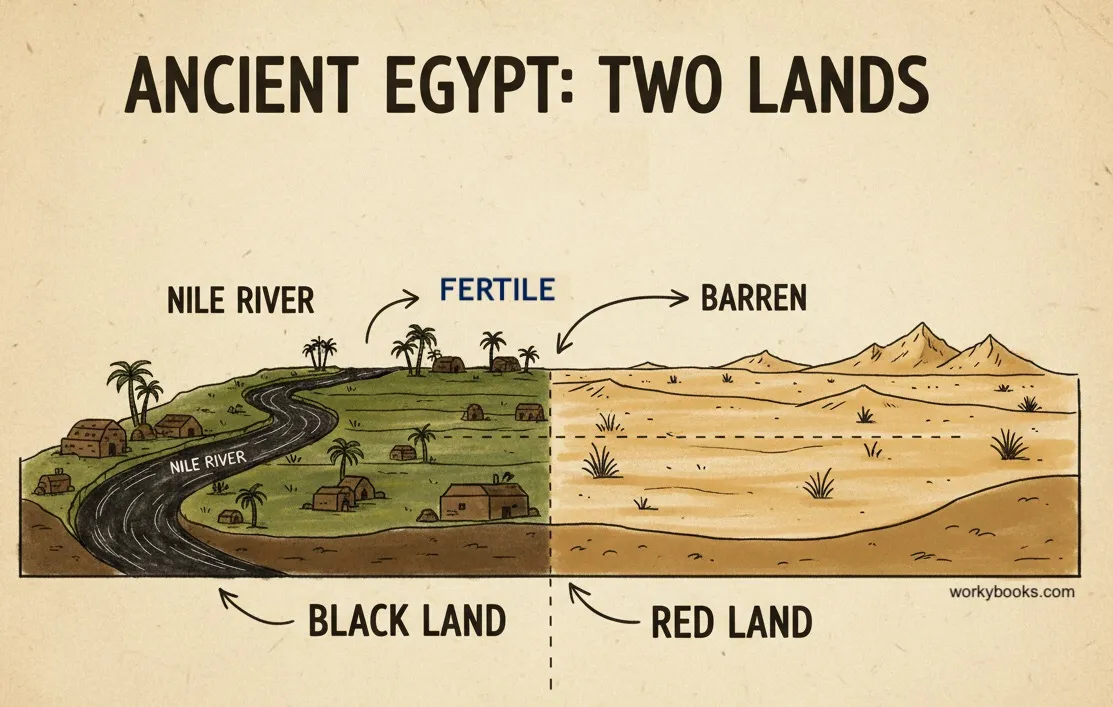
The geography of ancient Egypt was shaped by two contrasting environments: the Black Land and the Red Land. These two regions influenced nearly every aspect of Egyptian civilization, from agriculture to religious beliefs. The Black Land, called "Kemet" by the Egyptians, referred to the dark, fertile soil along the Nile River. In contrast, the Red Land, or "Deshret," described the vast, arid deserts that surrounded the river valley. Together, these landscapes made Egypt unique among ancient civilizations.
The Nile River was the lifeline of Egypt, flowing over 4,100 miles through northeastern Africa. Each year, between June and September, the Nile flooded, depositing rich silt onto its banks. This natural event created the Black Land, which supported the growth of wheat, barley, and flax. Archaeological evidence from tomb paintings at Saqqara (dating to around 2400 BCE) shows scenes of farmers plowing fields and harvesting crops. The predictable floods allowed Egyptians to develop advanced irrigation systems. Without the Black Land, Egypt could not have supported large populations or built powerful cities like Memphis and Thebes.
Beyond the river’s reach lay the Red Land. This harsh desert acted as a natural barrier, protecting Egypt from invaders. The Red Land was also a source of valuable resources. Egyptians mined for copper, gold, and precious stones in the Eastern Desert. However, life in the Red Land was difficult. Archaeologists have found evidence of ancient quarries and trade routes, showing that Egyptians traveled great distances to extract and transport valuable materials. The Red Land’s dangers inspired religious stories about chaos and the underworld, shaping Egyptian beliefs about life and death.
The contrast between the Black Land and Red Land shaped Egyptian society. Most people lived and worked near the Nile, where the land was fertile. The annual cycle of flooding and planting influenced the Egyptian calendar and religious festivals. Pharaohs, considered living gods, claimed control over both the Black and Red Lands. Social hierarchy was closely tied to geography: farmers, scribes, and priests played different roles, as seen in records from the reign of Ramses II (1279–1213 BCE). Over thousands of years, Egypt’s dependence on the Nile remained constant, but new technologies and trade networks gradually changed how people used the land.
The Black Land and Red Land were more than just physical spaces—they shaped Egypt’s culture, economy, and history. Understanding these two worlds helps historians explain why Egyptian civilization lasted for over 3,000 years.
These ideas connect to broader themes in world history, such as how geography influences the rise and fall of civilizations.
Interesting Fact: Some ancient Egyptians believed the Nile’s annual flood was a gift from the god Hapi, who was often shown as a blue-skinned figure pouring water from two jars.
What is the Black Land?
Fertile land by the NileDesert area far from the NileMountains in the southSwamps near the coast
What did the annual Nile flood bring?
SaltRich siltSandSnow
Which city was built in the Black Land?
MemphisGizaAlexandriaBabylon
Why was the Red Land important?
Source of mineralsBest farmlandMain city locationFishing area
How did the Red Land protect Egypt?
It was home to priestsActed as a natural barrierFlooded every yearProvided drinking water
What was a social effect of Egypt’s geography?
Created a strict hierarchyEveryone was a farmerNo cities existedNo religious beliefs
Pharaohs ruled only the Black Land. True or false?
TrueFalse
What does 'irrigation' mean?
Bringing water to cropsBuilding templesMining goldWriting on papyrus
Perfect For:
👩🏫 Teachers
• Reading comprehension practice
• Auto-graded assessments
• Literacy skill development
👨👩👧👦 Parents
• Reading practice at home
• Comprehension improvement
• Educational reading time
🏠 Homeschoolers
• Reading curriculum support
• Independent reading practice
• Progress monitoring
Reading Features:
📖
Reading Passage
Engaging fiction or nonfiction text
❓
Comprehension Quiz
Auto-graded questions
📊
Instant Feedback
Immediate results and scoring
📄
Printable Version
Download for offline reading
🔊
Read Aloud
Voice-over with word highlighting
Reviews & Ratings
No reviews yet. Be the first to share your experience!
Related Content
Geography of Ancient Egypt
This passage explores the vital role of geography in the rise of Ancient Egypt, focusing on the importance of the Nile R...
The Decline of Ancient Egypt
This detailed passage examines the decline of Ancient Egypt, exploring the complex causes behind the fall of one of hist...
Daily Life in Ancient Egypt
Explore the fascinating world of daily life in Ancient Egypt with this comprehensive history reading passage. Students w...
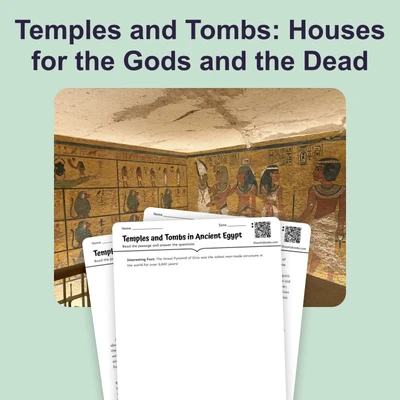
Temples and Tombs in Ancient Egypt
This passage explores the significance of temples and tombs in Ancient Egypt, focusing on their religious, social, and c...
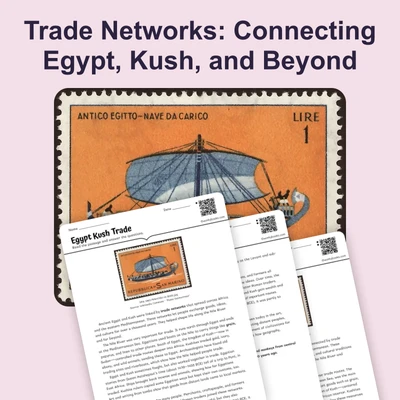
Egypt Kush Trade
This engaging history reading passage explores the complex trade networks that connected Ancient Egypt, Kush, and region...
6.2.3RH.6-8.1RH.6-8.4RH.6-8.7
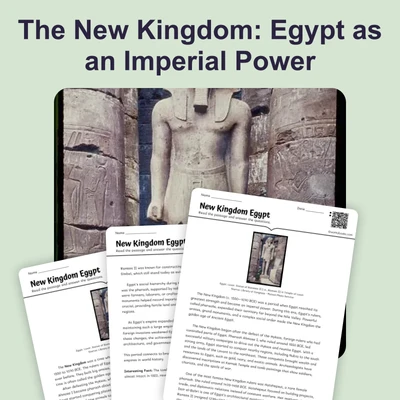
New Kingdom Egypt
This engaging history reading passage explores the rise of Ancient Egypt during the New Kingdom, when Egypt became a pow...
CA HSS 6.2RH.6-8.2WHST.6-8.2
Evidence in Ancient History
This engaging history reading passage investigates how archaeologists and historians discover clues about how ancient pe...
Why Egypt Wanted Nubian Gold
This engaging passage explores the relationship between Ancient Egypt and the Kingdom of Kush (Nubia), focusing on why t...
How Pharaohs Governed Egypt
This history reading passage explores how Ancient Egypt was governed, highlighting the roles of the pharaoh, vizier, off...
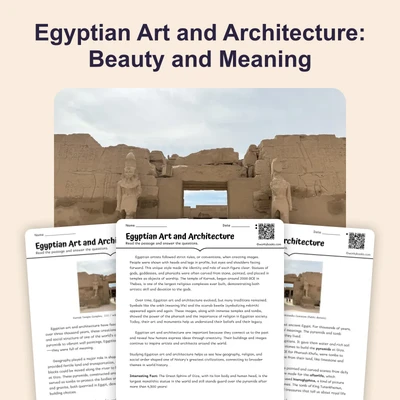
Art and Architecture in Ancient Egypt
This passage explores the beauty and meaning behind Egyptian art and architecture, from the grand pyramids to detailed t...
King Narmer Unifies Egypt
This engaging history reading passage explores the unification of Ancient Egypt under King Narmer, focusing on the signi...
Ancient Egyptian Afterlife
This engaging history reading passage explores ancient Egyptian beliefs about the afterlife and the construction of the ...
CA HSS 6.2RH.6-8.1RH.6-8.4
Ancient Theocracy
This engaging history reading passage explores the concept of theocracy in ancient civilizations, where priests and reli...
Ancient Mathematics
This passage explores the essential role of mathematics in ancient civilizations, including Mesopotamia, Egypt, Greece, ...
Ancient Monarchy
This reading passage explores the concept of monarchy in ancient civilizations, focusing on the origins, structure, and ...
Women in Ancient Societies
This reading passage explores the complex roles of women in the ancient world, focusing on civilizations such as Mesopot...
Ancient Science and Medicine
This comprehensive reading passage explores the development of science and medicine in ancient civilizations, including ...
Kush Conquers Egypt
This reading passage explores the fascinating period when the Kingdom of Kush, located in Nubia south of Egypt, conquere...
Slavery in Ancient World
This passage explores the complex history of slavery in the ancient world, examining its presence in societies such as M...
Ancient Civilizations and the Environment
This engaging history reading passage explores how ancient civilizations such as Mesopotamia, Egypt, and the Maya adapte...