This learning resource is available in interactive and printable formats. The interactive worksheet can be played online and assigned to students. The Printable PDF version can be downloaded and printed for completion by hand.
This passage explores the middle school science topic of the endocrine system, aligned with NGSS standard MS-LS1-3. It describes how glands produce hormones, which travel through the blood to regulate body functions such as growth, metabolism, stress response, and reproduction. The passage explains the mechanisms of feedback loops using a thermostat analogy, compares the endocrine and nervous systems, and uses puberty as a real-world example of hormonal changes. Key vocabulary is highlighted, and the content is accessible for grades 6-8, with differentiation for struggling readers. Students can engage with quizzes, writing prompts, and graphic organizers. Audio integration supports diverse learners. This resource is ideal for teachers seeking to deepen students’ understanding of body systems and their interactions in everyday life.
CONTENT PREVIEW
Expand content preview
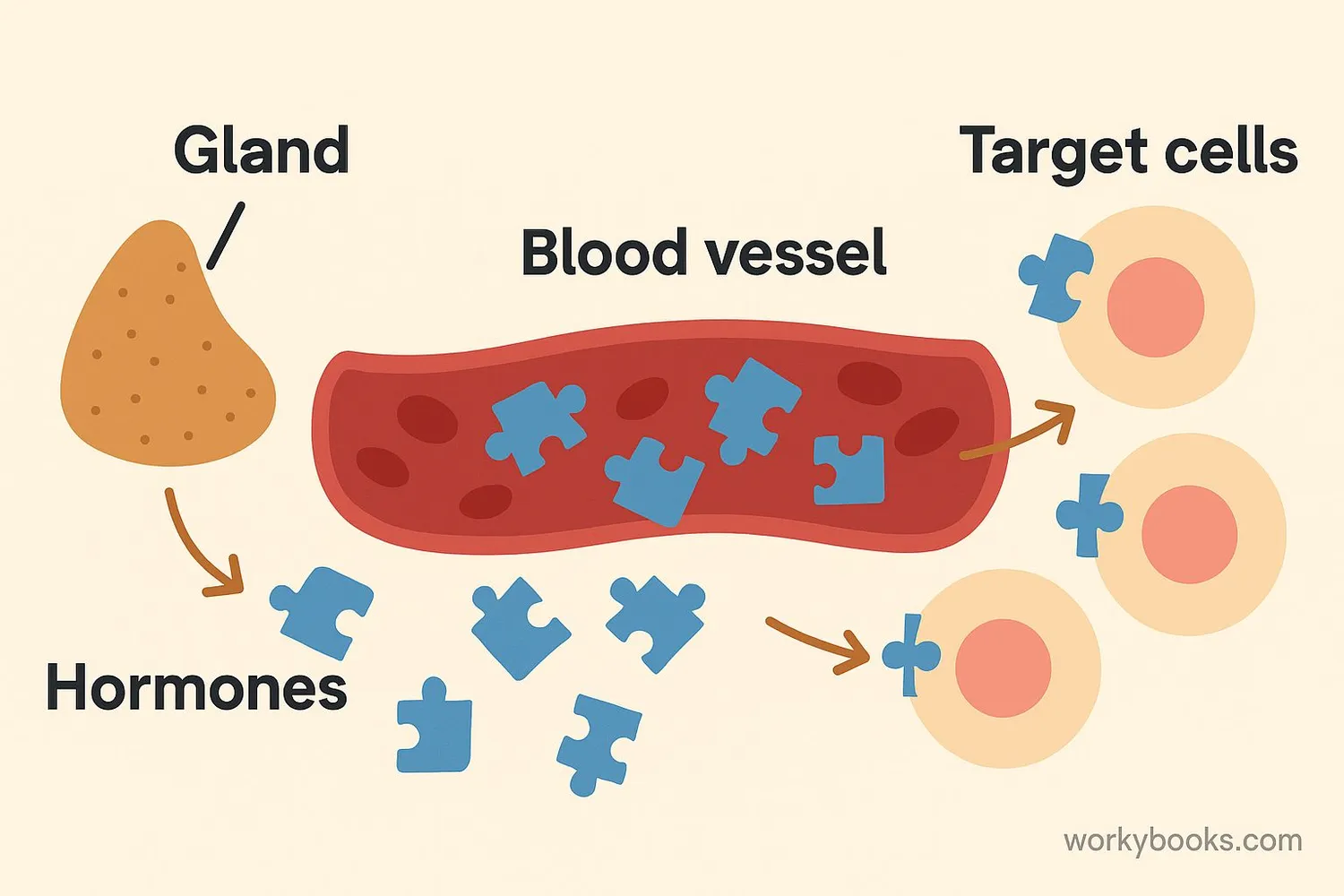
How hormones travel from glands to target cells
Endocrine System disorders can lead to noticeable changes in growth, energy, or mood. The endocrine system is a network of glands that produce hormones, which act as chemical messengers throughout the body. These hormones travel through the blood to control important processes like growth, metabolism, stress responses, and reproduction. Without this system, the body would struggle to maintain balance and respond to changes in the environment. Understanding the endocrine system helps explain how our bodies coordinate complex activities over time.
How the Endocrine System Works
The endocrine system includes several major glands. The pituitary gland, located at the base of the brain, is often called the "master gland" because it releases hormones that control other glands. It produces growth hormone, which helps regulate height and development, and signals the thyroid, adrenal, and reproductive glands to do their jobs. The thyroid gland in the neck releases hormones that control the speed of metabolism, or how quickly the body uses energy. The adrenal glands on top of the kidneys release adrenaline during stressful situations, triggering the "fight or flight" response by increasing heart rate and alertness. The pancreas releases insulin, which lowers blood sugar after eating. In addition, the ovaries in females and testes in males produce sex hormones that control puberty and reproduction.
Feedback Loops and Hormone Regulation
The amount of each hormone in the body is tightly controlled by feedback loops. These loops work like a thermostat that turns the heater on or off to keep a room at the right temperature. For example, when blood sugar rises after a meal, the pancreas releases insulin to bring it back down. When blood sugar returns to normal, the pancreas stops releasing insulin. This process prevents the body from having too much or too little of any hormone, which could be harmful. Scientists have discovered these feedback systems by measuring hormone levels in people with different medical conditions and observing changes when glands are removed or replaced.
Comparing the Endocrine and Nervous Systems
The endocrine system works closely with the nervous system, but there are important differences. The nervous system uses electrical signals to send messages quickly, often in less than a second. In contrast, hormones move more slowly through the blood, but their effects usually last longer. For example, adrenaline causes a quick burst of energy, while growth hormone works over years to increase height. During puberty, sex hormones cause gradual changes in the body that take months or years. Both systems help the body respond to challenges, but in different ways.
Understanding the endocrine system is essential for studying health, medicine, and science. Problems with hormone production can lead to diseases like diabetes or thyroid disorders, making research in this field important for everyone. As scientists learn more, treatments for endocrine disorders and ways to support healthy development continue to improve.
Interesting Fact: The pituitary gland is no bigger than a pea, but it controls many other glands in the body!
What is the main function of the endocrine system?
To produce hormones that control body functionsTo digest foodTo produce red blood cellsTo protect the body from germs
Which gland is known as the 'master gland'?
Pituitary glandThyroid glandAdrenal glandPancreas
What hormone is made by the pancreas to control blood sugar?
InsulinAdrenalineGrowth hormoneThyroid hormone
What does the thyroid gland control?
MetabolismHeartbeatDigestionMemory
What is a feedback loop, as described in the passage?
A system that controls hormone levels by turning production on or offA way the body digests foodAn electrical signal sent by nervesA hormone that controls growth
In the passage, what is the effect of adrenaline during a stressful situation?
It increases heart rate and alertnessIt lowers blood sugarIt decreases energyIt slows down metabolism
Hormones travel through the body using which system?
The blood (circulatory system)The digestive systemThe respiratory systemThe skeletal system
Which statement is TRUE according to the passage?
The endocrine system's effects are usually slower but last longer than the nervous system'sHormones work faster than nerve signalsThe nervous system only controls pubertyInsulin raises blood sugar
The endocrine system helps control puberty. (True/False)
TrueFalse
Feedback loops only work for the nervous system. (True/False)
FalseTrue
Perfect For:
👩🏫 Teachers
• Reading comprehension practice
• Auto-graded assessments
• Literacy skill development
👨👩👧👦 Parents
• Reading practice at home
• Comprehension improvement
• Educational reading time
🏠 Homeschoolers
• Reading curriculum support
• Independent reading practice
• Progress monitoring
Reading Features:
📖
Reading Passage
Engaging fiction or nonfiction text
❓
Comprehension Quiz
Auto-graded questions
📊
Instant Feedback
Immediate results and scoring
📄
Printable Version
Download for offline reading
🔊
Read Aloud
Voice-over with word highlighting
Reviews & Ratings
No reviews yet. Be the first to share your experience!
Related Content
How Does Cryptobiosis work
This passage explains cryptobiosis, the process where organisms like tardigrades pause their metabolism to survive extre...
MS-LS1-3RI.6.3RI.7.3RI.8.8
What Characteristic Is Used to Divide Aquatic Biomes into Three Zones?
This NGSS-aligned reading passage explains how aquatic biomes such as oceans and lakes are divided into three zones base...
MS-LS1-3
Skeletal System
This comprehensive middle school science passage explores the human skeletal system, focusing on the 206 bones of the ad...
MS-LS1-3
Homeostasis
This engaging science passage introduces middle school students to the concept of homeostasis, focusing on how living or...
MS-LS1-3
Organization of the Human Body
This comprehensive passage for grades 6-8, aligned to NGSS MS-LS1-3, guides students through the intricate organization ...
MS-LS1-3
Levels of Organization
This middle school science passage, aligned with NGSS MS-LS1-3, introduces students to the concept of biological levels ...
MS-LS1-3
Muscular System
This comprehensive passage for grades 6-8 explores the human muscular system, covering structure, function, and health. ...
MS-LS1-3
Integumentary System
This comprehensive middle school science passage aligns with NGSS standard MS-LS1-3 and explores the integumentary syste...
MS-LS1-3
Digestive System
This comprehensive science passage for grades 6-8 explores the digestive system, tracing the step-by-step journey of foo...
MS-LS1-3MS-LS1-7
Excretory System
This comprehensive middle school science passage explores the excretory system and its importance in maintaining the bod...
MS-LS1-3
Circulatory System
This engaging middle school science passage explores the circulatory system, focusing on how the heart, blood, and blood...
MS-LS1-3
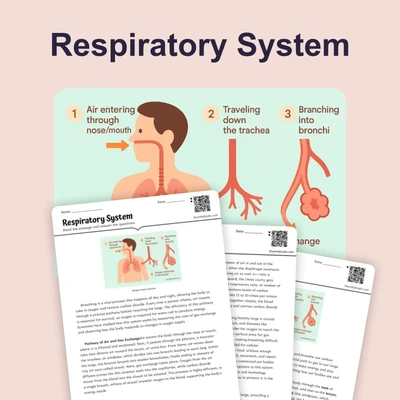
Respiratory System
This comprehensive passage for grades 6-8 explores the respiratory system, examining the pathway of air from the nose an...
MS-LS1-3MS-LS1-7
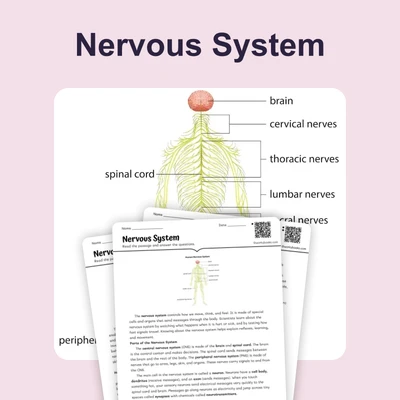
Nervous System
This comprehensive middle school science passage explores the structure, function, and significance of the human nervous...
MS-LS1-3MS-LS1-8
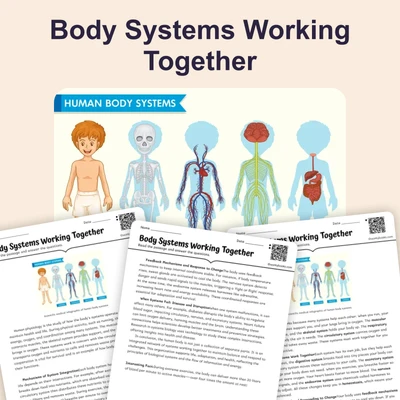
Body Systems Working Together
This middle school science passage explores how the human body's systems work together to sustain life, aligned with NGS...
MS-LS1-3
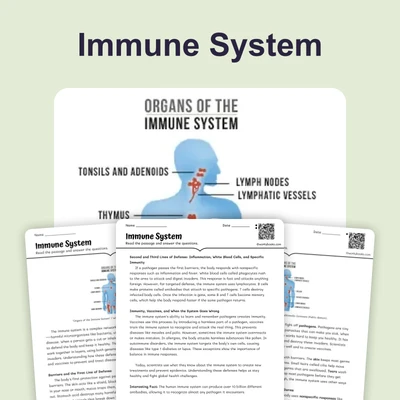
Immune System
This comprehensive middle school science reading passage explores the immune system, focusing on its role as the body's ...
MS-LS1-3
Reproductive System
This passage provides a comprehensive overview of the human reproductive system for middle school students, aligning wit...